Leif Rydell
The Pantanal-18
This blog about Pantanal is the third part of my trip to Brazil (Itatiaia and Chapada d G Jardim Amazonia are the other two).
So, welcome to the biggest weatland in the world, famous for all its birds but also as the best place to see Jaguars among other wildlife. As you enter the Pantanal the road turns in to a dirt road. During the northern summer and fall the region is dried out which gives high concentrations of animals. During the other half of the year the area is much flooded and many places hard or impossible to reach by car. It was a great feeling to reach this place after the long drive from Jardim da Amazonia. First stop was Piuval Lodge and included in the price was a Jeep-tour which gave us the first looks of this fantastic place.
A good bird during this car trip was the Red-shouldered Macaw. Macaws are great bird and always nice to see, this one not so common. A bird we thought should be a little bit hard to see was the Sunbittern but we saw quite a few of this special bird.
A true symbol of the Pantanal is the huge Jabiru. Though quite common around, still an amazing view everytime you see it. Here on in flight towards the nest and two just resting.
Piuval is a good place for mammals as well and we saw this cute S.A. Coati and the funny 7-banded Armadillo.
On this tour we also saw our first Great Potoo. What a remarkable bird!!
At nest we also saw this Great Horned Owl and close by the special Guira Cuckoo.
At the lodge itself birding is good and we saw many nice species. Here the quite common Cattle Tyrant, Giant Cowbird (on feral cow!) and the brilliant Yellow-billed Cardinal.
Just a short walk out from the lodge I also found this striking Black-collared Hawk.
Happy after our day at Piuval we now drove towards our next lodge a little bit further south, Pouso Alegre. Piuval is an upscale lodge with pool and other nice facilities. On the (quite long) way in from the Tranpantaneira we saw the hardest of the herons, the Capped heron as well as this pecular male Bare-faced Currasow.
Pouso Alegre is a more rustic and basic place know to be very good for spotting Great Ant-eaters. Birding and other wildlife are excellent too. We had heard that a Great Ant-eater comes inmost evenings to look for food around the lodge which it did our night as well. However, we were lucky to see one out on one of the trails which gave a more natural experince.
This walk also gave us the Undulated Tinamou, a bird much easier heard than seen as well as this handsome Red-throated Piping Guan.
Many lizards were around and one favorite was this robust Black & White Tegu. The lodge has a feeding area which attracts many different species but still surprised to find this elegant Plumbeous Ibis on the roof next to it.
Befor we left this nice place we had a stop at a trail together with the owner. Among some other goodies we found this awesome Helmeted Manakin.
Our next stop was SouthWild. Owned by the person who helped us with the planning and booking and also the company which "rented" the car to us. Situated next to the Rio Sararé in Pixaim area this place is great. An upscale place with a small pool, great feeding areas, complimentary boat trip on the river and a photo hide for Ocelot. We stayed here one night on our way south and two more at the end of our trip. There are extensive trails but I guess you need to have good nerves as referred to on this sign just a couple of hundred meters outside the lodge.
Meanwhile we payed a visit further south, the lodge had a Jaguar crossing its property. When we arrived we saw this cute Marsh Deer which hardly scared us. On our first we didn't see any signs of Ocelots but finally in the evening this beautiful animal showed up. First a little bit shy but soon more active looking for food.
The river tour here is excellent for herons and other water birds. The river Piquiri further south is a much bigger one with sand banks and other vegetation. This river in tiny and gives you the opportunity to come up close bothto birds and reptiles. The Yacaré (Caiman) is very common and we probably saw almost a 1000 of them in total all over Pantanal. Not as powerful as the crocodile species, it is still a beauty to watch.
Herons were so plentiful so you could almost imagine beeing in a restricted zoo area. The "white ones" were the most common but we easily saw Black-capped Night Heron, Boat-billed Heron, Rufescent Tiger Heron and the hard and elusive Agami Heron (why hide when you are the most stunning one of them all??).
Other water birds like this Grey-necked Wood-rail and and the very sought after and difficult Sungrebe kept our smiles going on for hours.
In Brazil there are 5 different kingfishers. We saw them all and here you can see the most common one, the enormous Ringed Kingfisher and the most hard one, the Green and rufous Kingfisher. Also here Nick's favorite bird?? the Black-capped Donacobius!
At the feeding place of the lodge you can easily spend some time resting while you enjoy top class birds. What about this stunner, the Orange-backed Trupial and Yellow-chevroned Parakeet together with the most iconic bird of South America, the Toco Tucan. Quite happy I got a pic when it's on its way to swallow a "fruit" it had thrown up in the air.
We now started our drive towards Porto Jofre and our place Jofre Velho. The road became more and more rough in some places and some of the 120!!! wooden bridges you passon the way south did not look completely safe. Her one which was ok and an other which was quite scary to pass.
On the way we stopped at several places and had good moments like this Crane Hawk (the only one we saw) chased by White-rumped Swallows. Our Duster became more and more dusty!! The rather common Roadside Hawk (here a juvenile) looked rather suspiciously at us and our car!
We finally arrived to Jofre Velho (not well signed) and saw the beutiful ground teeming with birds. Jofre Velho used to be a research station and the rooms are in different status. Still a very pleasant (and much much cheaper) than the other options here. The family took very good care of us and the food was simple but still very tasty and well prepared. Even if we had seen the amazing Hyacint Macaw (the worlds biggest parrot) decently before, we here had smashing views and performances of this absolute marvelous bird.
As a nerd shorebird enthusiast I had big hope in seeing the Pied Plover and the Collared Plover. The Wattled Jacana had been seen previously but great looks were given here. I feel priveleged to have seen these star birds so well.
Two boat trips were included in every nights stay (morning/ afternoon) as even the most avid birder's main choise is the chance of seeing a Jaguar. In Pantanal and especially at the Rio Sao Laurenco/ Rio Piquiri the chances are (very) high to lay your eyes on one. I felt pretty sure we would see one but the question was more how well we would see it. Many times when people see them they just lay down in the shadow which makes the sight quite bad. THis is in some way similar to jeep safaris in East Africa when dussins of jeeps (here fast boats) hurries in on or an other direction in hope to give their customers the best. Our boat was a smaller and not as fast as many of the others which actually proved to be a winning concept. Alone on this part of the river (the others were gone further away) we had our first individual after only 20 minutes. It made some slow walks on the river bank and showed pretty well.
Before we went back we had some nice views of a Capybara family. Obviously they rest at these banks as they need to be cautious to the Jaguars which have the Capybaras and the Yacarés and their main food. These cute Proboscis Bats were resting in a tree we passed. Not beeing the most wanted bird it was nice to have good views of the only pipit in the region, the Yellowish Pipit.
Along the river there also some terns (3 species) which are easy to spot from the boat. Here the elegant and specialized Black Skimmer with its scissor like bill and the local Great-billed Tern.
On short walks around the lodge we also had more beauties like this Thick-billed Euphonia, Rufous-tailed Jacamar and the plain but handsome Southern Berdless Tyrannulet.
Next morning was just beautiful and we had good feelings when we entered the boat again. Our guide knew his boat was slower than the others but was calm and polite, knewing what he was doing. Here he is with (from left) Nick (thinking of celebrating with a evening beer?), Jim and Per.
Seeing all the boats we wondered what was happening. It showed up to be a family of Giant Otters. We saw several different groups of these entertaining and special species. They just loved to play with each others.
The other boats took of and again we were alone! Traveling softly I saw something lying on a stretch of beach. Realizing soon what it was I screamed (Yellow) Anaconda! We approached it slowly and had great views of this fantastic creature. After some time the fast boats started to arrive and to my disappointment these people went up on the beach and of course scared it away down to the water. Such rude and bad behaviour both of the boat men and the tourists. This also meant that many people never got the chance to see it.
Well, saving the best till the end of this blog. We had 20 minutes totaly by our own with this male Jaguar (again because the fast boats had chased away again). It came out just in front of our boat and swam just 8-10 meters from the boat. Taking some shorter distances at the edge before going into the water again. We also saw make some attempt to catch a Yacaré. What an absolute wonderful animal it is. So majestic and powerful and yet also proud, relaxed and curious. I've been privileged to see and experince many animals over the world and this really takes a very vey high position.
WE had a safe trip back and some unforgetable memories as well. We saw 415 species of bird of which 337 were new ones for me and also many other excellent animals. What a great trip and place!!
Itatiaia National Park Brazil July -18
This 3,5 day trip to Itatiaia NP was a part of a longer trip in Brazil (other parts described in other blogs). Itatiaia is Brazils oldest NP and an excellent place to find fantastic birds. In these days we saw 193 species including 18 different Tanagers. We also birded the wetlands just outside the park itself. Our guide Hudson was great! His English needs some improvements but he surely knows his birds. Here the four Gringos (me Örebro, Per Askengren Örebro, Nick Armstrong England, Exeter and Jim Royer USA, California, Los Osos) from a selfie of him.
Hotel Ype where we stay is a very cosy place and highly recommended. The feeders are famous for attracting Tanagers, Hummers, and many others. One of my sought after species was the Frilled Coquette which we only saw briefly once the first hour.
When it comes to Tanagers, this place is just amazing. During the three full days we spent here we saw no less than ... Tanagers. Quite common at the feeders at were these two stunners, Green-headed Tanager and Black-goggled Tanager.
If you are interested in photography, you can easily spend a half day here and just let the birds come to you. Also quite frequent was the Blue Dacnis, here both a male and a female.
Except for the tanagers you will easily find Saffron Finch, Double-colored Seed-eater.
The second day we took the winding Agulhas Negras road towards the top of the mountain at 2400 meters. On the way we stoped for Lesser Yellow-headed Vulture and a group of Red-rumped Warbling-Finch.
Halfway we had a short stop for some shoping and the everywhere excellent Brazilian coffee.The long drive gave us stunning views, crispy air and the endemic Itatiaia Spinetail.
Nick enjoying the great Brazilian coffee.
Me at the top.
One of the starbirds up on these higher levels is the gorgeous Green-crowned Plovercrest. You would probably not find it by yourself but Hudson knew where to stop.
Hotel Ype also has its privileges during evenings and nights. During the last hour of light usually a few Gray-necked Wood-rails emerge from the thickets to feed and stroll at the lawns. Hotel Ype also is a good spot for the Tawny-browed Owl which we had excellent views of in the flashlight. Next to the restaurant I found this great and beautiful Moth Bugmaniac.
Obviously, hummers are a highlight and some of them frequently come in to the feeders. Here a Violet-capped Woodnymph, White-throated Hummingbird and a male and a female Brazilian Ruby constantly observed by the Black Capuchin.
We also explored areas just outside the park as there are plenty of good birding in some of the more open areas around the town and nearby wetlands. We stopped randomly? just in the middle of the small town and I experienced some of the most memorable minutes of the trip. In a tree (which we later called the "crazy tree") we saw Tropical Parula, Southern Beardless Tyrannulet, Purple-throated Euphonia, Narrow-billed Woodcreeper, Hooded Tanager and many more.
Further down close to the wetlands we had these two beautiful hummers, Glittering-throated Emerald and Glittering-bellied Emerald. As a finish of this fantstic day we experienced super high class birding with the funny performance of a group of Streamer-tailed Tyrants. Something I wish all birders sometimes will be able to see.
Our great birding continued with so many great birds and memories. My number one bird was this Such's Ant-thrush which we waited for about 30 minutes before it arrived. It was at a stake-out and the bird surely knew that Hudson had put out some worms. Unforgettable to hear it coming closer by just walking on the jungle floor!
The last day our great birding continued with so many good birds. What about male and female Surucua Trogon!
If you go here you can also see the "ruins" of the abandoned hotel Simon, which used to be afamous luxury hotel before it was bancrupt. Still it now possible to stroll around and see some good birds like this Variable Antshrike, Sirystes and White-crested Tyrannulet.
Now we went back to the airport at Sao Paolo for the flight to Cuiaba and more birding at Chapada dos Guimaraes, Jardim da Amazonia and the Pantanal (se these blogs)!!
California Nov-16
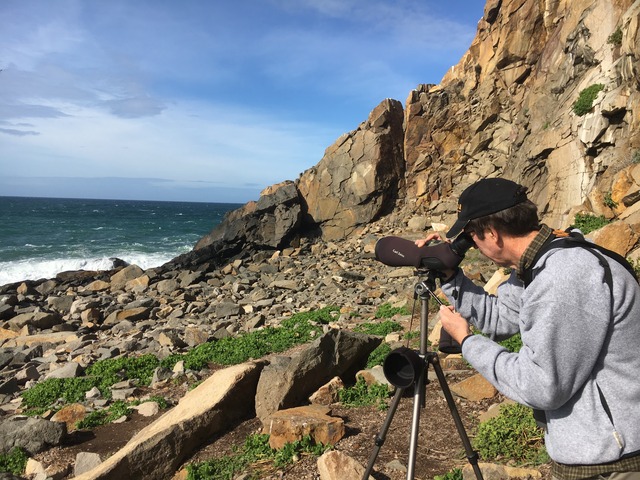
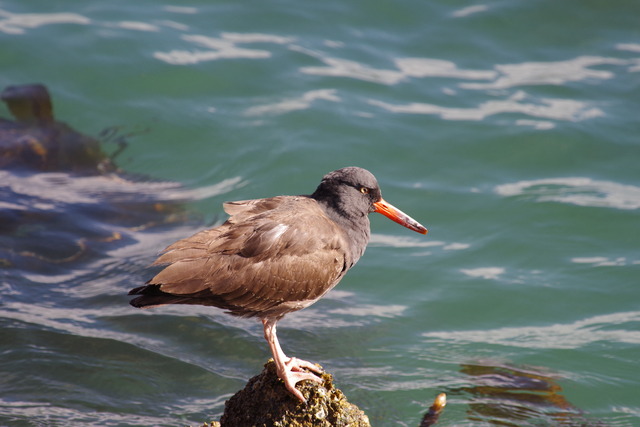
The last week in November I went to Los Osos, California to see my friend Jim who lives there. The main reason was actually because my son should do some internship there for a couple of weeks and needed my assistance to get there. As Jim had a normal working week, we didn't bird together more than a few days. My first day was a Sunday though, so this day we birded around Los Osos. The day was quite windy and at Morro Rock we did some sea watching and saw many Loons, Ducks and Shorebirds. Here Jim scanning the sea and below a juvenile Black Oystercatcher.
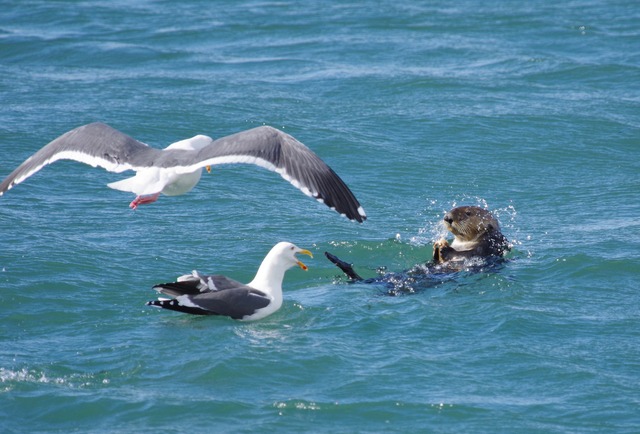
In the bay we saw some Gulls chasing a Sea Otter which had a clam on its breast, which was quite an amazing event.
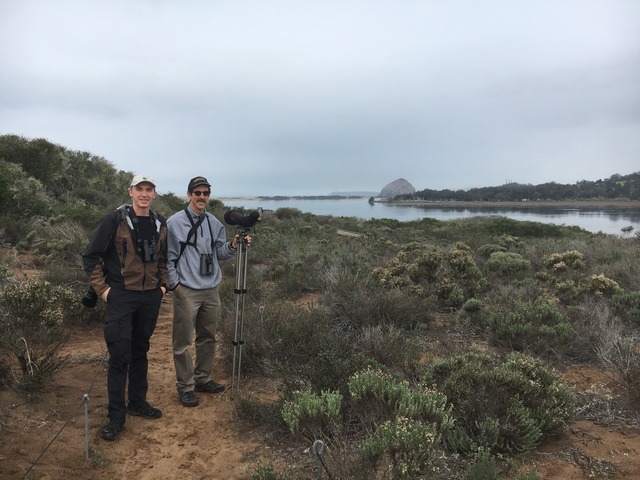
We then continued to the wetlands further in where we had good views of Bushtits and Am. Pipits, Cooper´s Hawk and also a wintering Hermit Thrush.
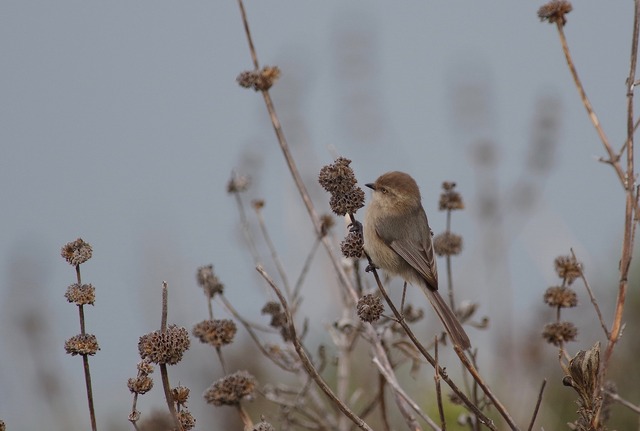
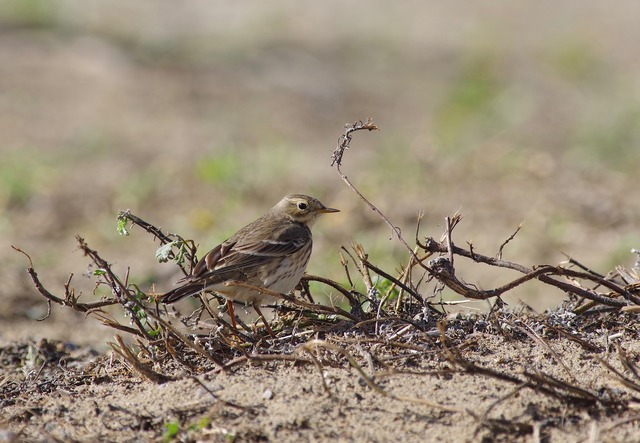
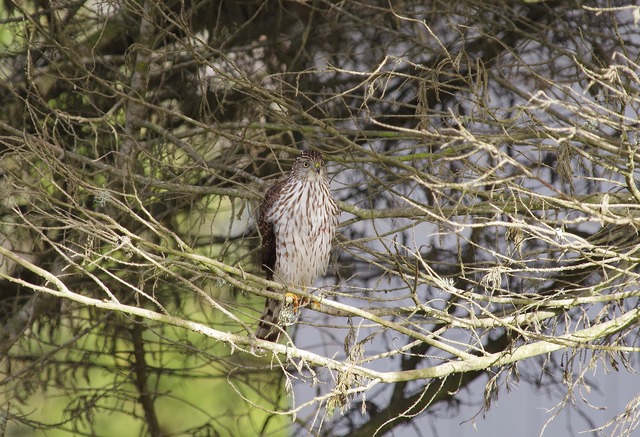

This area is full of birds and even if I have seem them all before it´s still very nice making acquaintance with all these birds. Here both Say´s and Black Phoebe, House Finches and a Northern Flicker.
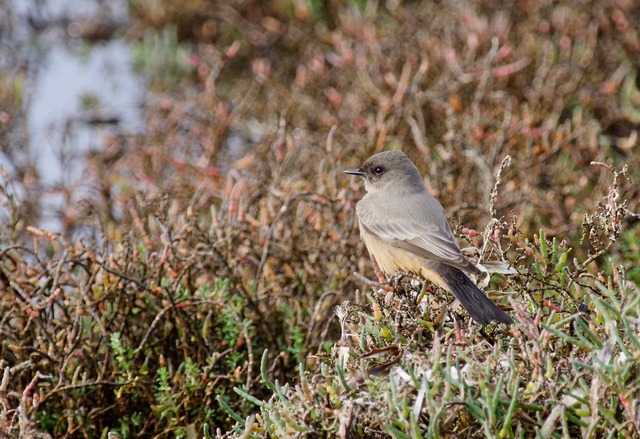
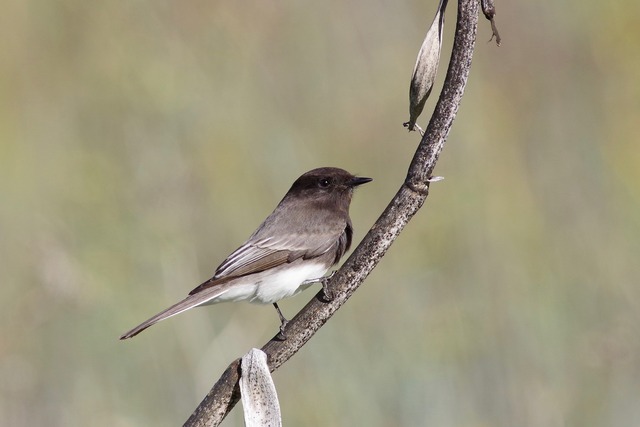
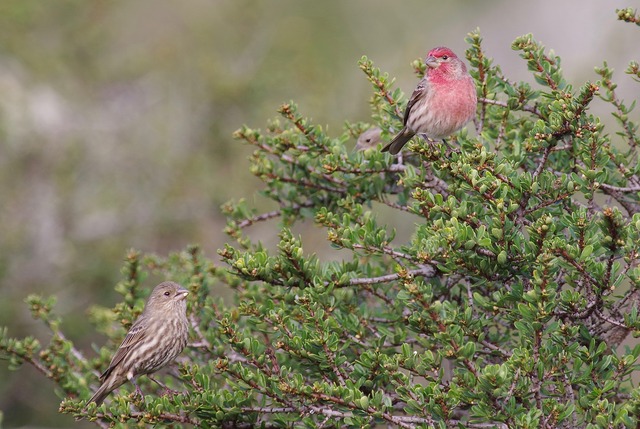
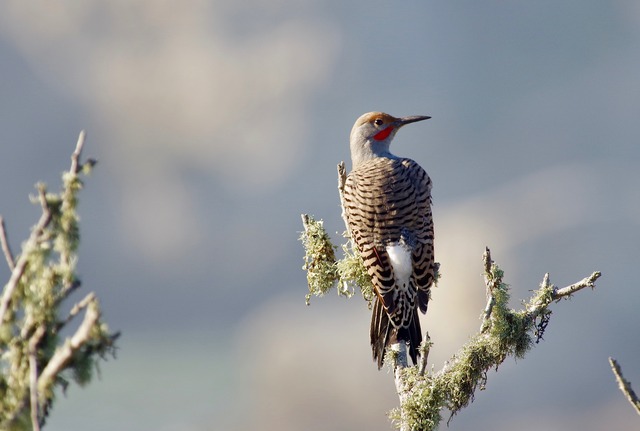
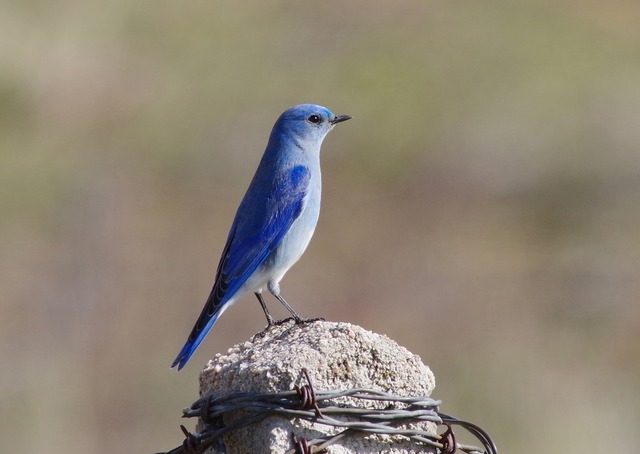
I also spent some time for myself which was great. The places I visited was almost deserted and I really enjoyed it. The first time I met Jim he took me to the Carrizo Plain which is a plateau a couple of hours drive from his home. Up here the landscape is steril but still holds lots of stunning birds. One of the first birds that showed up was the awesome Mountain Bluebird.
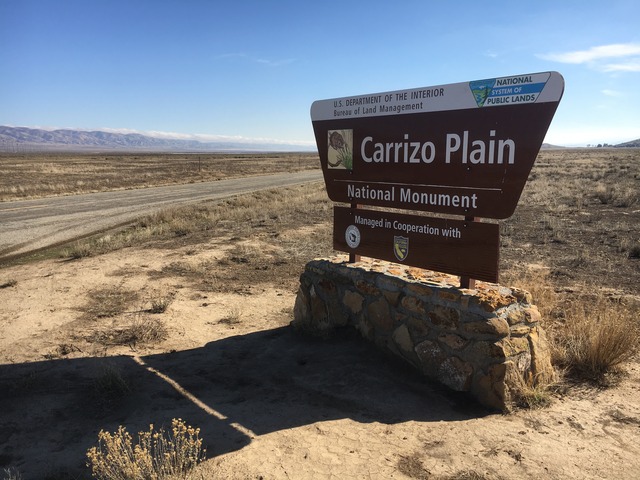
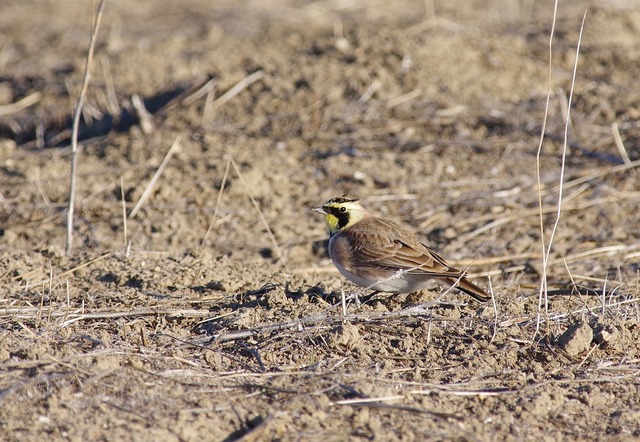
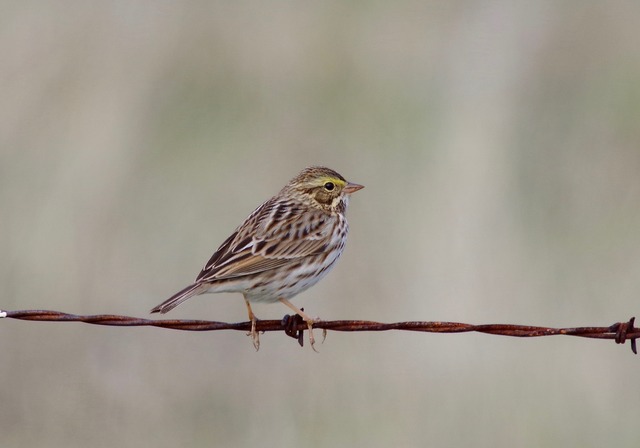
While taking photos of the Bluebird I realized the fields were full of birds. Hundred of Horned Larks were present and also different sparrows showed up. Here Savannah and the cute Lark Sparrow.

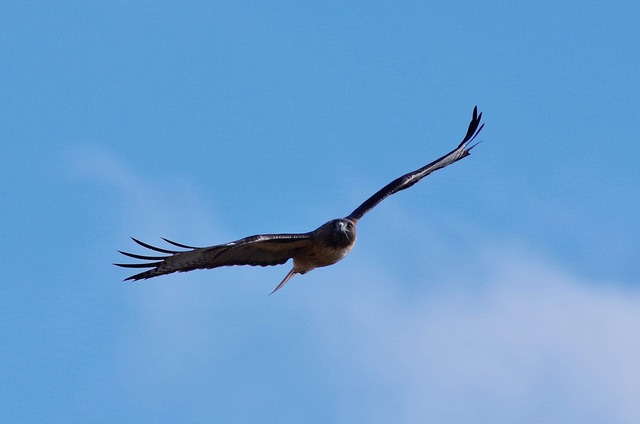
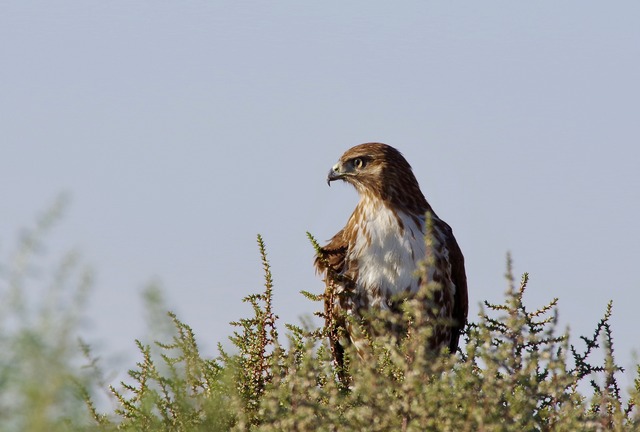
Also some raptors showed up and this Red-tailed Hawk seemed especially interested in me.
As you drive up here you will soon reach the salt lake (completely dry) where a specialty lives in the low brushes, the Sage Sparrow of which I was fortunate to see a family.

I searched in vain for Mountain Plover, which I saw last time here but many other birds showed well as this Ferruginous Hawk which together with the feeling of chosen loneliness ended a fantastic day
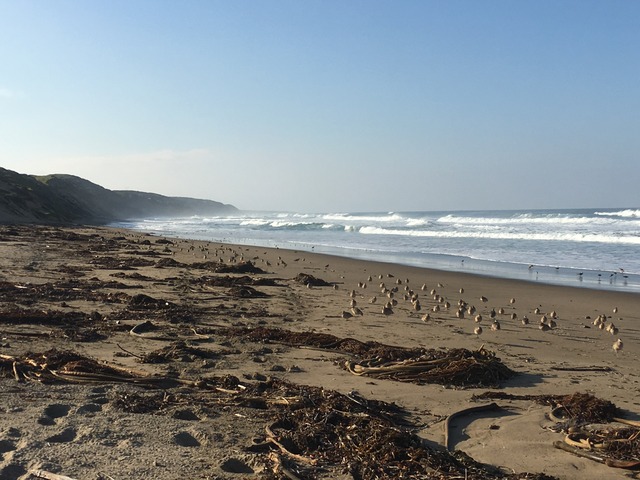
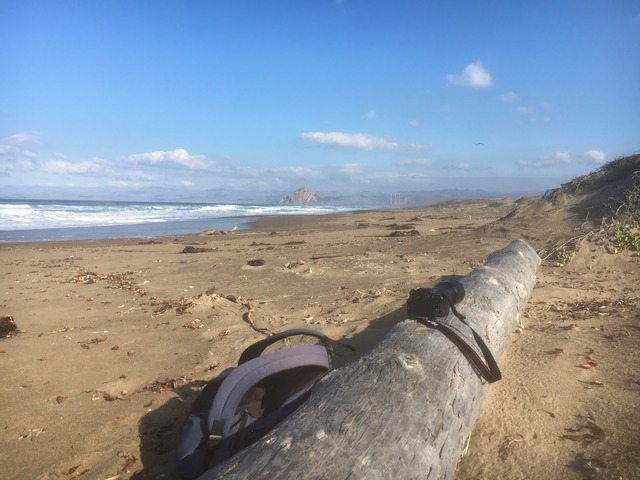
Next day I planned to walk the spit all the way to the jetty at Morro Rock. From the parking this is a very strenuous walk (I didn't´t understand how far it was until I reached the jetty). However, knowing I had good chance of seeing a Black Scooter (which has been observed earlier) in good light together with the knowledge of hundreds and hundreds of shore birds made it an easy choice. As you can see on the first photos they were plentiful and I had 7km of beach all for myself (talk about being privileged). You see the silhouette of Morro Rock at the horizons.
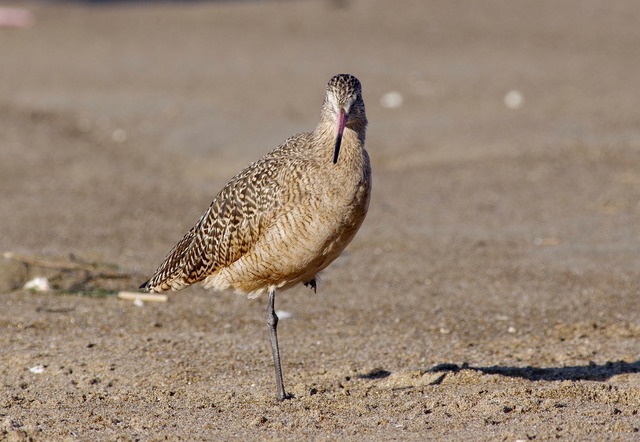
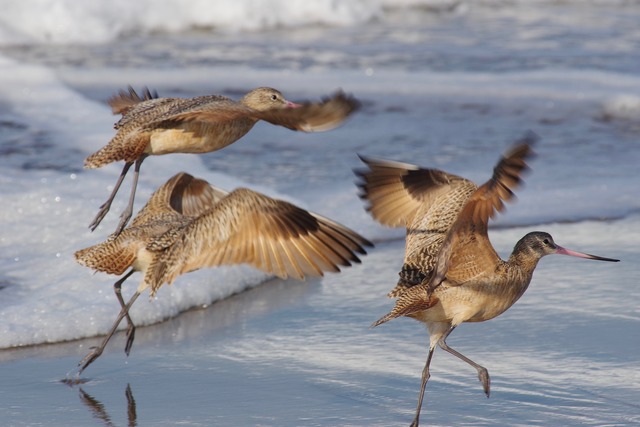
As shore birds are one of the groups of birds you like the most, this is just paradise. Long-billed Curlews and Marbled Godwits were plentiful and here I have two photos with their "faces" straight towards me, which makes it a little bit confusing which one is which. The third picture showing some Godwits at "take of".
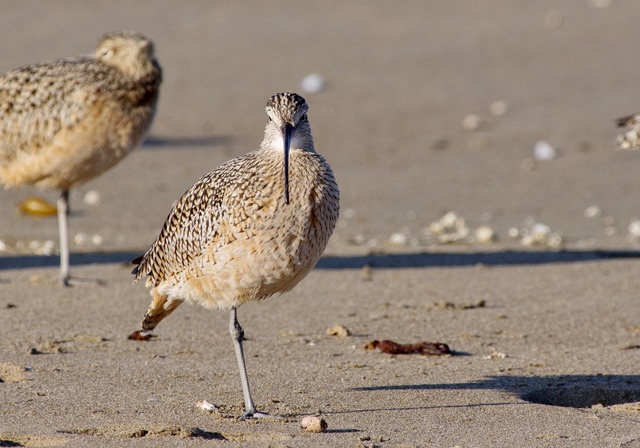
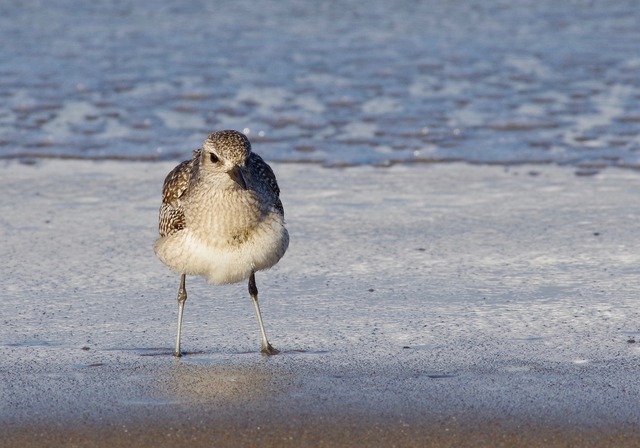
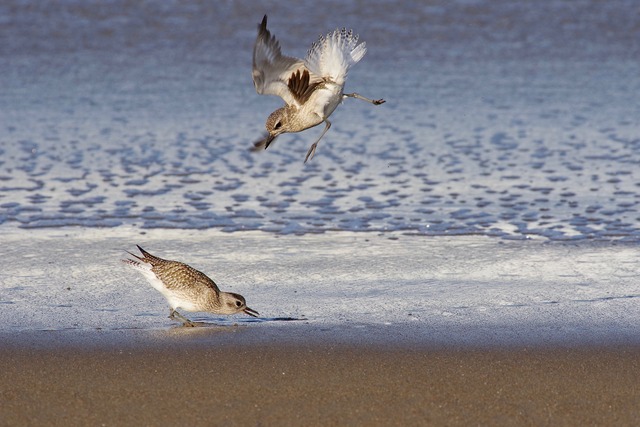
Not so plentiful but easy to see was Grey Plovers and Western Sandpipers.
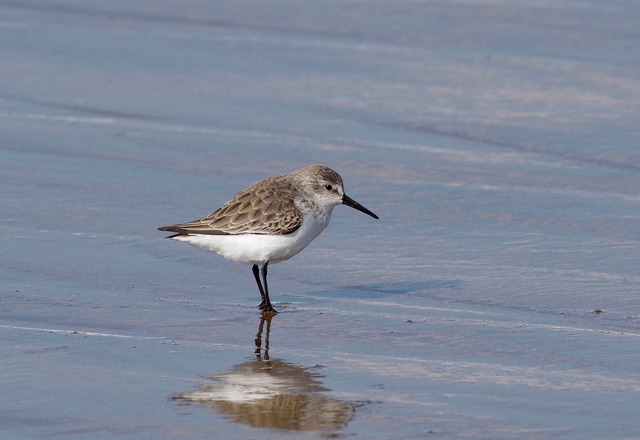
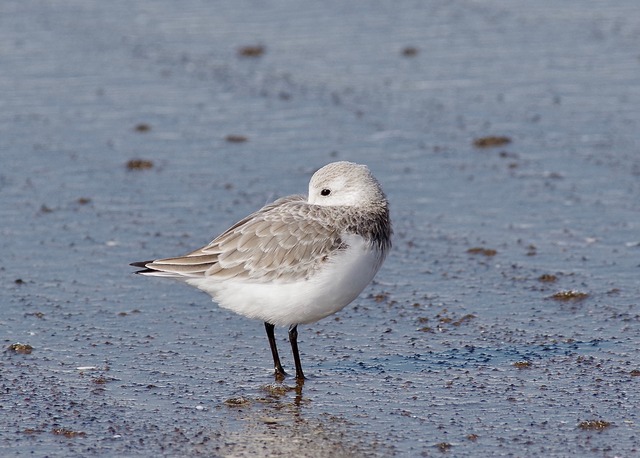
Even though the sanderling is more beautiful in breeding plumage they are very handsome in winter plumage looking almost as snow balls at the beach, here one alone sleeping.
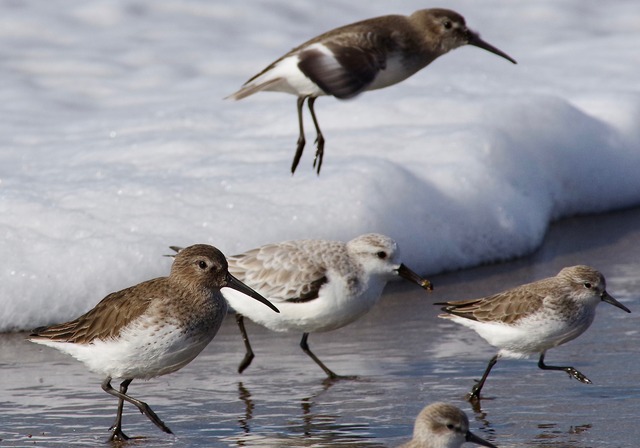
Next picture shows a Dunlin, Sanderling and a Western Sandpiper which in a way is educational.
Also present in small number was the Samipalmated Plover which resembles the Common Ringed Plover we have here in Europe.
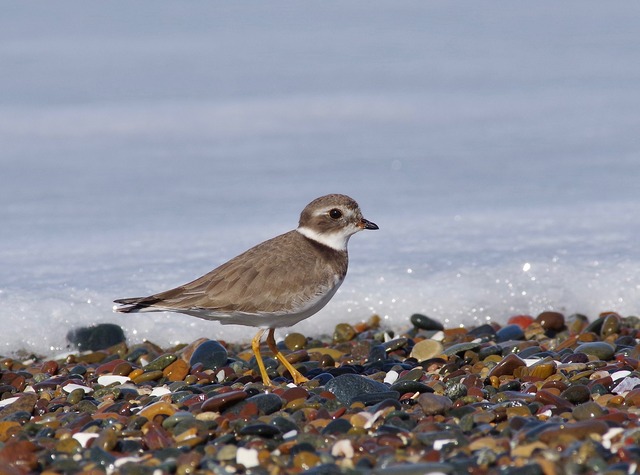
One of my absolute favorites is the Snowy Plover. The combination of the look and its peculiar behavior of running and "hiding" in small potholes when you approach is funny.
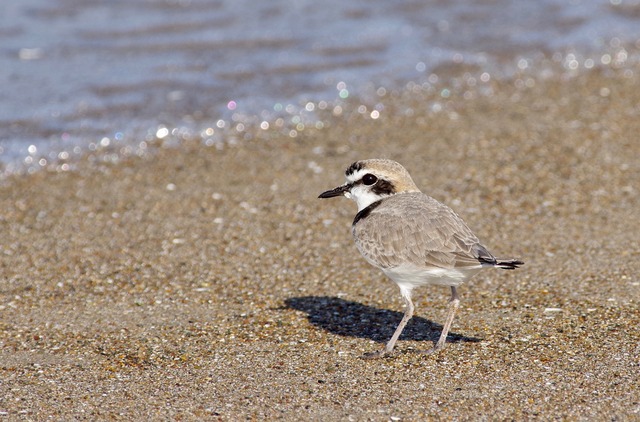
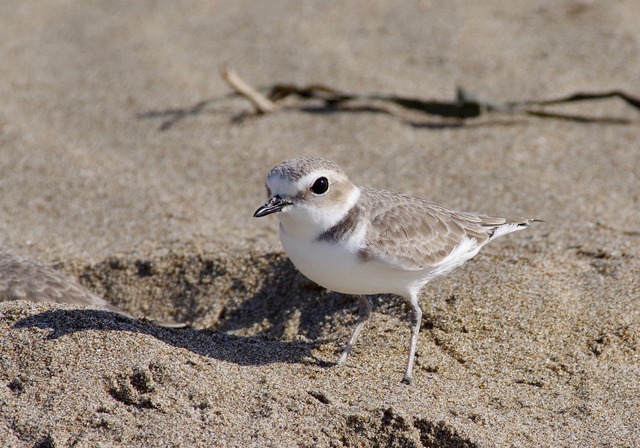
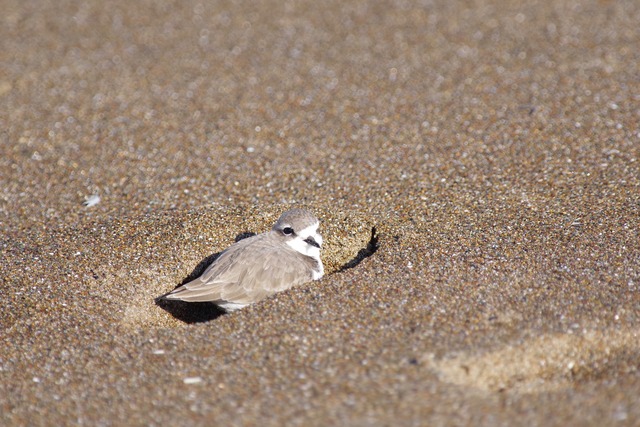
Turning my face towards the sea I saw many ducks and scooters and the Turkey Vulture patrolled the beach constantly.
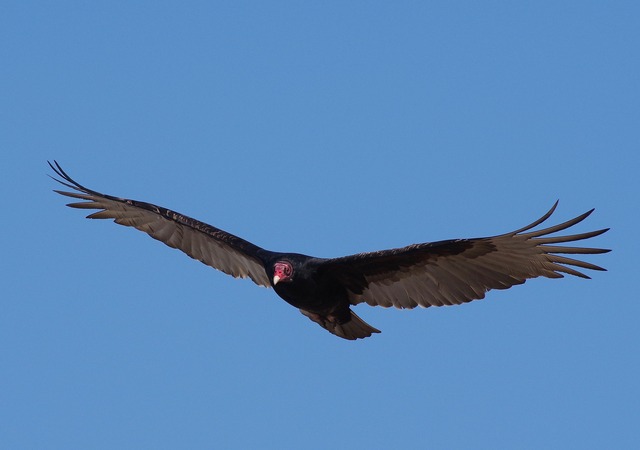
I was very tired but happy when I returned to my car. By the way, I saw the Black Scooter but it was too far out for a decent photo.
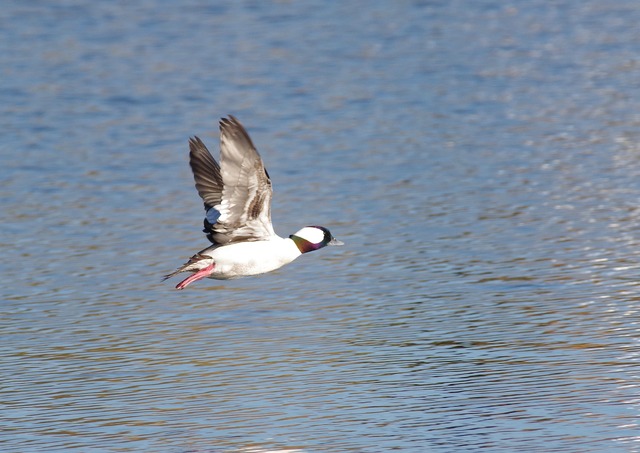
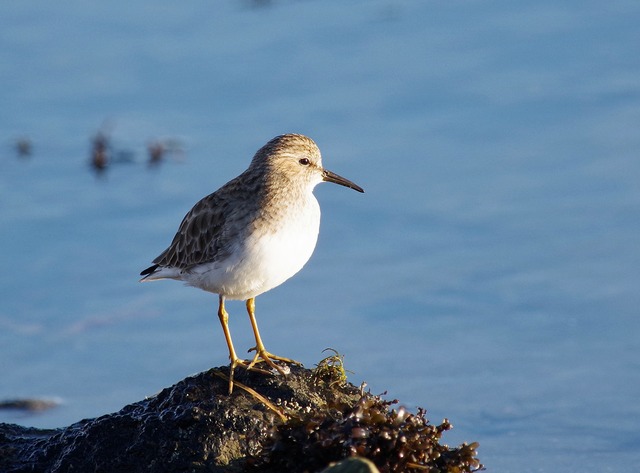
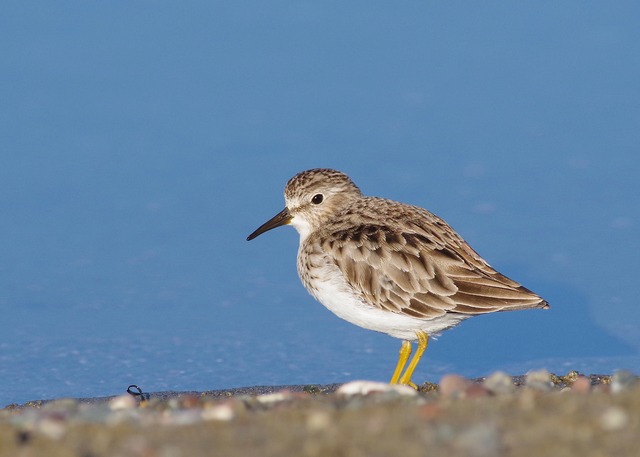
Next day I decided to drive north towards to the Elephant Seal colony at San Simeon. My first stop was San Simeon Creek Campground where I walked the beach for an hour. Again I saw many Snowy Plovers but also some Ducks and gulls like this stunning Bufflehead. While walking the spit I saw some Least Sandpipers but this individ was not taking much notice on me.
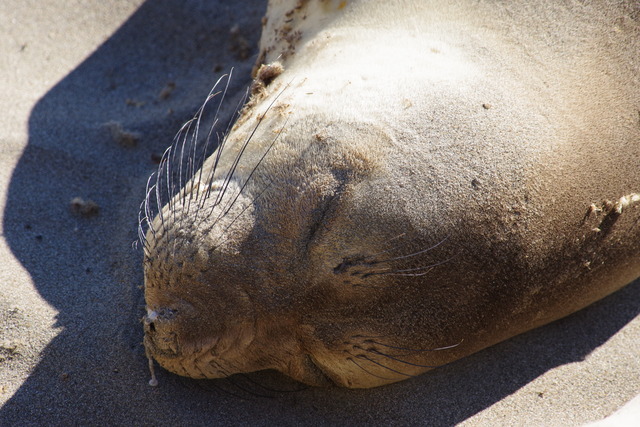
I´ve been at the seal colony a couple of times before but it´s a pleasure to see them every time. Quite a few this time of the year but many were sleepy.
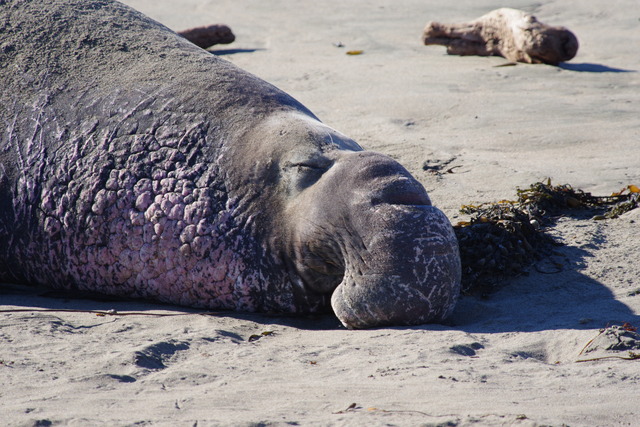
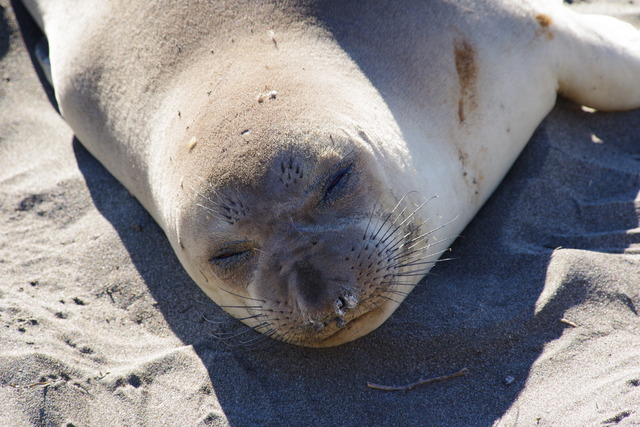
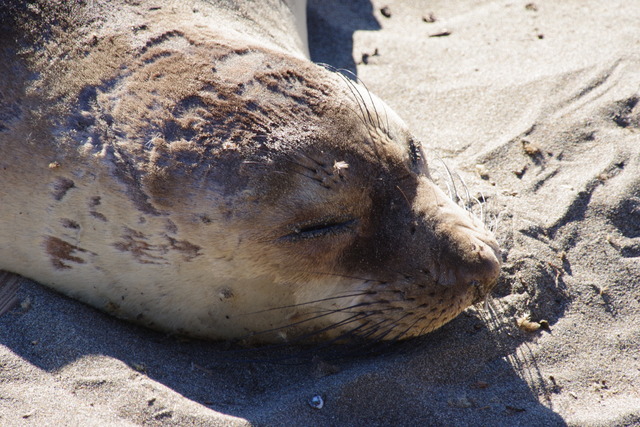
On the way back I stopped at Estero bay, Cayucos Point which is a splendid spot for "rocky shore birds". I had hoped to see wandering Tattler, which I only have seen briefly before, but no, the seems to be scarcer here than before. I saw one Surfbird and a group of Black Turnstones.
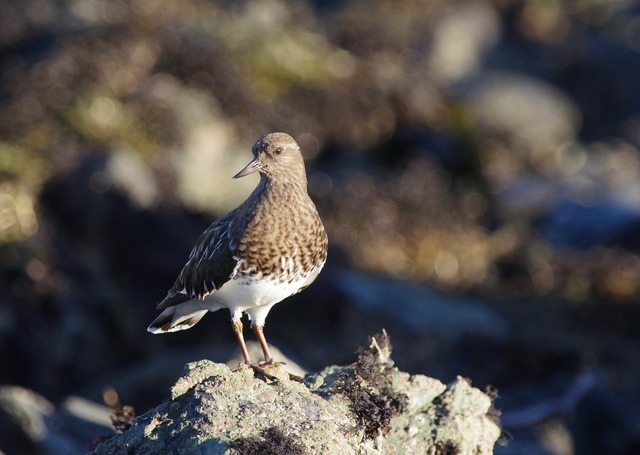
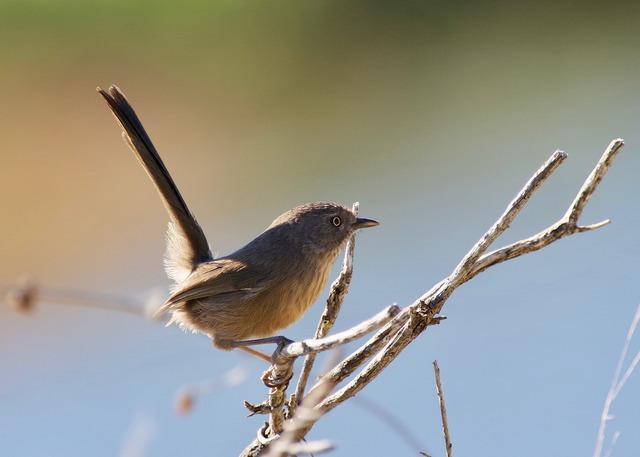
Next day Jim took a half day off and we drove to Avila Beach south of Los Osos. This is a very pleasant place I can recommend anybody to make a stop at. We were looking for a Red-naped Sapsucker that had been seen before but we had no luck. Normally quite secretive this Wrentit seemed to liked the sun which gave good opportunities for photos. Close by a Western Scrub Jay also enjoyed the sun.

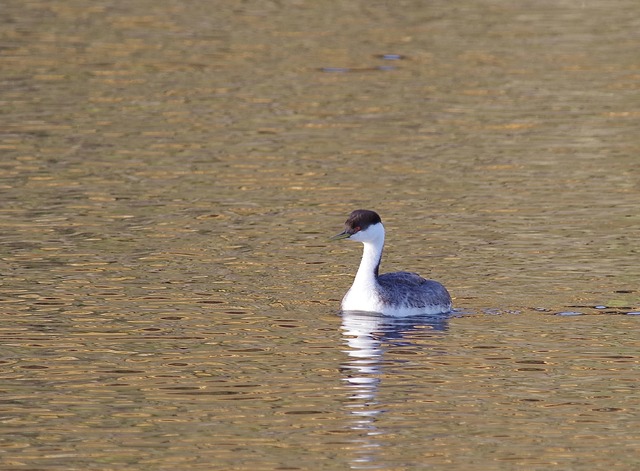
In a small inlet I saw this Western Grebe.
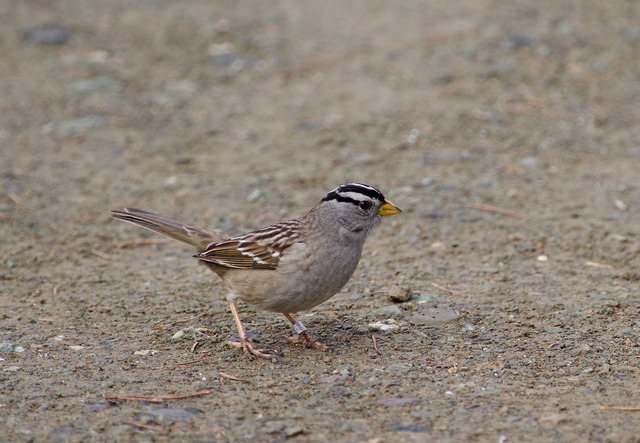
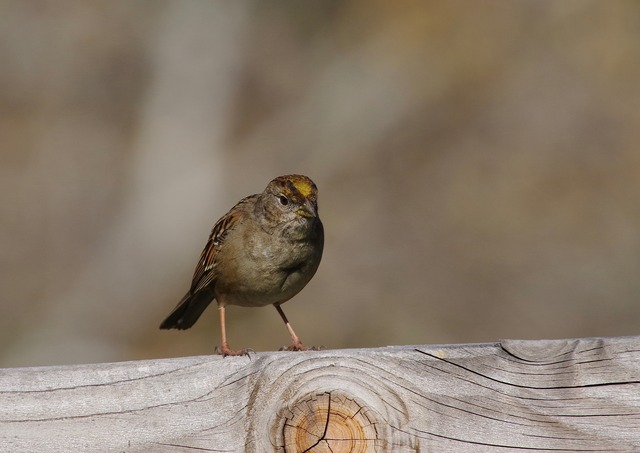
We also birded Spooner´s Cove just south of Los Osos and saw some common but nice birds like these White-crowned Sparrows (ad + 1:st winter) and the Golden-crowned Sparrow which winters here.

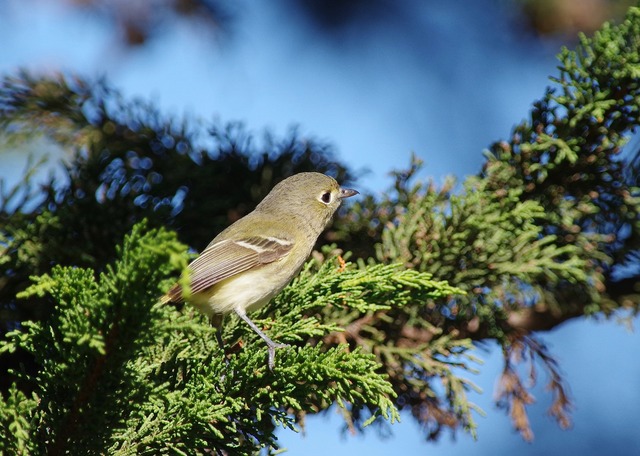
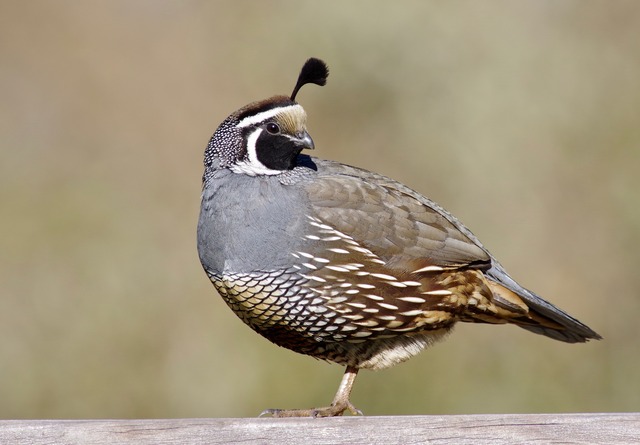
Some more birds that enjoyed the heat of the sun was this Common Yellowthroat, Hutton´s Vireo and California Quail.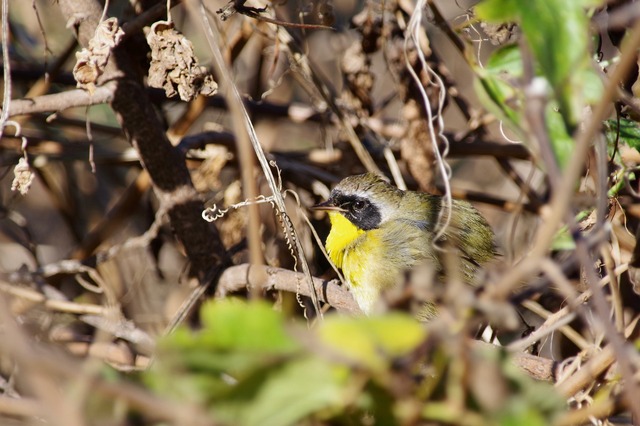
I had a fantastic week and I pass my best regards to Jim and Celeste for their outstanding hospitality.
United Arab Emirates 12 & 14
This blog gives you an idea of what to expect if you travel to this small but very friendly and diverse country. The cities of Dubai and Abu Dhabi are ultra modern and give people lots of opportunities of shopping, entertainment and the tallest building in the world, the 830 meters high Burj Al Khalifa which can be seen on the picture below. This country is also very beautiful and the beaches and desert areas are just great (which I think not many visitors have realized). I´ve been here twice, 2012 and 2014 and seen both cities but also traveled outside these to the city of Al Ain, the mountain at Jabel Hafeet and to the very beautiful desert around Liwa. Liwa is actually the easiest place on earth to visit great (red) sand dunes. A few nights we stayed close to Dubai airport and the views from the hotel roof was very impressive.

When we drove out to Al Ain and stayed at a hotel at the top of Jabel Hafeet and the vistas from here were also beautiful but in an other way. Here you can see the border to Oman on the left and my birding area here to the right.
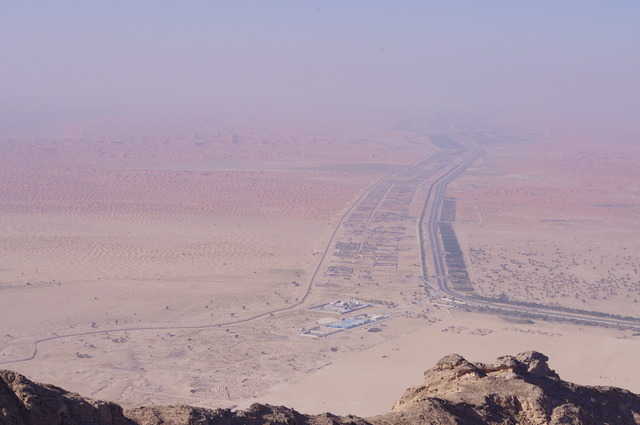
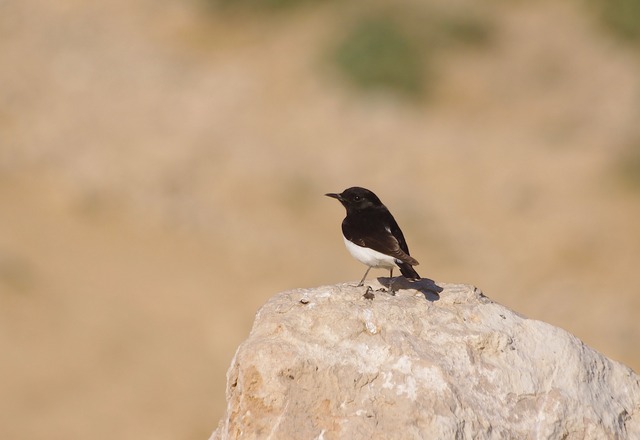
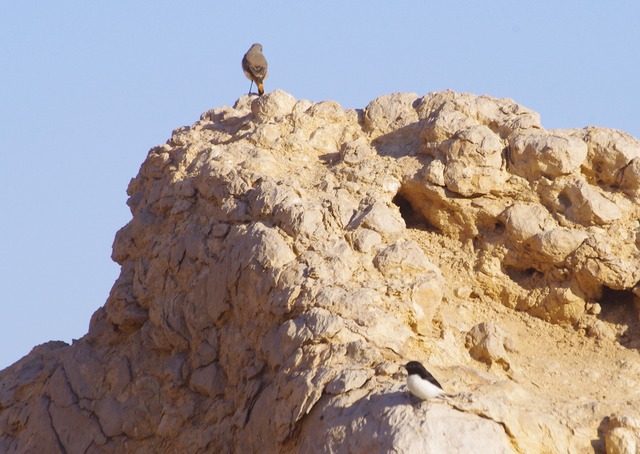
In this desert like habitat I saw the very much sought after Desert Warbler and some Wheatears. A little bit to the right at the photo above is the very good birding area of Green Mubazzarah. Here they have made a garden like recreation area which attracts lots of birds. Here I saw 3 different species of Wheatears. This male of Hume´s Wheatear and also the picture with the same bird together with a Red-tailed Wheatear.
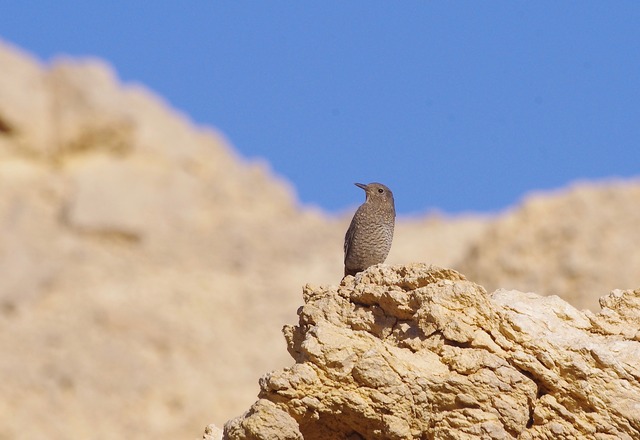
Also reliable here is the Blue Rock Thrush, here a (brown) female.
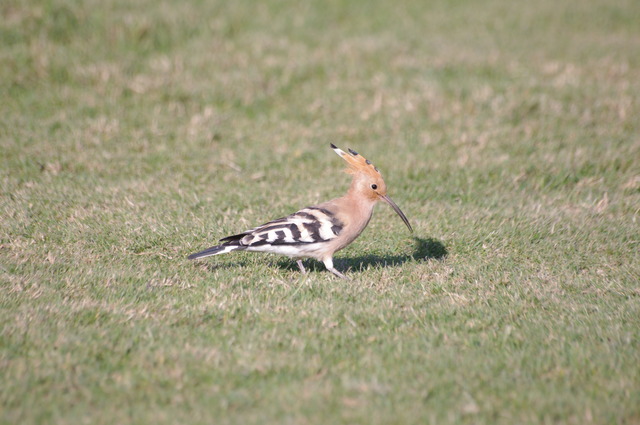
Where the grass was plentiful you will easily see birds like Hoopoe, Indian Roller and the Red-wattled Lapwing.
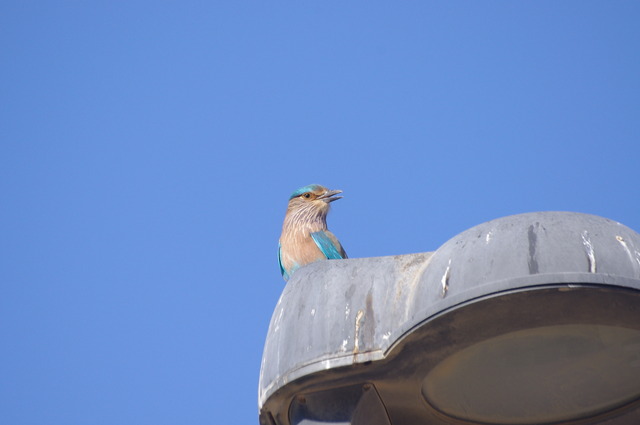
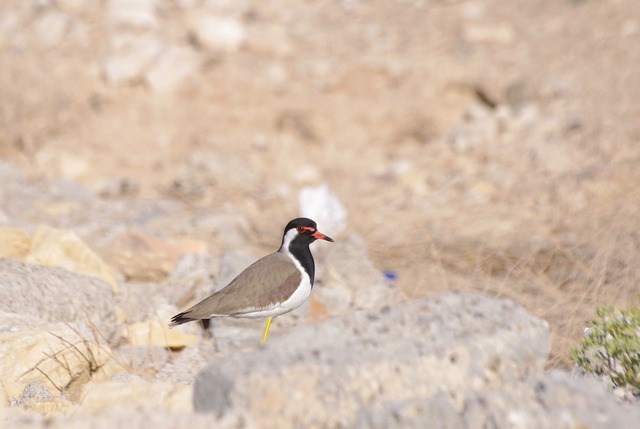
At the stony slopes I found a family of Desert Larks which has a good look despite it lacks colors.
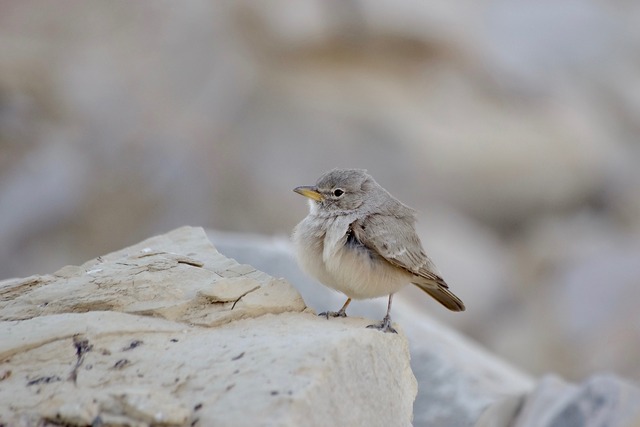
This is how it looks from the other side.
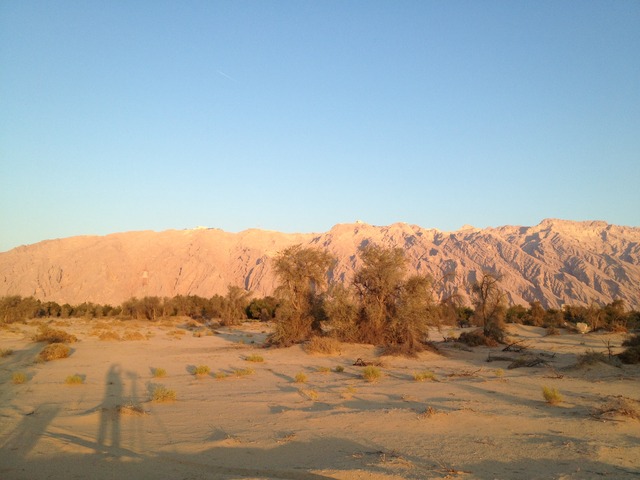
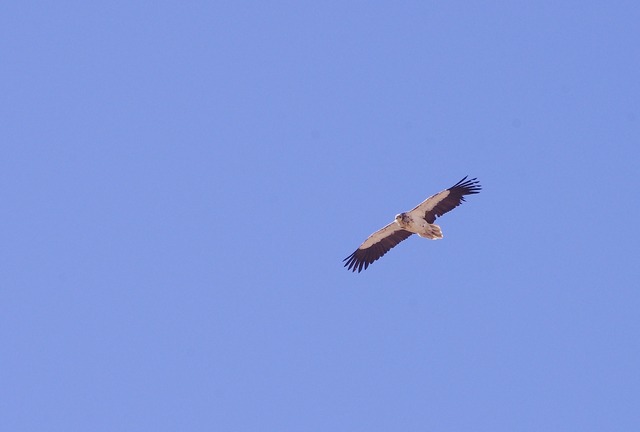
If you continue to the "top" of Jabel Hafeet you will come to a big parking area with a restaurant. Here is a good spot to see the Striolated Bunting as well as the Egyptian Vulture if you look up instead of on the ground.
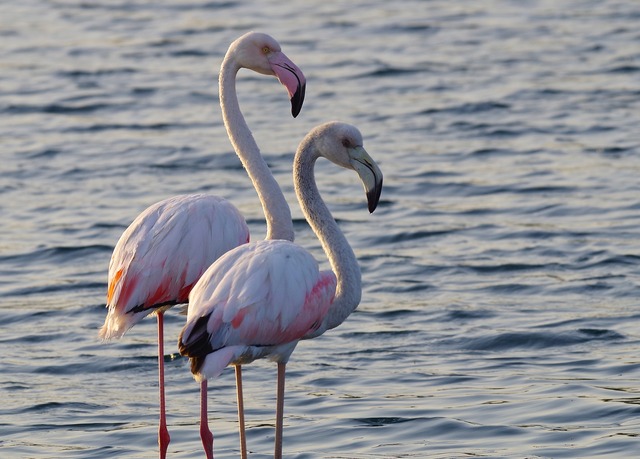
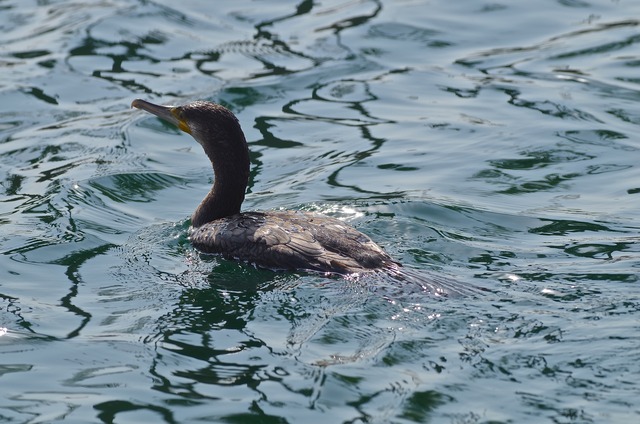
As I´m also an avid golfer I often try to visit some courses during my trips. Actually you sometimes see birds at the golf courses that might be quite difficult to see elsewhere. Here you can see Greater Flamingos, Socotra Cormorant, Egyptian Goose and Common Sandpiper which were easily seen at the famous Abu Dhabi Golf Course.
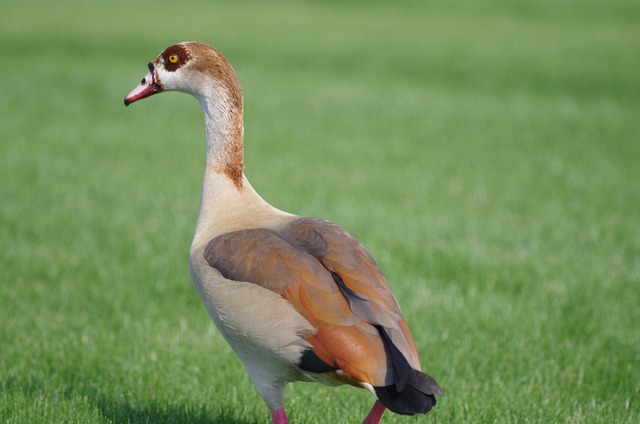
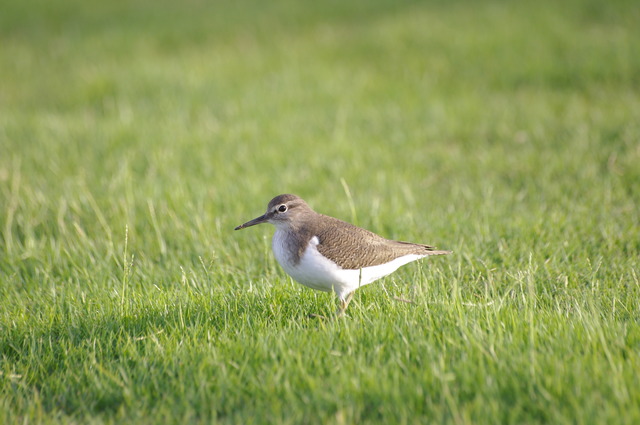
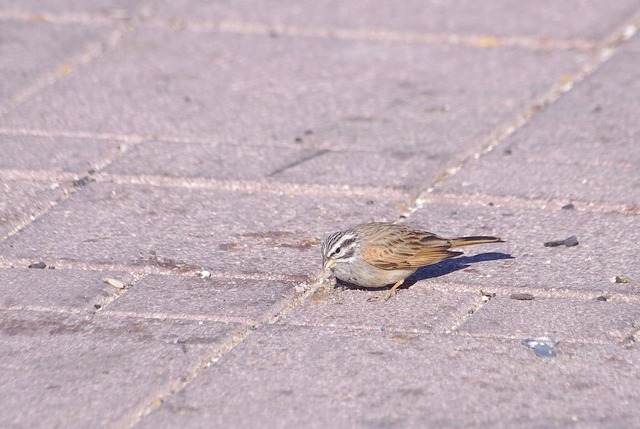
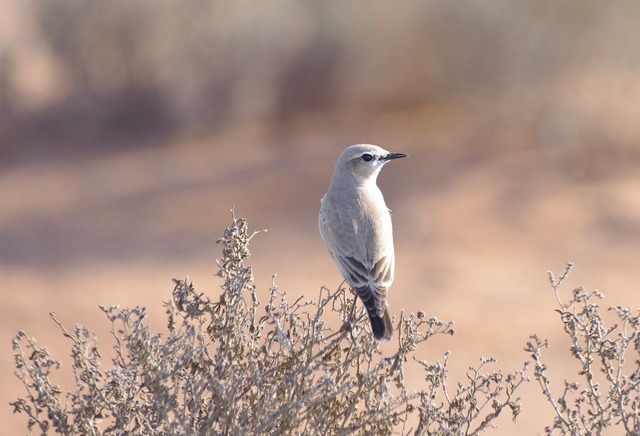
At the golf course at Al Ain I had to jump out of the buggy and take a photo of this "classic beauty" Isabelle Wheatear.
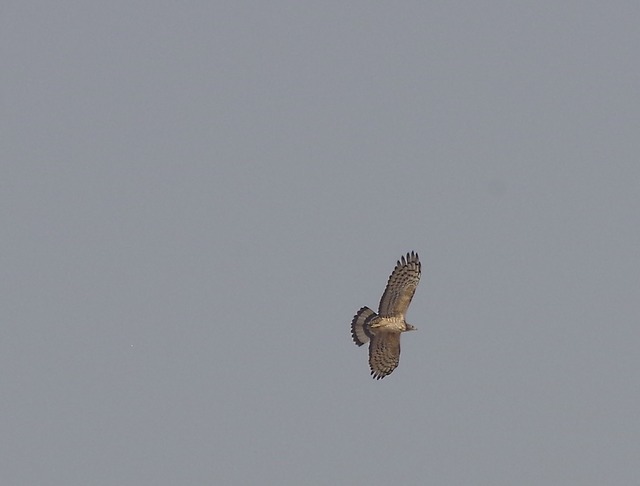
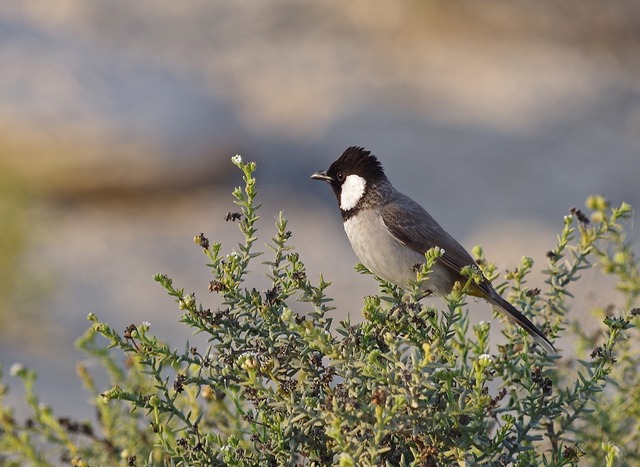
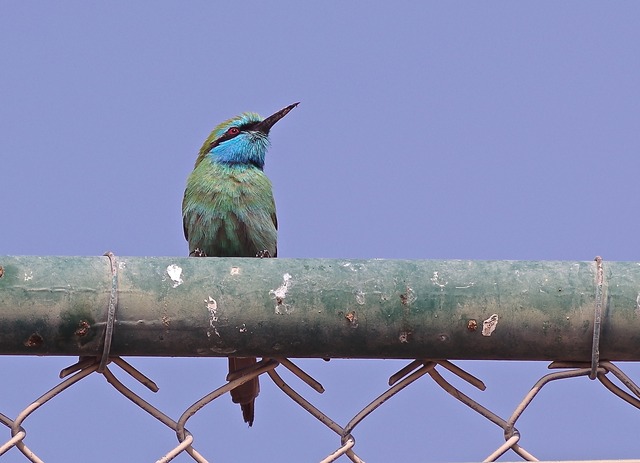
In Abu Dhabi I had a good and unusual experience. I played some golf at the "sand course" Al Ghazal, which is close to the airport and here I again saw some very nice birds like this quite difficult Crested Honey Buzzard as well as the common White-eared Bulbul and the awesome Green Bee-eater.
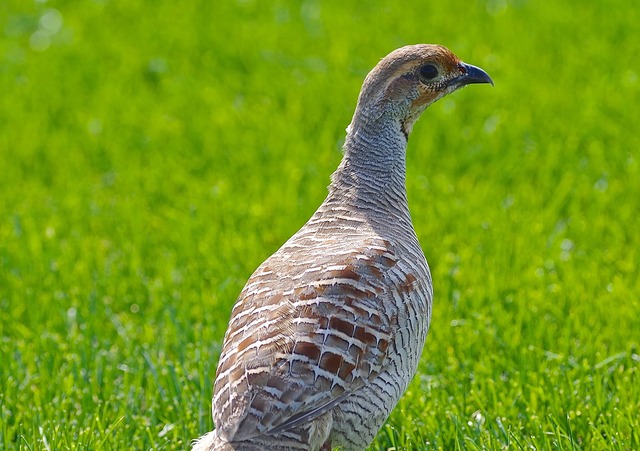
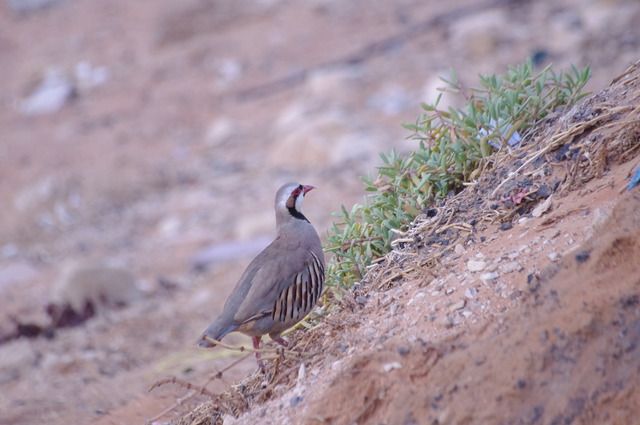
Easily seen in some parks was this Grey Francolin as well as the abundant Chukar Partridge.
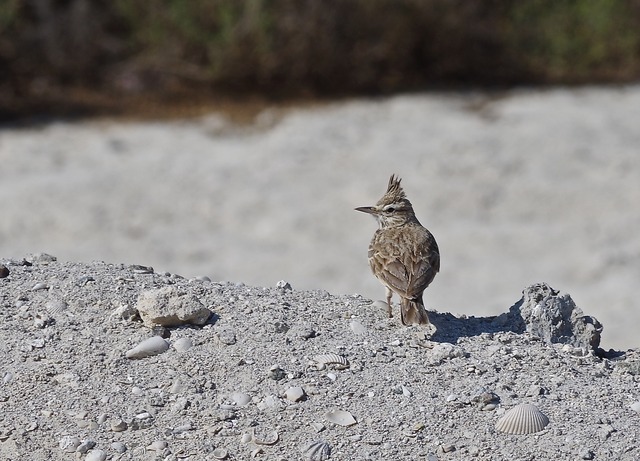
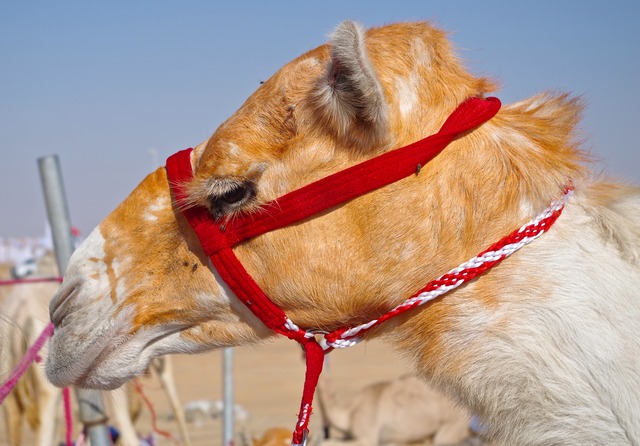
As I drove into the more sandy and desert-like habitats I saw many Crested Larks as well as as this cute Camel at a local festival.
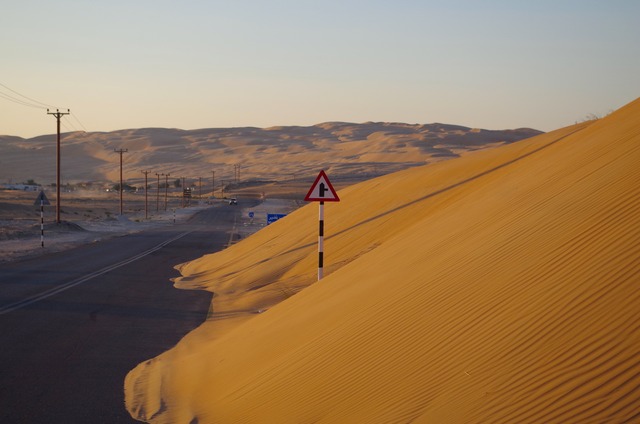
If you are interested in nature at all, make sure you take some routes outside the famous city areas and experience some nice views like this sand dunes close to Lisa Desert.
A country of many images, go there if you can!
Birds seen on both trips.
Birds
- Egyptian Goose . Quitecommon at Abu Dhabi golf course.
- Mallard. Quite common
- Northern Shoveler. 3 at Al Ain golf course.
- Green-winged Teal. & at Al Ain golf course.
- Chukar. 3 birds in the surroundings of Mercure hotel.
- Gray Francolin. 1 bird only at Ras al Khaimah golf club.
- San Partridge. Common at golf courses, Green Mubazzarah and gardens.
- Little Grebe. 3 birds Al ain golf club and 4 at Abu Dhabi GC.
- Greater Flamingo. Several hundreds seen along the coast but also seen at Abu Dhabi GC.
- Seen both at the coast in smaller numbers but also at some golf courses.
- Grey Heron. Not uncommon.
- Little Egret. A few single birds seen at some golf courses.
- Western reef Heron. Not uncommon along the coast.
- Cattle Egret. 5 at Al Ain golf club.
- Striated Heron. One bird at the harbor of Abu Dhabi.
- Black-crowned Night Heron. 4 birds at Al Ain golf course.
- Sacred Ibis. One single bird at one of the shores I stoped at.
- Egyptian Vulture. 2-3 birds seen at the top of Hafeet Mountain.
- Oriental Honey Buzzard. I was lucky to see one bird well at Al Ghazal golf club when it came soaring low over me.
- Steppe Eagle. 2 birds. One at Al Ghaxal golf course and one at Al Wathba water treatment.
- Eurasian March-Harrier. One close to Ras al Khaimah and one at Abu Dhabi GC.
- Sparrowhawk. Just one seen Ras al Khaimah.
- Eu. Moorhen. A few in ponds at golfcourses.
- Eu. Coot. Same as above.
- Red-wattled Lapwing. Common at golf courses. Also at Green Mubazzarah.
- Black-bellied Plover. +10 along the shores.
- Pacific Golden-Plover. A flock of 15 next to Al Ghazal Golg course.
- Lesser Sand-plover. Common along the shores.
- Greater Sand-plover. Just a few identified. Probably common as I saw thousands of plovers at a far distance.
- Kentish Plover. Common.
- Common Ringed Plover. A few single birds spread out.
- Crab Plover. Totally 7 birds seen at to different stops along the coast.
- Eu. Oystercatcher. +10 birds throughout.
- Terek Sanpiper. About 10 birds identified.
- Black-winged Stilt. Quite common at the golf courses.
- Common Sandpiper. A few birds at many locations.
- Green Sanpiper. 1 single bird identified.
- Common Greeshank. A few birds throughout.
- Common Redshank. Quite common.
- Marsh Sanpiper. Just one bird identified.
- Whimbrel. 2 birds identified.
- Eu. Curlew. Common.
- Bar-tailed Godwit. Quite common.
- Ruddy Turnstone. +15 birds seen.
- Little Stint. 2 birds identified.
- Dunlin. +100 birds seen.
- Slender-billed Gull. 3 seen at a stop at abeach.
- Pallas´s Gull. Eventually and very surprisingly I saw one bird at a lake at Al Ain golf course.
- Caspian Gull. A few birds identified. Probably overlooked.
- Gull-billed Tern. A few birds throughout the shore.
- Black-headed Gull. Very common.
- Whiskered Tern. Likes golf couses where I saw + 20 in total.
- Great Crested Tern. 3 birds seen at the shore of Ras al Khaimah.
- Rock Pigeon. Yes.
- Eu. Collared-Dove. Common.
- Laughing Dove. Common.
- Pallid Swift. Not uncommon.
- Green Bee-eater. A few birds at every golf course. A few at Green Mubazzarah.
- Indian Roller. Prefers golf courses and Green Mubazzarah.
- Eurasian Hoopoe. As with the Bee-eater and the Roller.
- Eu. Kestrel. A few single birds throughout.
- Rose-ringed Parakeet. A few flocks around Abu Dhabi.
- Southern Grey Shrike. Again, golf courses and Green Mubazzarah. Also Dubai investment park.
- Masked Shrike. One bird seen close to Dubai investment park.
- House Crow. Common.
- Desert Lark. A flock of 10 was around Green Mubazzarah close to the gorge. My 2000th bird worldwide.
- Gr. Short-toed Lark. One bird seen close to the shore of Ras al Khaimah when I was scanning for waders.
- Crested Lark. Common in suitable habitat.
- Rock Martin. Seems to like swimming pools close to the city. Seen while swimming at 2 different hotels.
- Red-vented Bulbul. Uncommon, seen with a few birds at Green Mubazzarah and one single bird in tree close to the shore of Ras al Khaimah.
- White-spectacled Bulbul. Not uncommon at Green Mubazzarah.
- White-eared Bulbul. Very common. A characteristic bird of the country.
- Graceful Prinia. Not uncommon near reeds and in smaller bushes.
- Small Whitethroat. 2 birds seen at Green Mubazzarah.
- Asian Desert Warbler. A bird I really wanted to see. One eventually seen at sandy and bushy area next to Green Mubazzarah.
- Arabian babbler. A family of 5 seen at Green Mubazzarah.
- Bluethroat. I was quite surprised to see one at Al Ghazal golf course
- Black Redstart. Up to 6 birds seen around Mercure hotel. A few more seen throughout.
- Blue Rock Thrush. Up to 3 birds seen at Green Mubazzarah.
- Whinchat. 1 at golf course Ras al Khaimah.
- Hooded Wheatear. It took some time but finally I saw a male at Green Mubazzarah.
- Hume´s Wheatear. 100% more than Hooded. 2 males seen at Green Mubazzarah.
- Red-tailed Wheatear. 1 bird seen at Green Mubazzarah.
- Desert Wheatear. Totally 3 birds seen in suitable habitat.
- Isabelline Wheatear. Totally 3 birds seen at Golf courses.
- Common Myna. Yes, common.
- Purple Sunbird. Not uncommon but never seen in big numbers.
- White Wagtail. Common on grassy areas.
- Richard´s Pipit. Several seen on lawns throughout.
- Long-billed Pipit. 2 seen at a lawn with Richard´s.
- Water Pipit. Just one bird identified on a lawn. Probably overlocked.
- House Sparrow. Yes.
- Striolated Bunting. 2 birds at the top of Hafeet mountain (parking space).
- Indian Silverbill. Seen the last day on trip 2 in a small tree next to a shoppingcenter in Dubai investment park.
California February 10
One of my favorite bird groups are the shorebirds and I therefor decided to make a trip to California during winter with my 11 years old son. Many of the "rocky shorebirds" migrate south to California from the Canadian and Alaskan coast. Also the marine wildlife is different in species because of their movements. I made some request at Birding Pal and got good contact with Jim Royer from Los Osos. Jim is an avid birder which was highly appreciated both for knowing the best locations as well as what birds to find. Jim spent a few days with me around his neighborhood and then gave me directions for some good locations when my son and I birded alone. Just outside Los Osos are some excellent rocks by the shore and we easily found both Black Oystercatcher as well as Black Turnstone and (Surfbird).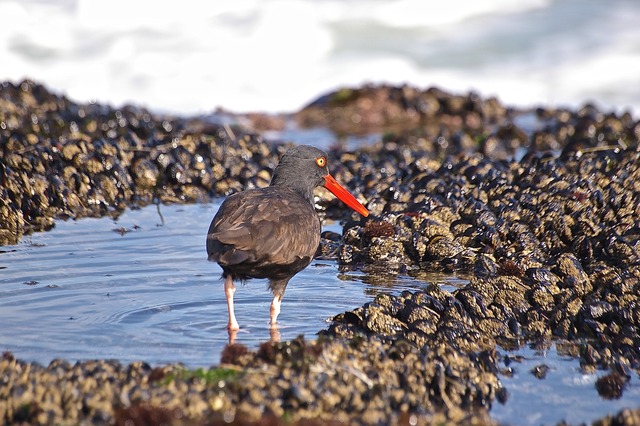

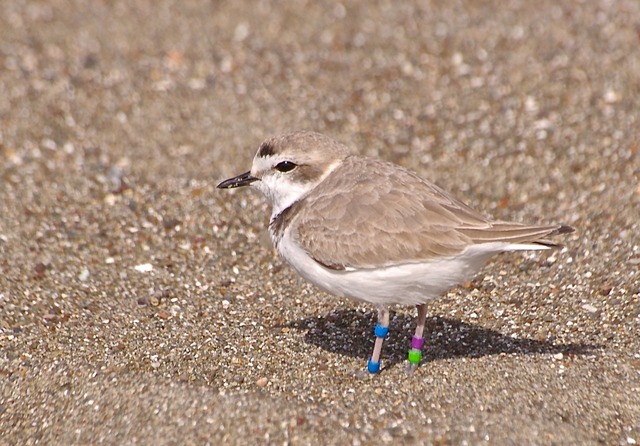
At a beach close by he showed us the very cute Snowy Plover as well as the tiny Least Sandpiper.

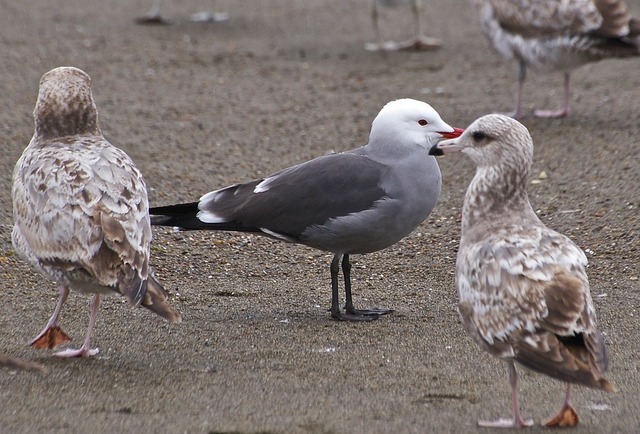
At this time of the year many, many gulls gather along the coast. Among all the more common ones we saw a few Heermann´s Gulls which is easily identified by its dark mantle and red bill.
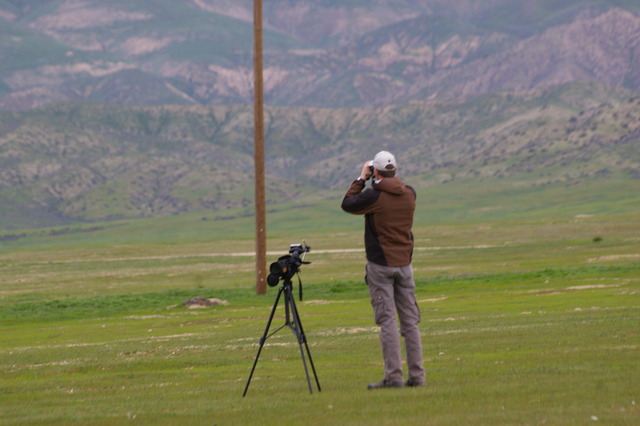
One day he took us up to the Carrizzo Plain where we spotted a very much sought after bird, the Mountain Plover. I could´t come near them for good photos but here you see me watching them at this excellent birding area. Here we also saw some of the more difficult species as Le Conte´s and Sage Thrasher (no photo).
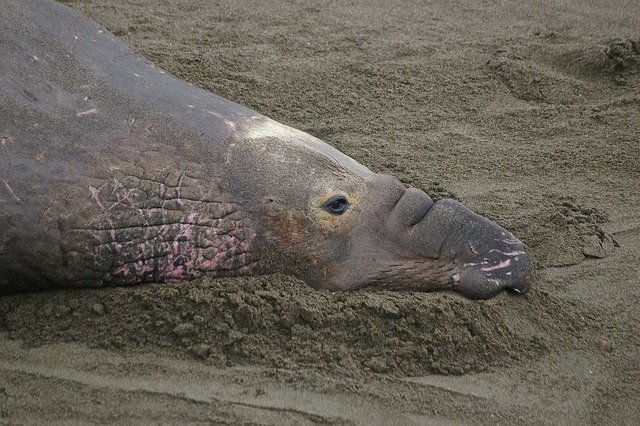
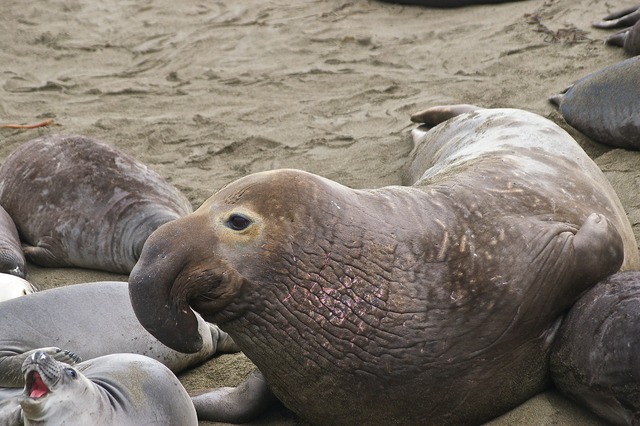
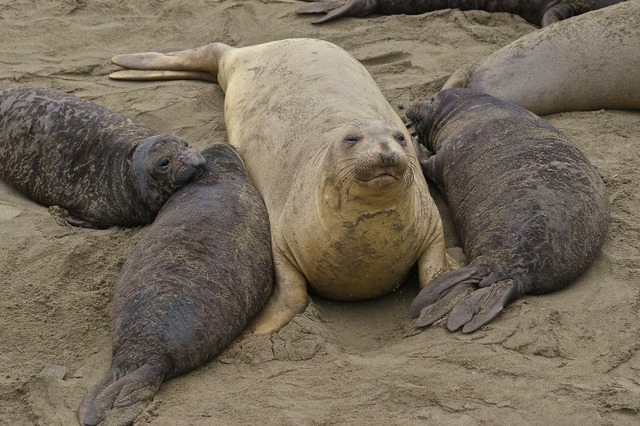
On the day we started to move north towards Monterey, Jim followed us in his car. The plan was to stop at San Simeon for the N. Elephant rookery. What amazing and odd looking animals. This place is just by the famous Highway 1 and definitely worth a stop. Our goal for the day was to try to sea one of the worlds biggest birds, the Californian Condor which survive with a few individuals further north. As we drove our hope decreased because the weather was not good, a mix of rain and mist. But for some reason the gods were with us and we saw one high up on a cliff with radio transmitters attached to it.
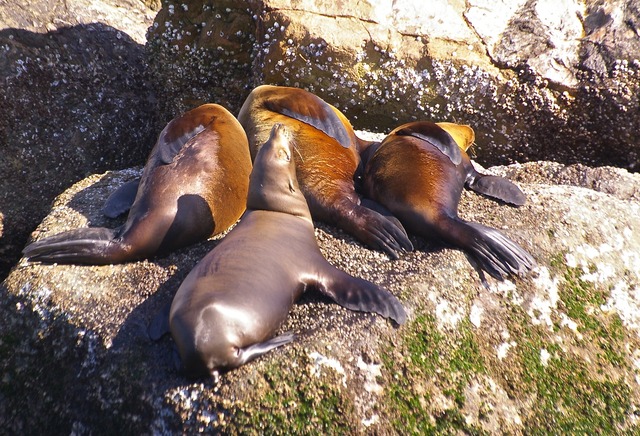
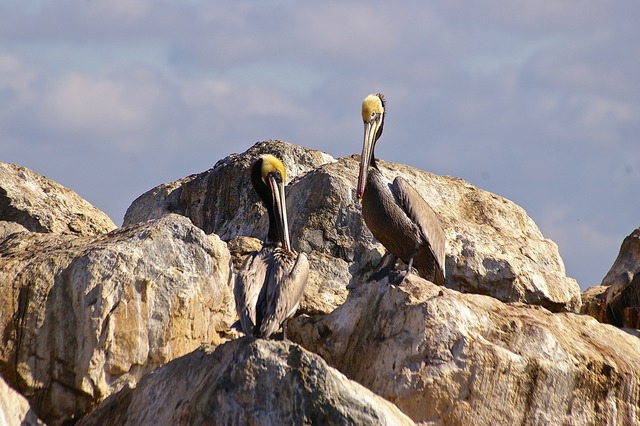
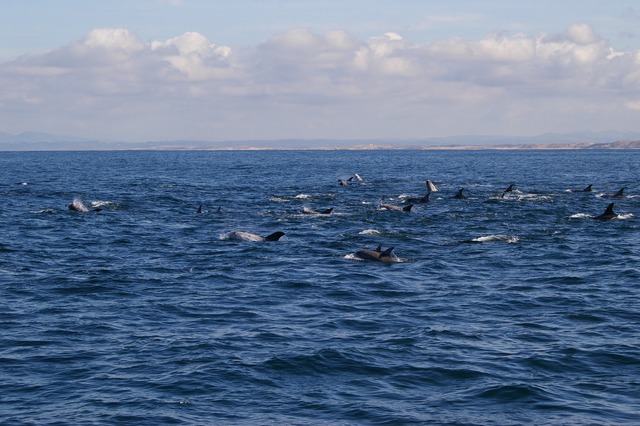
We arrived late to our motel for a good nights sleep. The next day we took a whale safari tour. At the harbor we saw many Californian Sea Lions and Brown Pelicans and just outside a big group of Risso´s Dolphins which has a different shape and profile compared to most other dolphins. Further out the sea was quite rough and I got sea sick. We saw some Grey Whales but not very close.

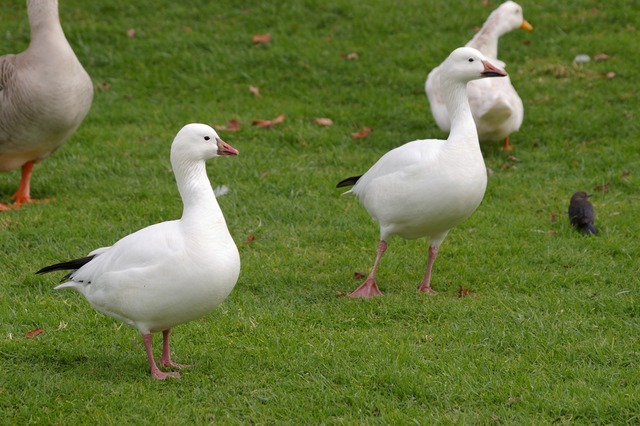
The last day we stopped at a small park half way back to L.A. Jim has told me we would have a good chance to see some geese and so we did. Not many were around but we still managed to see Ross´s and Snow (at the same photo, look at the different size of their bills) and Cackling Goose which now is considered a full species.
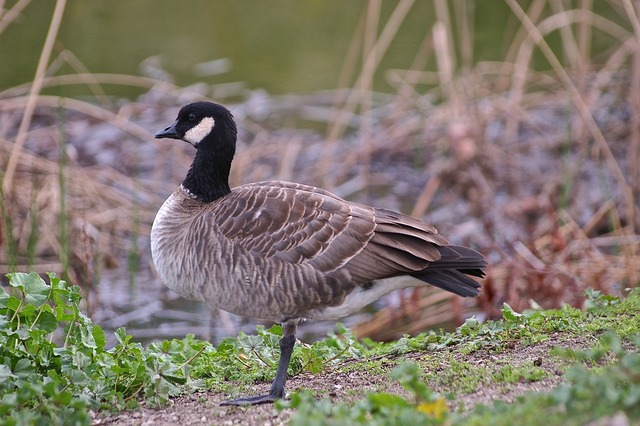
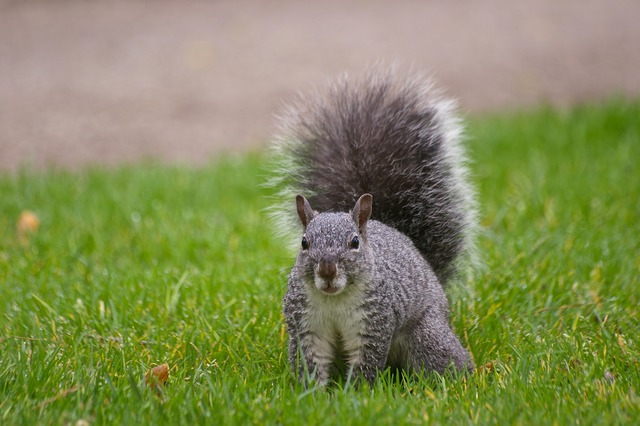
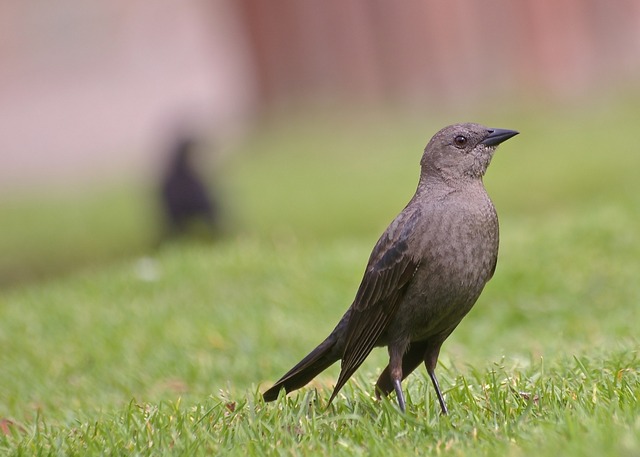
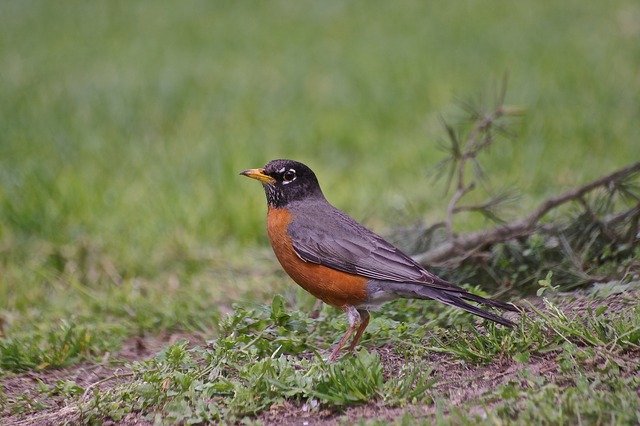
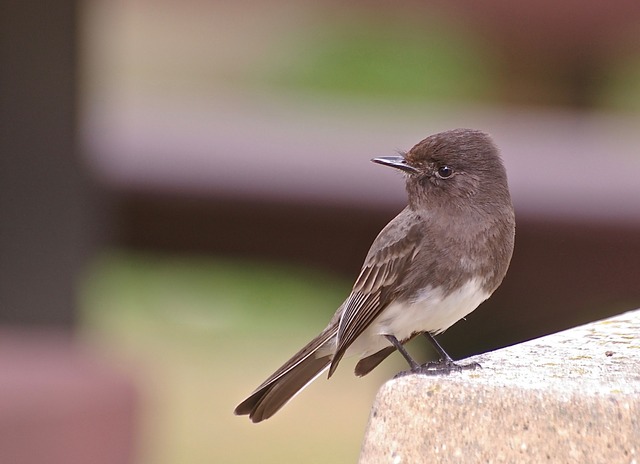
In this park there were also lots of Western Grey Squirrels and Brewer´s Blackbirds as well as the beautiful Am. Robin and Black Phoebe.
Full bird list of the trip.
Birds
- Snow Goose. One single bird seen at a recreational park in Santa Maria. Jim knew about the place.
- Ross´s Goose. One bird at the same spot as above. Good possibilities to see the different characters.
- Brant. 15 birds seen on one of the many beaches we visited.
- Cackling Goose. 2 birds seen inland Los Osos
- Gadwall. 3 birds different ponds Los Osos.
- Eurasian Wigeon. 10 birds as above.
- American Wigeon. Quite common.
- Mallard. Yes
- Blue-winged Teal. Common
10. Cinnamon Teal. Quite common.
11. Northern Shoveler. Totally 4 birds seen around Los Osos.
12. Northern Pintail. Totally 8 birds seen.
13. Green winged Teal. Common.
14. Lesser Scaup. A few at different places.
15. Harlequin Duck. One beautiful male seen quite close when we left the harbour at Monterey for a pelagic trip.
16. Surf Scooter. A few seen from beach.
17. Bufflehead. A total of 6 birds at two different locations.
18. Common Goldeneye. Quite common.
19. Hooded Merganser. 2 birds seen at Avila Beach.
20. Red-breasted Merganser. A few seen.
21. Ruddy Duck. As above.
22. Am. Coot. Quite common.
23. California Quail. Quite common around Los Osos.
24. Red-throated Loon. 3 birds seen from beach.
25. Pacific Loon. More numerous.
26. Common Loon. A few from beach.
27. Pied-billed Grebe. A total of 3 birds.
28. Eared Grebe. A few birds seen.
29. Western Grebe. About 10 birds seen from beach and around Los Osos.
30. Clarks Grebe. One bird seen together with westerns.
31. Am. White Pelican. 3 birds seen.
32. Brown Pelican. About 10 birds seen.
33. Brandt´s Cormorant. A few both Los Osos and Monterey.
34. Double-crested Cormorant. Common at both locations.
35. Pelagic Cormorant. 2 at Los Osos and a few more at Monterey.
36. Great Blue Heron. A few single birds close to water.
37. Great Egret. 2 birds around Los Osos.
38. Snowy Egret. In total 4 birds at different locations.
39. Turkey Vulture. Quite common.
40. White-tailed Kite. One single bird inland.
41. Northern Harrier. One bird at Carizzo Plain.
42. Red-shouldered Hawk. 4 birds in total
43. Red-tailed Hawk. Single birds throughout.
44. Ferruginous Hawk. 5 birds, mainly inland.
45. Golden Eagle. In total 4 birds seen at different locations.
46. Am. Kestrel. A few single birds.
47. Merlin. Up to 7 birds seen, mostly inland and Carizzo Plain.
48. Peregrine Falcon. In total 3 birds. A pair at the coast close to the Condor place.
49. Am. Condor. One proud bird seen at the top of a cliff halfway to Monterey.
50. Black-bellied Plover. One single bird at beach.
51. Snowy Plover. A total of 25 birds at two different beaches. One north of Los Osos and the other close to Santa Barbara.
- 52. Semipalmated Plover. 2 birds in the same area as the Snowy Plovers.
53. Killdeer. Widespread and quite common.
54. Mountain Plover. About 40 birds seen up on Carizzo Plain,
55. Black Oystercatcher. 15-20 birds at different beach locations.
56. American Avocet. Common at good habitats. More than 100 birds seen in total.
57. Spotted Sandpiper. Single birds seen on 3 different locations.
58. Wandering Tattler. One bird seen briefly when arriving to Santa Cruz but unfortunately disappeared when I approached to see it better.
59. Greater Yellowlegs. 2 single birds seen.
60. Whimbrel. In total 20 birds at different locations.
61. Long-billed Curlew. About 10 birds throughout.
62. Marbled Godwit. Quite common at a few locations.
63. Black Turnstone. Common at rocky beaches. 25-30birds seen.
64. Surfbird. Same spots as Black Turnstone but not as common. Aprox. 10 birds seen.
65. Sanderling. Common at beaches, about 80 birds in total.
66. Western Sandpiper. A few at close distant (more than 300 seen at distant which were mixed with Least Sandpiper, did not spend time to decide each bird)
67. 5 birds at close distant (see above).
68. Bonaparte´s Gull. About 10 birds throughout.
69. Heerman´s Gull. About 30 birds at different beaches of this elegant gull.
70. Mew Gull. A few, not fully counted.
71. Ring-billed Gull. Common.
72. Western Gull. Common.
73. Herring Gull. 2 birds found amoung all the big flocks.
74. Glaucous-winged Gull. 4 birds seen at two different beaches.
75. Glaucous Gull. 1 single bird made Jim excited at the Elephant Seal Colony.
76. Caspian Tern. 4 birds seen.
77. Forster´s tern. Totally 8 birds.
78. Common Murre. 20 birds seen up in Monterey, whale watching.
79. Rhineceros Auklet. 2 birds on the whale watching tour.
80. Rock Pigeon. Yes.
81. Band-tailed Pigeon. 20 birds seen at inland location.
82. Eurasian Collared Dove. Seen throughout with single birds.
83. Mourning Dove. As above.
84. Barn Owl. One bird in “stake-out-tree” near the university at San Luis Obispo.
85. Western Screech-Owl. 3 birds heard during owling outside Los Osos.
86. Great Horned Owl. As above.
87. Northern Saw-whet Owl. 5 birds at the same route as above.
88. White-throated Swift. About 10 birds inland on the way to Carizzo Plain.
- 89. Anna´s Hummingbird. About 5 birds seen at different locations.
90. Allen´s Hummingbird. The same as above.
91. Acorn Woodpecker. A few birds at a few different locations.
92. Nuttall´s Woodpecker. In total 3 birds seen at different places.
93. Northern Flicker. A few birds throughout.
94. Black Phoebe. In total 3 birds seen.
95. Say´s Phoebe. About 5 birds at different locations.
96. Loggerhead Shrike. 3 birds seen throughout.
97. Hutton´s Vireo. Two birds just north of Los Osos.
98. Western Scrub-Jay. 8-10 birds throughout.
99. Yellow-billed Magpie. 4 birds seen at a valley on the way to Carizzo Plain.
- American Crow. Quite common.
- Common Raven. A few birds.
- Horned Lark. Aprox. 20 birds up on Carizzo Plain.
- Tree Swallow. A few birds seen.
- Chestnut-backed Chickadee. 4 birds near Jims house and 10 more at other locations.
- Oak Titmouse. One single bird at an inland park.
- Bushtit. About 10 birds throughout.
- Pygmy Nuthatch. 3 birds just north of Los Osos.
- Brown Creeper. Same as above.
- Bewick´s Wren. 2 birds around Los Osos.
- Ruby-crowned Kinglet. In total 5 birds at two locations.
- Wetern Bluebird. 2 birds inland Los Osos.
- Mountain Bluebird. 10 birds seen up on Carizzo Plain.
- Hermit Thrush. 3 birds north of Los Osos.
- American Robin. Quite common, about 30 birds in total.
- Northern Mockingbird. Quite common, about 10 birds in total.
- Sage Thrasher. Jim managed to tape in 2 birds up on Carizzo Plain.
- California Thrasher. 3 birds at 2 different seed feeders.
- Le Conte´s Thrasher. A pair seen after some hard searching at Carizzo Plain.
- European Starling. Yes.
- American Pipit. 1 single bird seen on Carizzo Plain.
- Phainophepla. I bird seen on the road up to Carizzo Plain.
- Yellow-rumped Warbler. About 6 birds seen throughout.
- Townsend´s Warbler. Also this warbler was seen with 6 examples at different locations.
- Common Yellowthroat. 3 birds seen.
- Spotted Towhee. 7 birds seen throughout.
- California Towhee. As above, likes feeding places.
- Vesper Sparrow. On single bird seen up towards Carizzo Plain.
- Lark Sparrow. A few single birds.
- Sage Sparrow. Up to 10 birds seen.
- Fox Sparrow. 1 single bird close to Jim´s house, Los Osos.
- Song Sparrow. Heard a few times.
- White-crowned Sparrow. Quite common.
- Golden-crowned Sparrow. 3+2 birds seen Los Osos and Monterey.
- Dark-eyed Junco. More than 10 birds throughout.
- Red-winged Blackbird. Quite common.
- Tricolored Blackbird. A few birds seen up towards Carizzo Plain.
- Western Meadowlark. A few birds throughout.
- Brewer´s Blackbird. 10 birds Santa Cruz.
- Great-tailed Grackle. 1 bird seen Santa Maria.
- Brown-headed Cowbird. Several.
- Purple Finch. Quite common.
- House Finch. A couple of birds at some feeders.
- Lesser Goldfinch. In total 13 birds at different locations.
- American Goldfinch. 7 birds seen.
- House Sparrow. A few.
Skriver om
Innehållskategorier
- Intresse - Natur
- Intresse - Vilda djur