Leif Rydell
South Vietnam 24-25
This Christmas/ New year I went to southern Vietnam with my wife for 2 weeks. We made a standard "classic" route including Ho Chi Minh city, Cat Tien National Park, Da Lat (mountain town) and 3 days by the beach. It was a good and comfortable trip and we took a private taxi between each place. Hiring a taxi is very cheap (Vietnam is cheap overall) and payed only 310 US dollars for the whole round trip. I have contact if you are interested. After spending the first night at an airport hotel, we head off to Cat Tien which is "the most famous" NP in Vietnam, possibly not only because of its wildlife but also its proximity to Ho Chi Minh. Her we stayed at the nice and well set lodge, Green Bamboo. It's right at the river and in the mornings and evenings you can hear the Yellow-cheeked Black Gibbons sing. They are born blond but later turn black. Photo from restaurant.

We had 3 nights and (2 full days here) and I had booked myself in to the photo hides they have here. It's 40-50 US Dollars per day and if you want to see the Pittas and other elusive species, you have to do it this way. At the first hide I saw the Blue-rumped Pitta easily in the morning and also the stunning Siberian Blue Robin.
I spent about 3 hours in the morning and enjoyed several other species like Grey-faced Tit-babbler, Puff-throated Babbler, White-rumped Shama and the curious Ochraceous Bulbul.
Not only birds were hungry and a couple of N Smooth- Treeshrew and Pallas´s Squirrel also joined the food party.
A few ground living birds as the Germain´s Peacock-Pheasant and Scaly-breasted Partridge were also present from time to time.
As the heat became more and more intense I decided to leave without seeing the Bar-bellied Pitta, which made me quite disappointed. The last one to be seen at this time was the handsome Indochinese Blue Flycatcher.
I walked around the headquarters for an hour looking for "open areas" birds and saw a few. By the ticket desk I met the ranger who took me to the hide. He asked if it had been good and I answered yes, but no Bar-bellied Pitta. He told me the pitta sometimes shows up also in the afternoon and gave my a deal "half price" to go there after lunch again which Í accepted. So I went back to the river and took the boat to the other side and had a nice lunch. As agreed , I went back and again he followed me to the same hide. Just after 30 minutes it shoved up, a superb male of the Bar-bellied Pitta. What a great moment.
Next day my wife and I took a tour to Crocodile Lake with a local guide. We hiked through the jungle the last 3 km and enjoyed the scenery with several Crocks just next to the jetty. In early morning and late evenings, several Green Peafowls come out from the dense forest to feed. No one at this time though I walked the edge and tried to find one. When we came back to HQ my wife went back to the lodge and I took a walk in the other direction to see what I could find. To my surprise, a male came walking just in front of me. What luck!
The last morning I was booked in to an other hide with different species and the best place to see the elusive Siamese Fireback. Unfortunately, no one showed, but I still had a good collection of nice bird like this Slaty-legged Rail and Gr. Racket-tailed Drongo.
Two more Bulbuls, the Streak-eared and Stripe-throated also showed well several at times. Also here and a very shy Greater Coucal and a nice Hainan Blue Flycatcher.
The common Zebra Dove and the much shyer Emerald Dove flew in and back before I had to call it the day and return to the hotel for departure to our next place, the hilly town of Da Lat, where we also celebrated the New Year.
Except for beeing a popular spot also for Vietnamese tourists because of the flower festival, it too, has it share of good birds. I had quite a few good hours (no photos though) at the forest slope of Mt. Liang Biang. Very foggy and windy at the top but ok inside the forest itself. Our hotel at the northern side of town was also next to the forest and one of the few birds photographed here was the Burmese Shrike.

We had good days here and took a great full day tour to the surroundings, visiting coffee plantations and a very big female Buddha statue which we climbed all the way up inside it.


Our third stop during our vacation was by the sea, just south of Phan Tiet. Here we stayed at a nice resort for 3 nights taking swims in the ocean and some nice massages. At the beach I had a big flock of Sanderlings and a Great Thick-knee! I hired a cab for a half day and went south to a salt-work area where many different shorebirds and other wetland bird ha been reported. No good photos from here but well worth the trip. An other day I took a shuttle in to Phan Tiet to look for Vietnamese Greenfinch which had been reported. I was luckier here and saw 8 in total. In the garden of the hotel, a friend from home, the Eu. Tree Sparrow.


The last 2 nights went spent in Ho Chi Minh city. What a "crazy" place. About 11 million people and estimated 10 million mopeds/ vespas. They were everywhere and getting from one side to another of the street was a true challenge. Of course we took a mandatory day tour to the tunnels used during the terrible war and I ended up "sick" after visiting the museum. We also visited an island in the delta where people still live a simple life away from the big city. Vietnam is a very friendly country well worth visiting and also relatively cheap.
In total I got 34 new bird species and saw about 120 in total, which I believe is quite good taking in this was not a pure birding trip.


Northern Tanzania -24
For the 6th time, I was fortuned to visit the lovely country of Tanzania. It was 5 years since last time and it was great to be back. My close friend Robert, who is the Director of Kibaha school outside Dar es Salaam, met me in Arusha. My flight to Doha from Stockholm was late and I just managed to get my flight to Kilimanjaro by running through the airport. Therefor, I was not surprised to see that my suitcase was not at the airport to be picked up. I had to stand in a line and make a request before we could head on. Our plan was to spend some time together and also go on a shorter safari. In total, I had 8 nights and 4 of these I spent with Robert, who later had to visit a job conference in Dodoma. A 3 day safari with 2 days in Tarangire and one at Ngorongoro was in our itinerary. https://kilimanjaronaturetrail.com/ After this, I then spent 4 nights on my own at a lovely small lodge at the southern slope of Mt Kilimanjaro. First we went to Lake Duluti outside Arusha where we had a walk. The forest was very hard birding but in a more open field we had many species, among these this Taveta Golden Weaver (female), a flock of Speckled Mousebirds and also a flock of Blue Monkeys.


We then visited Kilimanjaro Golf club and had lunch. While Robert was doing some work calls, I took a walk around the empty course. I saw plenty of birds and among them, Af Grey Flycatcher, Hammerkop, Tawny-flanked Prinia, Winding Cisticola and a handsome Chin-spot Batis.
While having our lunch att the club house, I spotted a medium sized bird in a tree next to us. Great views of this Pearl-spotted Owlet.

Next day, Safari day. We got picked up by our excellent guide Nick (Nicholoas) who is working for the company we hired, Kilimanjaro Nature Trail https://kilimanjaronaturetrail.com/ . This company has good service and also priced in a more decent way than some of the others. We left early towards Tarangire NP. This was the first time for me to this park which holds plenty of animals and quite a few special birds you wont see in Ngorogoro or Serengeti. My super target bird was the Long-toed Lapwing, a shorebird not easy to see, except at special spots. Quite a long drive from the gate to Silale swamp we arrived and started to search. After a while I spotted one resting but the next 30 minutes gave 11 in total on a stretch of about 1 km. What a relief. Here also a stunning d'Arnauds Barbet. In the swamp next to the Lapwings one single Reedbuck was feeding.


For most people, East Africa means big mammals and go for the big 5. I have been so fortuned to do quite a few safaris and seeing these majestic animals are always a great pleasure. tarangire is famous for big herd of Elephants and Buffalos and we saw plenty the two days we spent here. Here some close up views of them as well as Blue Wlidebeests and the stunning Waterbuck.


At one of the picnic spots we visited there were of course animals trying to get lucky with all the food (waste) people "leave". This young Velvet Monkey was both curious and hungry as well as the local speciality, the Ashy Starling.

Just outside the picnic area I saw my only Rock Dassie, (which apparently is closest related to the Elephant!) and one of many N. White-crowned Shrikes.


We made a loop into a more drier area, called small Serengeti. Not that many birds around here but some of the ones I had hoped to see in this spot. We spotted a group of Black-faced Sandgrouses in the shadow of a bush trying to escape the upcoming heat. A softly patterned Double-banded Courser (a favorite) and a cute pair of Namaqua Doves.

A little bit further on we had good views of 2 Scretary Birds walking slowly next to our jeep. Close by under a tree a few Yellow-necked Spurfowls with a cute Dik Dik (the smallest of all antelopes). In a burnt spot several Fisher's Sparrow-lark with a Lark hard to identify 100%.
Tarangire is well known for its amount of birds not usually seen in the other national parks. Birds like Red-bellied Parrot is quite easy here while can be hard at other places. The more common ones are also plentiful like these Red-cheeked Cordon-bleus and Yellow-collared Lovebird.


Ngorongoro (crater) National park is totally different and sometimes described as Garden of Eden. Here, down at the bottom of and old crater from a collapsed vulcano, animals live in a true circle of life. Most of the animal (except birds of course) stay here all the time. The angle of the slope makes it impossible for Giraffes to enter, so therefor you will not see this magnificent animal here. The crater i about 16-19 km wide and is a stronghold for Lions, Black Rhinos, Hippos and many different types of antelopes. In total we saw 7 lions in two groups, both a a very close range.

One of the bird species I really wanted to see was this male Rosy-breasted Longclaw which was kind enough to show itself close to our car. Other birds that came up close was this Capped Whetear, Black-winged Lapwing and the handsome and colorful Agami Lizard.

One spot all the jeeps go to is the Hippo Pond. This is a great place to enjoy your lunch while looking at all the bathing Hippos. Some birds like it here as well and probably find parts of their daily meals along the picnic tables. Close up were some Superb Starlings as well as a local specialty, the Rufous-tailed Weaver.

Of course Ngorongoro has a lot of mammals, both on the slopes as these Olive Baboons as well as Zebras and playing Lions. In total I saw 17 different lions in Tarangire and Ngorongoro.


Just before we left I saw a group of Grey-crowned Cranes and a single Buffalo with some Cattle Egrets.


At the top of the rim you will have a stunning view of the crater. Some birds are present here as well, as this very local Mbulu White-eye. A pic of me and Robert as well.


After three wonderful (as always) days we now returned back to Arusha. Next morning Robert left for his meeting in Dodoma and I was picked up for at special bird trip. I have read about the Engikaret Lark Plain and what a terrific place it is for som dry/ arid species. My guide had not been here before as well but with help of Google maps we found the spot. This land is Maasai land but the Maasais here know about the fact that birders show up from time to time. One elder man followed us for the 3 hours I spent here. It was a very satisfying walk but very surprising I only saw one of several lark species normally seen here. Here the Fawn-coloured Lark of which I saw about 5-6.
Far from all birds I saw came close enough for photos but some of the more cooperative birds I saw was this White-browed Scrub-Robin and Fisher's Starling.
The area was mostly dry bush but one area closer to the Maasai water hole was greenish with some bigger trees. Here I saw some Eastern Violet-backed Sunbirds among plenty others. You can also see my guide from the tour operator of Kilimanjaro Nature Trail https://kilimanjaronaturetrail.com/ and the Maasai man who followed us.

Some animals can be spotted outside the parks and it's not unusual to spot Giraffes as we did next to the Lark Plain.

In good mood I left for my final destination on this trip. My guide now took me to the foot of Kilimanjaro where I stayed for 4 nights at the lovely Materuni Homes. First morning it was cloudy and no sight of the peak but next morning was very satisfying as well as the afternoon beer at the same spot. Here you can also visit a lovely waterfall and make Tanzanian local coffee.


I saw quite a few new birs but most of them in the forest next to the lodge. However, the enormous Silver-cheeked Hornbill, the Abyssinian Crimsonwing and the ever present Variable Sunbird showed well in more open country.
What a lovely country Tanzania is. It's well worth a visit for many reasons.
India part 3, Tiger.
So this is my third and last part of the 38 days I spent in India. My plan was to stay one more week around Sattal after returning from the northern Himalayas. As my stomach was still in rather bad shape I felt I needed some change. Therefor I booked a flight to Goa which is a heaven for beach, party and Yoga lovers. As the beaches stretch more than 100 km, there are different types of places depending on what you want to do. I chose one just south of the airport which is very quiet. I just spent time here biking around and taking long walks on the beach. I had some problem with my lens so many photos were a no use. This Kentish Plover from my beach is one of only a few I could save. Fortunately I found what was wrong for the more important last days.

After 7 days in Goa I flew up to Delhi and was picked up by my driver for the first part, one day in Barathpur. My stomach was pretty bad this day and we had to make a stop at a hospital before continuing. The reason to go here was more or less only to see the Indian Courser. The park itself is not worth visiting this time as all migrants have left and the resident birds live a quiet life, so we went to a place about 10 km north of the park. To my big disappointment we never saw the courser. It had been there the day before and though we spent 7 hours here it never showed up. My guide told me this was the first time he hadn't seen it on this site!! I saw these two lapwings; the Yellow-wattled, the Red-wattled Lapwing and a few very shy Chestnut-bellied Sandgrouse but I have seen them all quite a few times before.
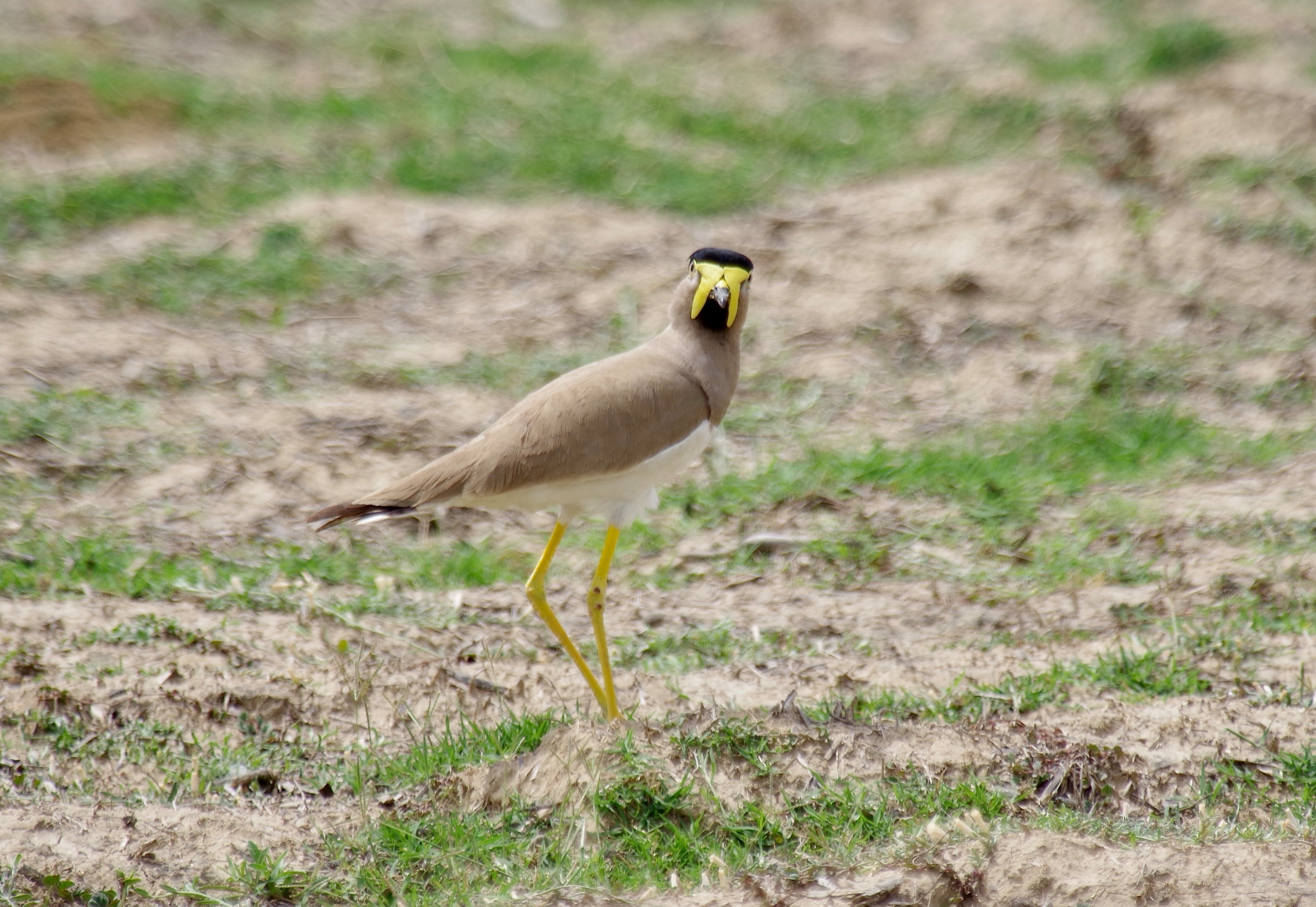


Next to a tree where we parked in the shadow, a group of Bank Mynas were searching for food in the rubbish on the street.

I the went back to Delhi to catch the night train to Ramnagar which is the main hub for the eastern part of Corbett. We slept a few hours before the jeep came and picked us up. For the next 4 days I was invited to stay and do safaris with 4 Indian fellows. 2 of them are doctors and one of the doctor's son also on his way to become one. The fourth man is working for WWF. Is was a great opportunity to go with them and my excellent tour operator had managed to find place in Dhikala zone which is the true hard core place for wildlife. Unfortunately, the government plan to close this fabulous place, so I can call myself lucky to have been there. Here you see all of us at the gate and a pic of the lodge area. On the way from the gate to the lodge, which is almost 1,5 hors drive in to the core area, we saw this roosting Tawny Fish-owl which didn't look too happy to see us.


Weather was much worse than normal for this time of the year and we had plenty of rain which made some of the safaris hard. A lovely moment was when the rain stopped in the afternoon and gave strong colours with the mountains and the grassy area. A stunning White-throated Kingfisher also wanted to enjoy the fresh air after the rain.


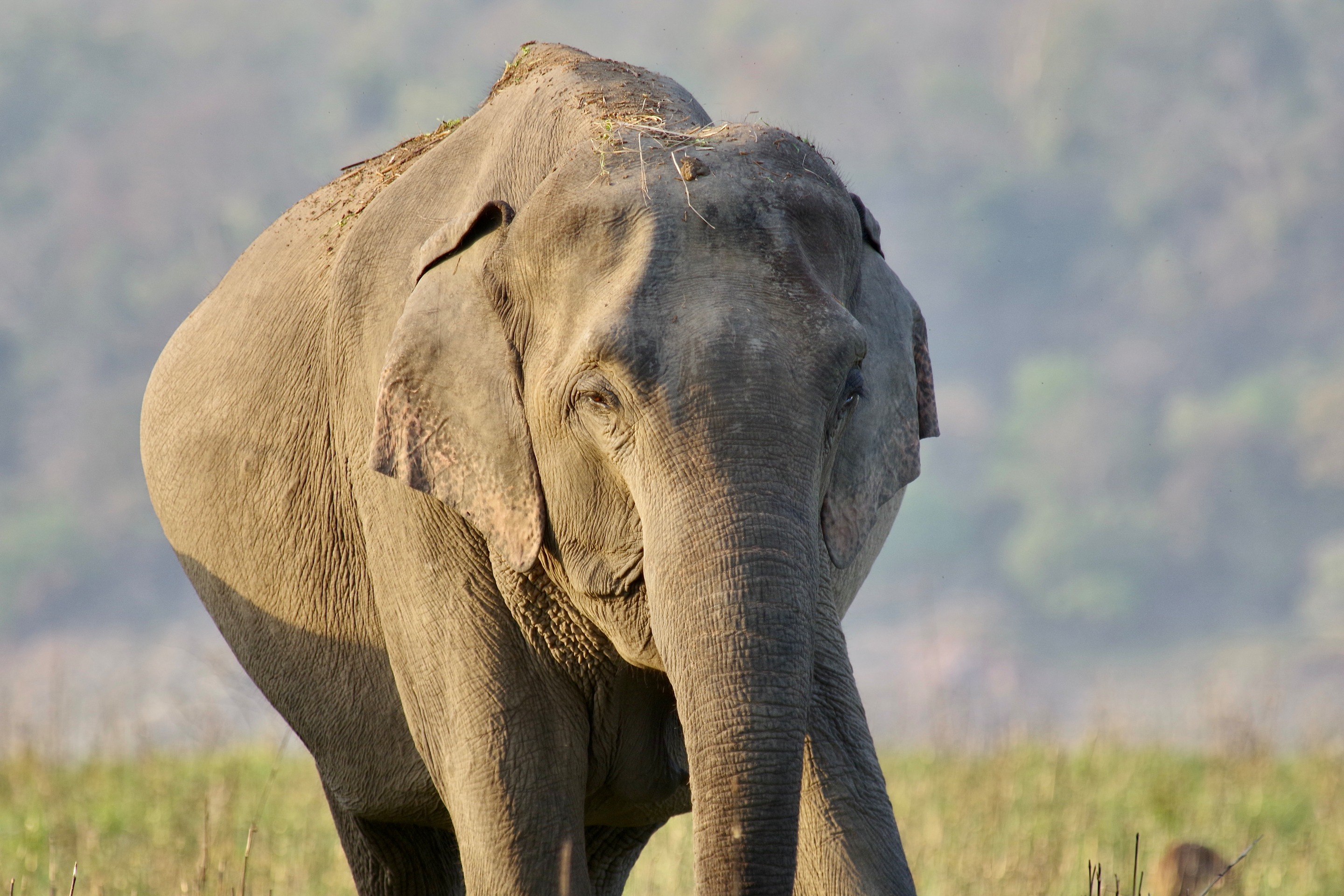
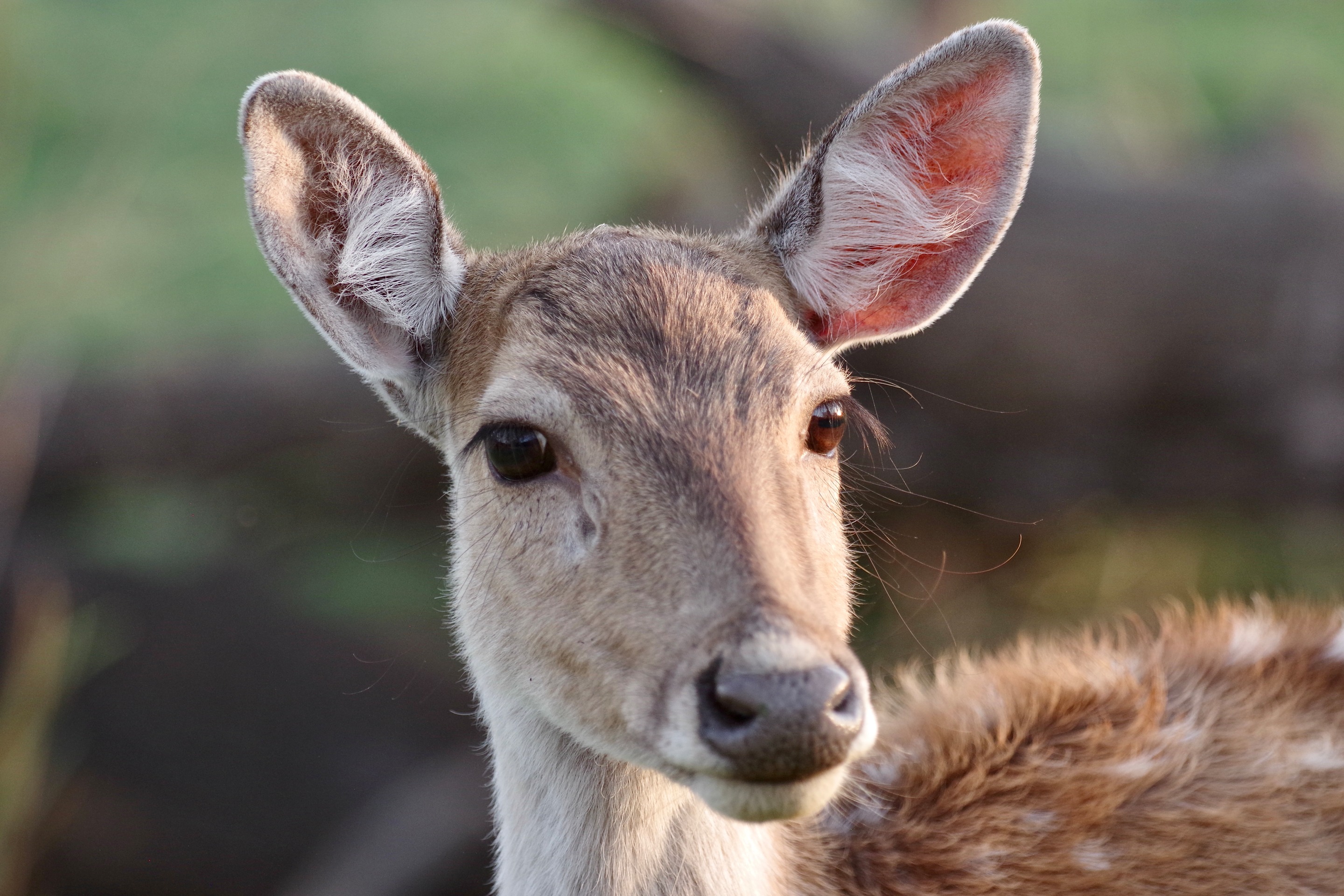
The grassy area was is a lovely place to see many elephants and Spotted Deers. Several "families" gathered here especially in the mornings and afternoons. We saw 2 bulls fighting which was a new experience. Here we also searched for and found the West Himalayan Bush-warbler which had been seen the day before. First record for this area.



The jeeps usually choose from the grassy areas or to go to the other side of the Kosi River. The river and its edges are popular sites for both mammals and birds. Here I saw my first tiger ever, which was a fantastic moment and a great relief. Now I had seen one quite far away resting and make small moves and could just hope to see one closer further on. As Shorebirds are my favorite group of birds this hour was one of the most memorable occasions, when we also spotted our first River Lapwing close up.


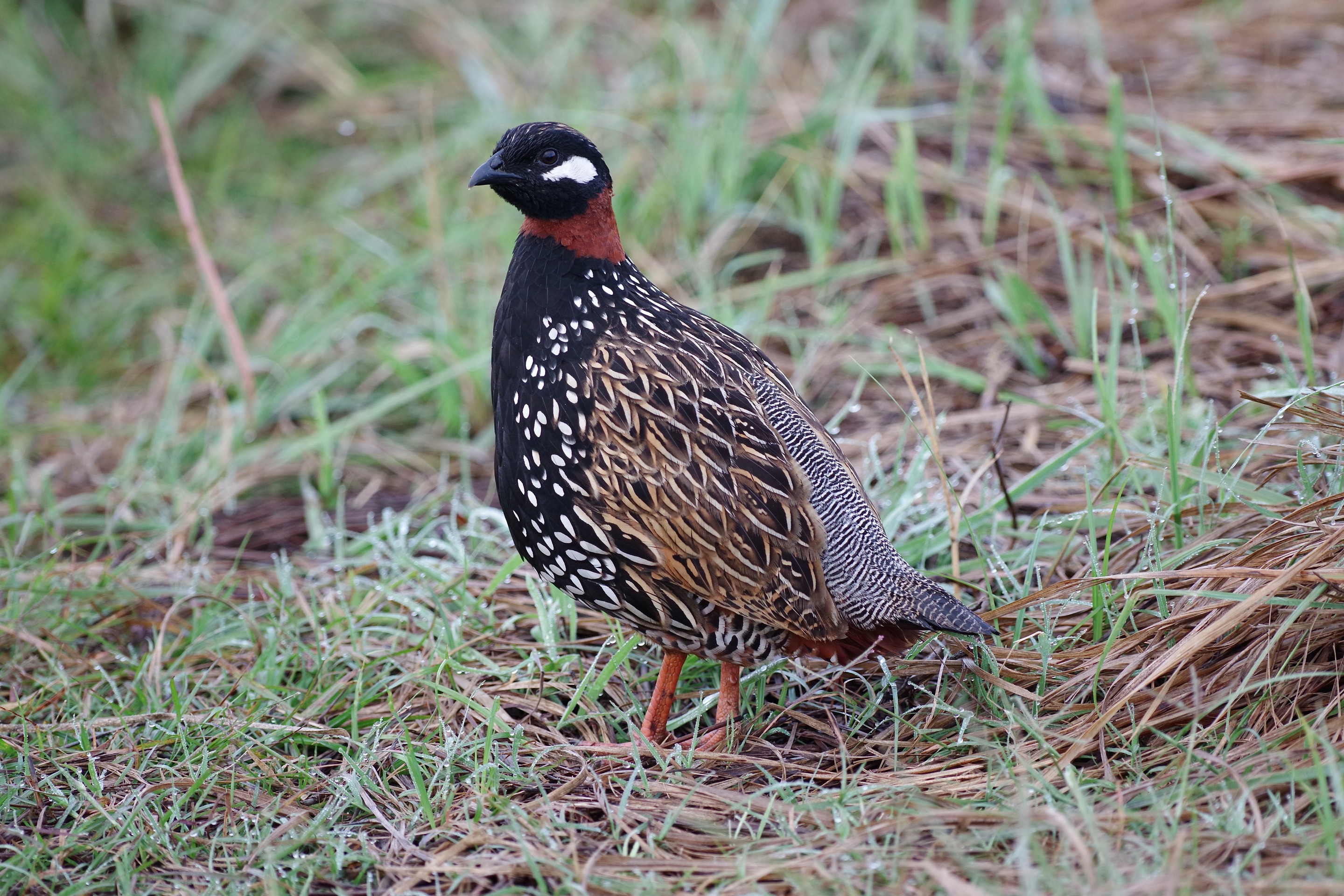
Corbett is well known as the oldest and biggest national park in India and also holds the greatest numbers of tigers of any park. The areas where tourists are allowed are just a fraction of the park itself. That combined with the vegetation which is very thick or covered in high grass makes observations hard. Not many people see tigers in Corbett, except for the lucky ones that makes it to Dhikala. My second tiger here was in high grass and we stood still for quite a while waiting for it to rise. One jeep had seen it for a few seconds and were pointing at the spot where it was resting. After almost an hour it rise and moved away. We had decent looks at it before disappearing in to the higher grass again. Here we also saw a splendid male Black Francolin, a proud Paddyfield Pipit and the ever present Pied Bushchat.



Monkeys are present at most places in nature habit and people are around. The seem to specialize in finding food in the jeeps. This guy (an old one and the baby one) liked to break themselves in to the jeeps during lunch breaks in hope to find some snacks.


As said before, rains were heavy a few times. Obviously, you will not stay at the lodge though raining. Time is precious during these few hours you have the opportunity. But it also meant some special moments according to nature. This Elephant and the drained track and dizzy landscape are examples of this.


Though I still had some severe pain in my stomach, thankfully reduced by help of my Indian friends I loved this part of the trip and even if we look happy here it was sad to leave this marvelous spot.


Anyway, time for the next and also last destination of the trip, Ranthambore NP. The trip there was made by train and once more I entered a night train, this time towards Jaipur where I had a half day before my afternoon train to Sawai Madhopur which is the town next to the park. Jaipur is famous for being one of the most beautiful towns in India. I hired a taxi for a half day and visited the most famous sites. Here a street view near the Water Fort, a pic of the big Amber Fort and a man at a local factory producing world famous hand made fabrics.


Ranthambore is perhaps the most "famous" tiger park in India. The fact that it is the closest one to Delhi, relatively open in nature structure for easier spottings and full of tigers make this park the hot spot number one. That means plenty of people! The good thing is that each zone (10 of them), have a limit amount of jeeps and canteens to enter. All parks in India have the structure that they provide two safaris each day, one morning and one in the afternoon. You always go back to your lodge/ hotel for lunch and rest for about 4 hours before going back in the afternoon. This differs from most park in Africa where you usually are out all day. This is a famous spot at one of the entrances whit winding roots around the walls. You can see a Peacock on the road. This bird is extremely beautiful and also very common in the park.


On my first safari I didn´t see tigers but it was during this first one I saw my only Sloth Bears. Two of them were looking for ants just by the track. They were moving constantly so getting a decent picture wasn't easy. This was the best shot I could get before they proceeded in to the forest.

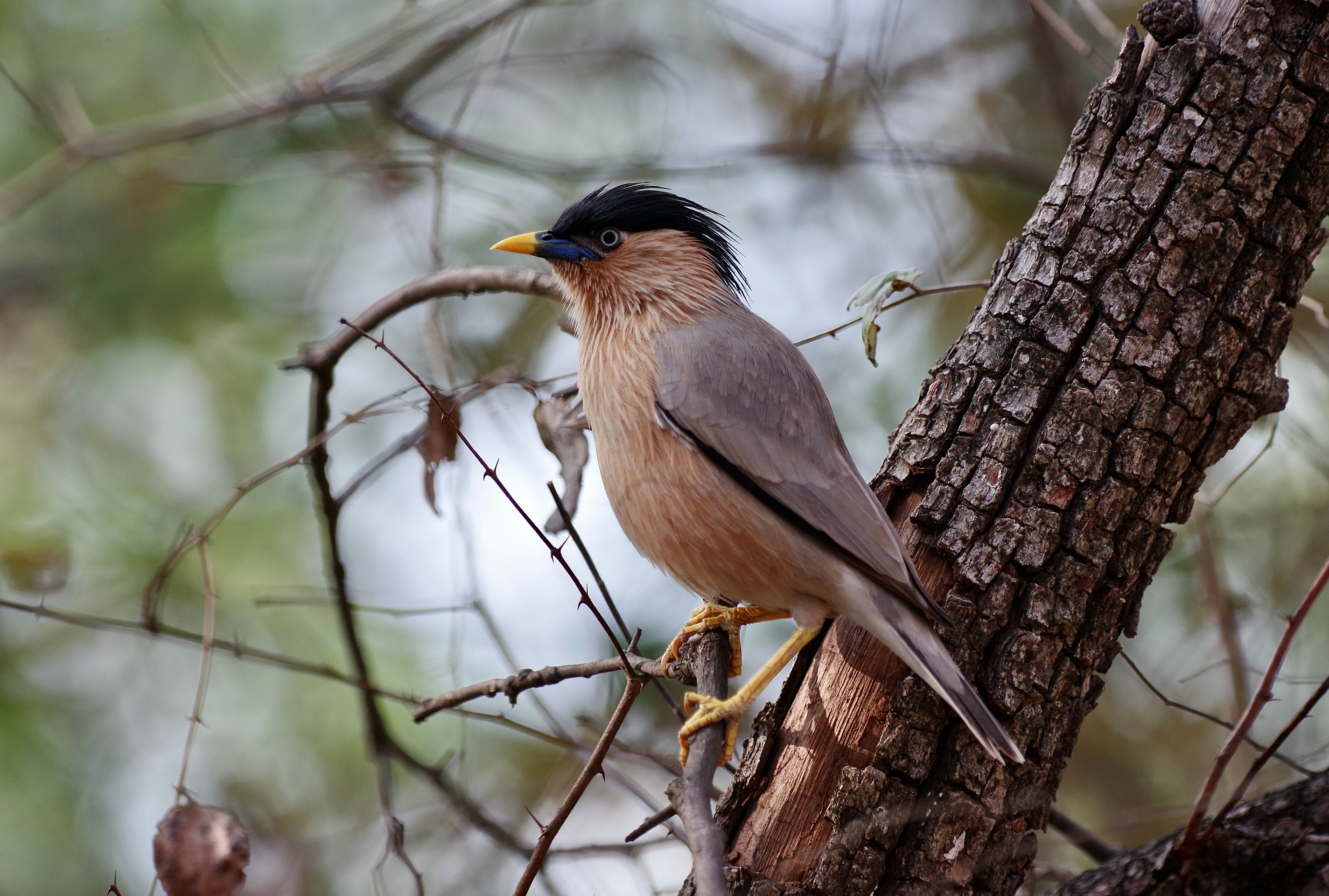
In zone 2 where I saw the bears there are lots of smaller patches of water which attracts some birds. I had good views of this Brahaminy Starling which was a new tick and also of several Indian Pond Herons waiting for a catch.

It was not until my third safari I saw my first tiger here. Actually this individual was the only one I saw. Riddih is her name. She is about 4 years old and hardly a ridiculous creature. This first sighting was when she was resting at a cliff about 200 meters away. After about 2 hours she yawned 3 times and rose. Lucky for us she didn't go backwards but headed sideways. She disappeared behind a big rock but then came in to great views for about 30 seconds before disappearing in high grass. The last day we saw her again. She was walking slowly quite far away from us and we also had the sun in our eyes which made the observations rather difficult. I'm glad I had my binoculars (most people didn't as they just carry cameras), so I got to see her starting a hunt. She caught a big male Wildboar and the fight was very heavy. She dragged him in to the water and it took almost 4 minutes before you could see the desperate moves of the Wildboar stop. Great experience!!


As said before, it had rained a lot more than usual, which made the park much wetter than normally this time of the year. In April to June tiger sightings is more or less guaranteed but this year many smaller pools did not force the tigers to visit the bigger lakes. A very special bird is theh Great Thick-knee and we were lucky to see it up close with a chic which made the guide surprised. The Painted Stork was not plentiful but easy to observe as the always keep next to the shore of the lakes. 

As the sun was getting closer to the horizon we stopped at the biggest lake with the fort at the back drop. Around here we had several Spotted Deers coming for an afternoon drink as well as this handsome Black-winged Kite. The last bird before leaving the park was this day roosting Indian Scoops Owl.


If interested in all bird sightings, you can check it up on my profile at Ebird. ebird.org (Leryd24, Leif Rydell)
Bye bye India!!
Argentina part 2, The Andes
After a terribly early flight (04.30!) we arrived safely to Jujuy airport. Francisco Cornell, our new guide for 9 days picked us up and we started the journey east. First days were not planned to visit the high Andes, but the famous forested Calilegua National Park and also further east in to the drier Chaco. Temperature was much higher than normally for this time of the year. We experienced temperatures between -10 (at night in the high Andes) and +34 in the drier Chaco. Planning clothing for the trip was more unusual for a standard birding trip.
As we visited during the southern hemisphere winter, many migrants (especially flycatchers) were absent. We knew this when we booked but reason for choosing this time was both because of lack of possibilities for me and Per to have longer breaks from work but also because some shorebirds actually could be easier at this time.
Francisco told us it would be much quieter than during summer, which it was, but we still saw some nice birds. Among the most stunning ones was this curious Plush-crested Jay. Very active and restless made it hard to photograph.
As we walked at first level in this mountainous park we encountered some rather common birds like the Common Chlorospingus and Moss-backed Sparrow.
In patches of more closed forest we had great views of this Amazonian Motmot. Not a new lifer but still an amazing bird to spot close up. This skulking Ochre-cheeked Spinetail was not easy to see and photograph in the dark forest floor and also a rather hard and challenging Mottle-cheeked Tyrannulet moving fast in the tree tops.
As we climbed higher we started to see new species like this fabulous female Giant Antshrike. At the top I took this picture of my two friends together with our excellent guide Francisco Cornell. He is a very skillful birder and also very humble and polite, always ready to assist. The sign shows an endemic frog (which we never saw).

Going back down again we stopped at the lowest part where there is a camping. Here we had, in the evening sun, some more nice species. Also a nice group to collect is the New World Warblers of which 3 new would be possible during the trip. Here the Two-banded Warbler and the handsome Brown-capped Whitestart. The third one, the Pale-legged Warbler was never seen unfortunately.
We now drew further east to a small village where I had my first empanadas (oven baked pirogues whit different ingredients). These became a favorite during our trip. Next day we drove out to much flatter and dry country, the Chaco. Early in the morning we saw our only Black-legged Seriema (no photo). A little bit further away we stopped at a small dam. Again, you realize that water makes all the difference. This place was full of birds and we encountered many new species. Among these were these Ringed Teals and a Narrow-billed Woodcreeper.
We kept on driving east and during the day it became rather hot, 33 degrees in July is very high. At one point we made a short stop which did not give much as the heat was coming up. My biggest mistake during the trip was that I put my very precious leather hat from Australia on the roof of the car and forgot it there when we jumped in. After about 5 km I realized what had happened and we turned back. Unfortunately someone had stoped and taken it as it wasn't on the road. The road was so wide and the ditches very open so there is no chance it would have been hidden somewhere. Francisco told me that a hat like that would be like finding a small treasure. Not more than 10 cars had passed us but one of them must have been "happy". We went as far as Estrella to look for Crested Gallito but had no luck. We saw a few birds, among them this Many-colored Chaco Finch. Normally when you visit South America, hummers are plenty. There are a few in Argentina but we only saw 6 species, among these, one of the few I got a photo of was this Blue-tufted Starthroat. Close to where I lost my hat we saw this massive Great Black Hawk.
When drove back towards Jujuy, where we would spend our night, before heading up to the Andes, we stopped at a small private farm which Frincisco knew about. We paid them a small fee and entered a nice habitat. Again, you see what water will do to increase bird life. Down here you see the Red-billed Scythebill which surely is a remarkable sighting. This place would be a heaven if the owners would organize it whit a hide or two and maybe serve coffee and simple food.
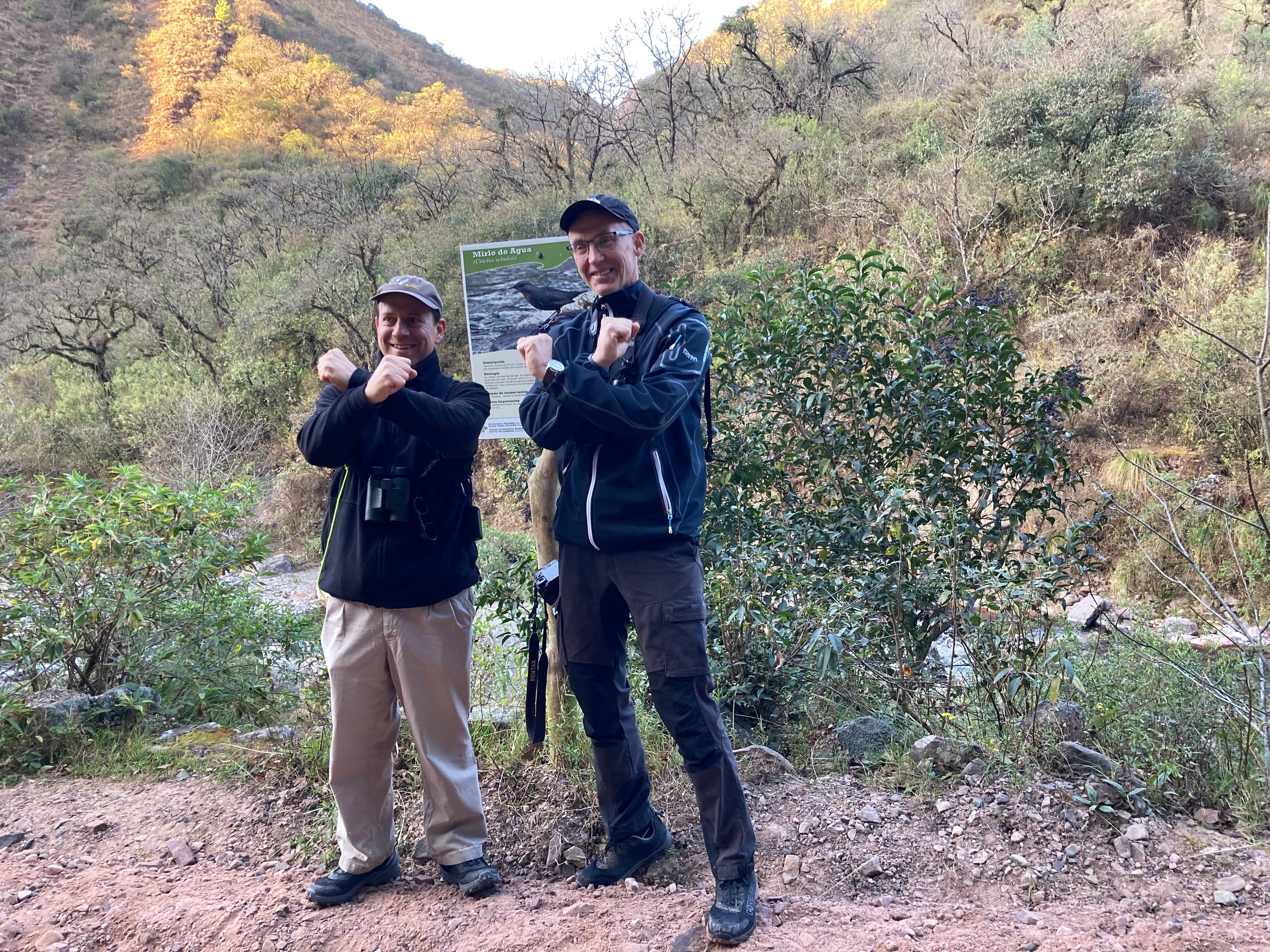
We stayed in central Jujuy in a strange apartment. It was clean and safe but in a dark and closed galleria. I little bit spooky but also a new experience. We had one of our best dinners for the trip at a local restaurant. Early next morning we set of for the famous Yala NP, home to many bird including Torrent Duck and the endemic Rufous-throated Dipper. At one of the first stops on the way up to higher altitudes, we saw both of the earlier mentioned birds. Great luck as the Dipper can be hard and are missed by some groups. Here you see these fabulous birds and the happy guys celebrating. First med and Francisco by the sign to the Dipper and the then Per and Nick with Francisco.


As we continued further up we saw this Variable Hawk, a bird we saw plenty of during the trip. There are two morphs, red and light. Here the more common light.Actually, I was surprised we saw so few species of raptors during the trip. As we stopped at a grassy field, some kind of cattle area, I also saw a new shorebird, the fabulous Andean Lapwing. One standing and one flying.
We now had a long drive towards Abra Pampa up in the high Andes at 3500 meters. We passed trough some fantastic landscapes and dramatic cliffs. Not many long stops as we wanted to reach it before dark but a few ones gave us Ornate Tinamou, Patagonian Mockingbird and the fabulous and striking Mountain Caracara.
At one other place we had a good short top where I saw this curious Tufted Tit-Tyrant but also interesting because here was a part of the old rail road that was used backed in time for mining and transport. Always sad to see the decline of these things.

Just before Abra Pampa is a small lake full of birds and here we saw many Giant Coots and a few Andean Gulls. Dark was coming down so I had to manipulate the photos.
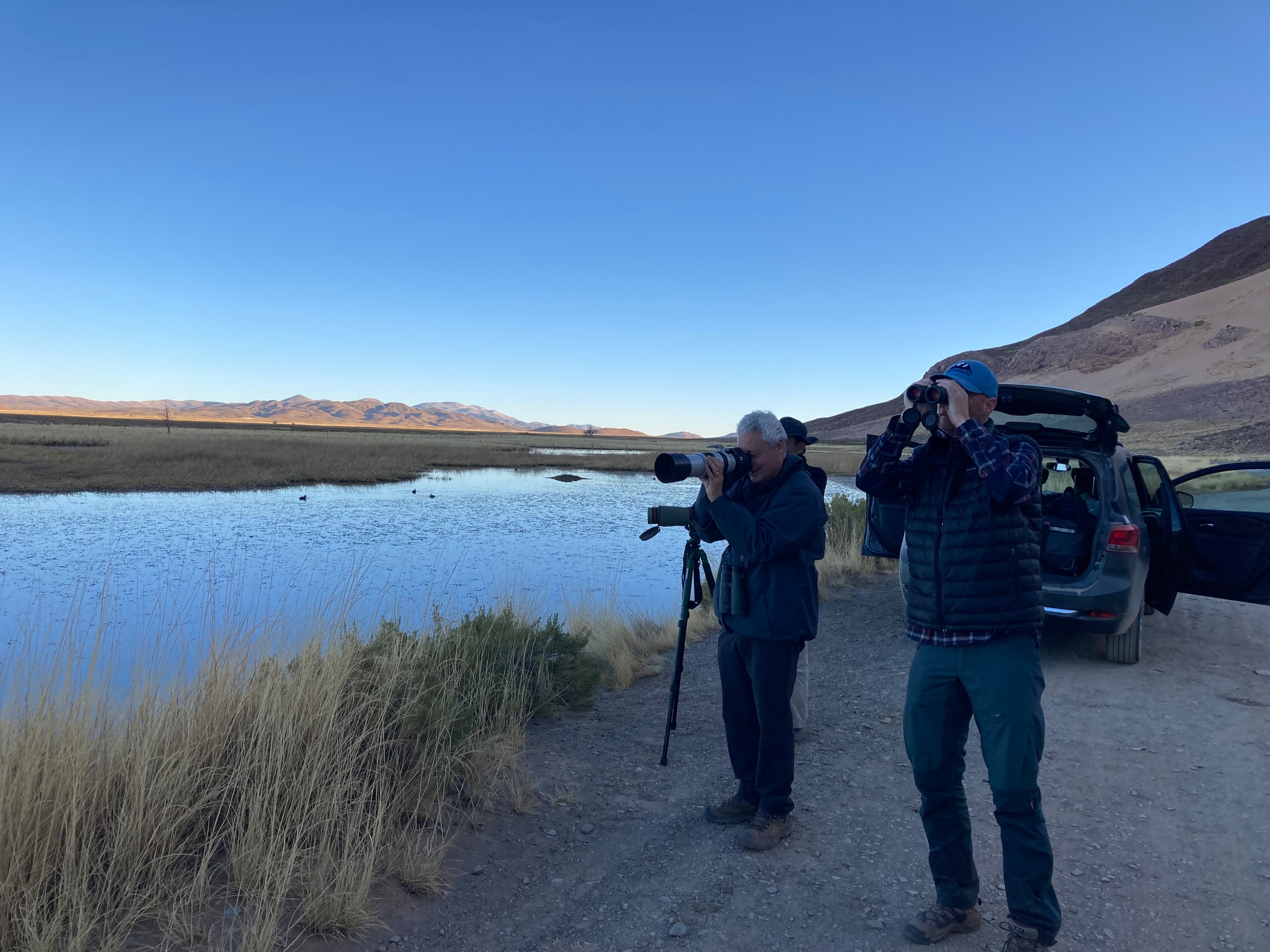
As we were standing here I stared to feel some smaller symptoms of higher altitude. As we cheeked in at our simple hotel, I felt a little bit more. Still, we had to have dinner and walked to a smallish restaurant at the central square. Outside a local group of boys were playing some local music which gave an extra touch to it.

Next morningI wasn't completely well and Francisco took me to the local small hospital. A little bit high blood pressure and also my body didn't get enough oxygen so I had to get oxygen gas for 20 minutes. Then they let me off. A rather common situation for tourists they were used to. People who suffer initially usually gets better after a half day. Todays destination was Lake Puzuelo, a big shallow salt lake on the plateau. Our first stop was at this lake though. A very funny and strange look met us here. As the temperature had been several degrees below zero, the lake was frozen. I the middle a large group of Andean and James's Flamingos were stuck, waiting for the sun to loosing up the ice. Talk about natural adaption!!
Here we also saw our first Andean Geese.
As we drove the 50 km towards the lake we made short stops when birds appeared. In a tree we saw this awesome Variable Hawk (red morph) and the Streak-fronted Thornbird which makes their nests like grass-balls hanging. Quite like the weavers in Africa.
During this stretch we saw many different species of finches, both the "group" of yellow ones as the gray ones. Getting close enough for a photo was harder though. Later in the blog I have a few but being one of the most common bird groups during the trip they still behaved rather nervously.
When we arrived we had to register at the office. As we drove the narrow trail-road we encountered one of my dream bird immediately. Two Andean Avocets were standing on the bank of a small river. A little bit too far away for a good photo we (maybe just I?) climbed out from the car to approach. There was a small slope down to the bank so 1/3 of the birds was hidden because of this. As trying to get closer, they tool off and the only picture I got was this unsharp one of a flying bird. Still a big thing for me and top 2 or three of the birds I saw during the trip. We saw 6 more at the lake but they were all at "scope-distance".
As with many salt lakes and high altitude ones, water level is decreasing because of global changes (most likely). Down by the shore, as close we could get there were quite a lot of birds but not as many as during summer. Flamingos, ducks, coots were there but in small numbers. A few shorebirds of course and among them, an important one the Puna Plover. An endemic plover which remains more or less with migration. 5 or 6 of them and one half way to breeding plumage but that was not the one I got decently close to.
On the sandy and bushy shore we also saw this funny Cordilleran Canastero and driving back a juvenile Andean Flamingo. We also were lucky to spot a mammal quite hard to see, the Culpeo or Andean Fox, which is very robust to be a fox.

At this road, as at many others we saw Lamas. Lama is the domestic version of the wild Guanaco, which is much more common in the southern part of Argentina. The owner seems to decorate them, not sur why, if for just marking instead of numbers or of other traditions.

We now drove to the city of Quiaca next to the border to Bolivia. Actually, the city on the Bolivian side, Villazón is second half of this big trading hub. Francisco had some trouble with the rooms but refused to let the owners change our booking from the original one. Good on you Francisco! After having our dinner at a "famous" birding restaurant, can't understand why as the food was not much to write home about and the owner was also a little bit inflexible with the ingredients in our omelettes.
Anyway, next day, BIG DAY!! Per wasn't feeling so good and felt nervous about climbing up to 4600 meters which was our plan. After a while he felt ok and his oxygen level just slightly low. Of we went east and in to the part called Eastern Cordilleran. Target was the no 1 dream bird of them all, the Diademed Sandpiper Plover. An iconic bird in many ways but especially for me as my Australian (recently past away) Graham had been to Chile twice and Argentina once to see it without succeeding!!
As we started to climb on the rather rough road the landscaped changed. The other famous animal for (at least people outside SA) is the Vicuna. This is the wild version of the Alpacka. It's a little bit smaller and also cuter and less"rugged". Quite common up here but still not completely calm because of hunting (which I think is illegal).
At 4600 meters there is a pass from where you go down again further east. Here you can see us at the pass.

Ok, magic hour. Would we find DSSP or would it remain elusive also for me. 20 minutes drive from the top we stopped at one small ravine with smallish bogs and low vegetation, the habit for the bird. We walked slowly towards it and every move from birds made me nervous. Standing about 50 meters from the bog I realized I was looking at one. What a moment!! I actually got emotional. The sun was coming from straight forward so I decided to try to make a loop for better light. I never got as far as I wanted before they took off a couple of hundred meters. Still had seen it (a pair actually) and also brought a decent photo as a memory.
I rank this bird as no 1 in my lifetime (before seeing my first Wandering Albatross swooping by just by the boat I was in and a few drops from my eyed dropped). The reason is also because of the connection to Graham who actually was the person who made me a shorebird maniac. Under a stone I put a photo of me and him last time we saw each other on a trip to the Northern Territory and outback birding. Here you can see me and Francisco celebrating. Thank you so much Francisco!! Before we left I also saw a few of the specialized Red-backed Sierra Finch which is only found at these altitudes.

We now turned back as we had a long drive to go south and down. Still we had one bird to look more for, the Gray-breasted Seedsnipe. An other bird on my shorebird list and also if seen my first Seedsnipe ever. We had tried on the way up but would make longer and more efficient stops where Francisco knew it was usually seen. Not a breeding time they are much more secretive but most importantly, quiet. At the third stop Per became the hero by seeing a group down the slope. Just moving slowly in the low bushes they are easily overlooked. Nick and I climbed down as close as we could get to the group of 4. Very secretive indead.
When looking at these we saw a few Andean Condors flying over us and they seemed to concentrate on something a kilometer away. We drove down and found them. 14 of them flying or sitting by some kind of dead body, probably a Vicuna. Some of them came so close over us that we heard the swooping of the wings in the wind. An astonishing experience, for sure. Here one adult male close up and one more "classic" view of one soaring with the Andes in the horizon. Hardly one of the cutest birds on earth but surely one of the most impressive.
Mostly bad luck but in some way good luck!! Just when we arrived the paved part of the road close to La Quiaca, we got a flat tire!! I'm glad it didn't happen high up on the steep and unpaved road. Not sure what could have happen if so. Anyway, we had to put the "donut" on and try to find a solution in La Quiaca. When we finally found a garage it showed up to be an already repaired tire and also in a very silly way. The guy at the garage was exremely polite and helpful and made a good repair as they didn't have the correct size in the garage itself. We gave him a big tip which we hope he appreciated. In some way nervous during the rest of the trip the repairment of the tire was sufficient.

A little bit later than projected we reached Tilcara which is a popular holiday destination for Argentinian people, mostly the ones from B.A. We stayed at a very nice place and went out to celebrate a fantastic day rich in different typed of content. Up in the high Andes we had to move very slow not to pressure our bodies too much, down her we felt more released. A heavy traditional (too heavy to be honest) meal of different meat ended the day. Next day was an other long travel day as we needed to pass both Jujuy and Salta to reach our hotel in a village further south. We made a few stops of course of which one was better than the others. At a local pond we got quite close to some ducks for photos. These are Cinnamon Teal, Inca Teal and Yellow-billed Pintail.
A highlight, (not for me though but Nick, who has a strange habit of picking "standard" birds as favorite ones) was this Great Pampa Finch.
This area where we stayed the following two nights is a "gate" to our next day and the last formal one for our trip. Parque National de Cardones is in the more southern range of the Andes and more greenish. The views here are just outstanding and trying in some way to give justice in a picture is more or less hopeless. These pictures are from one of the highest points here about 3200 meter above sea level.


This was a point where we had our only chance to see a new shorebird on my list, the Puna Snipe. It breeds down in some grassy wet areas here but were not present at the moment. What can you do? We saw some good and hard local birds but not close enough for a photo, though this Plumbeous Sierra Finch came close enough. Here we also were very lucky to spot one of the national monuments of Argentina, the rare and endangered Southern Guemal, at the top of a cliff. In this park we also saw a few "wild Lamas", the Guanacos which I wrote about earlier. This photo is a of a Rufous-bellied Mountain Tanager hiding in the bush. This is a hard and much sought after and not seen by every group.
Most likely, this also became my 3000 lifer. I wasn't aware of it when it happened but realized it when I came home. Not easy to know as some birds are not considered to be full species or vice versa depending on what taxon you prefer/ use. I also use iGoterra except for Ebird and on the first one I know I have all my species seen
Our goal now was to go down and further east to a very special place, which I still think is a part of the park itself. This part is the largest cactus forest (funny name?) in the world. Almost as far as you can see the nature looks like this, with one cactus after an other with about 10-15 meters in between. A marvelous but also a strange place. At the second picture you can see the peak of Cachi/ El Libertador which is 6380 meters high.


Close to the town of Payogasta we made an important stop. This is a great and easy spot to see the special Burrowing Parrot. A rather handsome one and very prolific where it hangs around. Almost an Australian feeling about the look and behavior. Also a hard bird and pretty high up on the wanting list was the Sandy Gallito as we had missed the other one at the start of this part of the trip. The parrot was very easy as it was the first bird we saw and all together about 300 of them. The Gallito was harder but eventually we saw it because of the skill of Francisco. I like this upright type of birds, they resembles the Pittas in a way.
We drove back to our hotel and could once more enjoy the dramatic and fantastic views of the Andes. We stopped for one bird that made Francisco a little bit puzzled, this Buzzing Miner had some differences from the one expected. It showed up to be a southern sub-species wintering here.

Next day was last day as our flight was leaving in the afternoon and we had some distance to make. We made a stop at a lake which was nice and gave decently closed look at this Buff-necked Ibis. Not sure exactly where we saw this Gray-necked Wood Rail but it was somewhere close. Francisco took us safely to the airport and we said goodbye. The nine days we spent here has been (in many ways) a great experiences which will never be forgotten. Francisco is a great guide but also a great guy and I will recommend him strongly to anyone who wants to experience this part of the world.
I'll end this part of the trip with a symbol from this part of the world, the Red-legged Seriema which we saw a group of the last day
Hasta la vista!
Argentina part 1 2022, Buenos Aires and Punta Rasa area.
Part 1 (3 days around Punta Rasa and Buenos Aires)
Finally after missing this trip because of Covid, we (my good friends Nick and Per) finally made it. The ticket were bought just before outbreak of Covid and now 2,5 years later we flew off. Argentina has for long been on my wishing list. Both because of the high concentration of Shorebirds hard to see elsewhere but also because of its dramatic landscapes. Potentially I could get 18 new Shorebirds! This first part will describe our 3 days in B.A and the areas around Punta Rasa which is a north pointing tip about 340 km south (SE) of Buenos Aires. The area is both at the sea but also som localities a little bit inland. Going there you pass some areas of the famous Pampas. For Swedish people names like Samborombon and Rio de la Plata has a special meaning because of Taube's famous songs. After these first 3 days I had seen 5 new shorebird out of 6 possible. A good start.
We arrived early in the morning July 20th after a long flight from Europe. KLM was a pleasant carrier to use and service was good. Our guide for two days, Diego Gallegos picked us up and off we went. Going south we stopped at a few places when we saw some birds. One of the most handsome birds during the trip was this Long-winged Harrier which showed up a few times these two days.

As we came closer to Punta Rasa we made a few stops, essentially the one at Tuyu-Palenque which is a combined area of drier grasslands and wetter areas with ponds and smaller lakes. Here we saw many birds and especially one of my most sought after species, the Tawny-throated Dotterel. I was quite nervous as this would be our best chance. Our guide Diego Gallegos made his work and found a flock of at least 16 birds, which is a good number. Approaching them by foot for a photo would be almost impossible but as the ground was hard and rather flat we made it by car. One of my top 3 for the trip, what a bird!
At the wetter areas, we saw many new birds. Among these were the handsome Coscoroba Swan, the rather handsome Red Showeler and the tiny but active Sooty Tyrannulet.
One of my target birds was the S. Am. Painted Snipe which is a beautiful but hard bird to see. Very sensitive to water level during non breeding season, we did not make it. Water was to high. Anyway, we saw our first Rufous-chested Dotterels. They were all in some kind of non-breeding plumage but not expected anything else. Later during our trip in Patagonia we saw some more of them and a few on their way to become stunning. We also saw quite a few Southern Screamers and many Crested Caracaras.

Next are two rather strange photos of birds I saw in this area. The one at Many-colored Rush Tyrant was taken in a rush (ha ha) when the setting at the camera wasn't right and the second was at a small flock of Monk Parakeets passing through. It's not a good picture but quite a strange one as I later saw the head and a wing of a Chimango Caracara just behind the flock which gives a "funny" and unusual picture.

As the afternoon came closer we had to turn back towards our hotel in General Lavalle we saw some more nice birds as this Burrowing Owl, Bare-faced Ibis, Roseate Spoonbill and several Red-fronted Coots. We checked in and had our first evening by the dinner table with some good local wine and many laughs. Good to be on a tour again.
Next day we left the town by driving slowly at the outskirts. We were lucky to see a few Plumbeous Rails feeding at the edge of some ditches next to the road. Not a very secretive bird (compared to the ones in Europe) we managed to come pretty close.
The journey continued slowly towards Punta Rasa ( it's a tip pointing north by the coast). Here usually some interesting birds winter every year. I must say we were lucky as we had nice and close looks at several shorebirds I wasn't sure to at all. Shorebird bonanza as follows; Hudsonian Godwit, Red Knot (a decently common bird in Sweden), Two-banded Plover both in breeding and non breeding plumage and the strange looking Snowy Sheatbill. This species is now considered to belong to the shorebird family. 3 new shorebirds in just a few minutes. A strong and big moment for me, wanting to see as many of the shorebirds as possible.
Next to the shorebirds we also found Olrog's Gulls, Brown-hooded Gulls and some Royal terns. Before going, I didn't know who Claes Christan Olrog was but Diego told us he is called the founder of Argentinian field ornithology . He was actually a swede who lived and worked most of his life in Argentina. He wrote the first field guide and has given name to many birds including this gull.
These are the happy guys, Nick (middle) and Per (right), (me missing) and our excellent guide Diego Gallegos (left) after seeing all the awesome shorebirds and other species adjacent to the shore. You can see the Sheatbills to the left just by the shore line.

After a 3 hours drive back, Diego dropped us at our hotel in the centre of Buenos Aires. Next day we took a walk down to Reserva Ecologica Costanera Sur. This is a fantastic oasis more or less in the centre of the town next to the famous Rip de la Plata. To walk around this site takes 2-4 hours depending on speed when birding. It has a massive list of 352 species. Walking on our own we spotted quite a few birds among them these; Picazuro Pigeon, Grayish Baywing and the common Patagonian Mockingbird.
As we walked many other species appeared of which some were kind enough to let me have a pic. The following are Cattle Tyrant, Red-crested Cardinal and Rufous-bellied Thrush, all rather common.
My absolute favorite group of birds are the shorebirds but I also have a weakness for warblers and other smaller passarines. Her yo can see the Tropical Parula, the handsome Masked Gnatcatcher and the simply , but still beautifully patterned S. Beardless Tyrannulet.
As we left the reserve we stopped close to Nick's favorite ??!! bird, the Rufous Hornero. You can see it here but also Nick enjoying its presence and filming it with his phone.

The last pictures from this part of the trip are me and Nick at the reserve with the city skyline behind and two pics from the centre of the town which is supposed to have around 12 million people.


Next; the north west and the Andes!
Skriver om
Innehållskategorier
- Intresse - Natur
- Intresse - Vilda djur