Leif Rydell
Central Spain and the Pyrenees.
After a year and a half break from travel, because of Covid, myself and two friends (Per and Nick) made a 8 day trip to Spain. Purpose for me was to see as many of the birds missing on my list for this area and of course to again do a birding trip with some friends. Early August is in many ways a slow period and some birds are not easy to track down. Missing on my list were Great Bustard, Black (Cinereous) Vulture, Spanish Imperial Eagle, Dupont's Lark, Wallcreeper, Iberian Green Woodpecker, Black Wheatear, Rock Sparrow and Citril Finch. We arrived with an afternoon flight to Madrid, rented our car (a Opel Mocca which was a disappointment both in size and comfort) and made it to our local hotel. First thing next morning we were on the road towards NE. Our first spot was just outside Madrid itself and we spoted our first group of 16 Great Bustards on a field next to the road. The Road was narrow and we couldn't stop directly. After we had parked a few hundred meters further we went back, but at that time they have moved further out and the pictures were just for memory. A few km more and we stopped at a small village and took a walk. Our first Short-toed Eagle was nicely perched in a tree and I got my first Rock Sparrows here as well as a small group of Spanish Sparrows and a few larks. A great feeling to be birding abroad again with good friends!

We then continued on smaller roads through local farmlands. Birds were not plentiful and you feel the same experience as in Sweden at this time of the year, with no song and breeding activity. Birds seen in fewer numbers were Red-legged Partridge, more Larks (Crested) and Woodchat Shrike. We then drove towards Mirador de Valdelanagar, were a local birder had given me location for the Imperial Eagle. Last part was on a pretty rough road but when we got there, the reward was stunning. A pair sitting on a big electric pole (quite far away) but easily recognizes through a scope. They also made a few displaying flights to our great joy. Here we also saw Red-rumped Swallow, more Rock Sparrows.

We now headed for our hotel in the very beautiful town of Miraflor de la Sierra but on the way we passed the dumping spot at Colmenar Viejo which showed to be a real highlight. At the top of the spot more than hundred Griffon Vultures and at least 15 Cinereous (Black) Vultures were seen, either in flight or on the ground. Her also a giant roosting area for White Storks.


As we arrived to our hotel we checked in and started to drove up the mountain for an afternoon there. On our way towards the top, Per realized he had forgotten his bins at the toilet in McDonalds where we had a brief lunch! Quick turn and back. The lucky star was ons Per's side and they were still there, at the toilet though almost 3 hours had gone!! We still had time for a drive up to the local mountain to look for some local specialties. We had great views of a flock of Iberian Magpies, close views of Griffon Vultures among others. This Greater Whitethroat gave us some confusions before we came close enough to see.


A short coffee and ice-cream stop at a narrow pavement in an unnamed small village.
Next morning we headed east and our first stop was at lake Embalze de Pedrezuela. We had views of some raptors and the trips only Bonelli's Eagle (juv) was seen. Here we also had several good views of Melodious Warblers and this juvenile Subalpine Warbler, with which we certainly needed help to decide what species it was. We continued further east and reached the area around lake . on the way we made a stop at small village with an old fort, where Dupont's Lark could be possible. We saw a few more Larks, Short-toed and Thekla but no Dupont's. Later in the afternoon we reached Laguna de Gallocanta which has a big list of birds. Not at this time though and we decided not to drive all the way to the shore. We had some nice views right at the information board, namely the only Black-eared Wheatear of the trip and a couple of (juv/ female) Cirl Buntings on a field. Night in the cosy village of Tornos, where we had a well deserved beer (or two) before crashing into our beds.


Nick and Per enjoying a well deserved beer and putting down todays records in the evening at Tornos square.
Next morning we went back to the lake areas and we saw more than 10 Montague's Harriers, a new flock of Great Bustards and one Black-bellied Sandgrouse. Unfortunately it disappeared when we walked towards it and I was the only one to see it. Happily we saw this species later on during our trip.

Our journey now continued north towards the Pyrenees.
Next stop was Reserva de El Planeron, which is one of the most "famous" spots for this elusive species but no luck here either. Definitely wrong time of the year. We had splendid views of Thick-knees and Western Bonelli Warbler which cheered both Nick and Per (and me though no new birds for me) up. We then drove up to Huesca where we tried for Scops Owl without luck and had a nice meal at the plaza.


Next morning, target Black Wheatear which I had been given a trustful spot for. When reaching the castle area of Castillo de Montearagon we realized that the road was closed the last part but I made a chance of asking one of the workers if we could just go to the top and not at all to the castle area and he said we should be fine. Up here it certainly took a while before I found it, but I eventually it happened! On the way down we had our first sighting of the Iberian Green WP which made me shout straight out as it flew past the car. It landed close so everybody got a decent look. Other good birds here was Blue Rock Thrush and a group of Bee-eaters. All birds were seen at distance so no pics from this spot.
Later we started our trip towards the Pyrenees and our fantastic hotel Uson right at the best spot. Before evening we had time for a shorter walk at the local valley where we spotted a few birds we also see at home like the Red-backed Shrike and the (White-throated)Dipper. We then had nice evening with splendid food (and a beer or two)!

Stunning and fantastic hotel Uson.


Today we headed towards the ski resort area Astun next to the French border. Weather was not good at all with some rain and fog. We didn't see much but as the clouds lost their total impact we saw two Bearded Vultures (Lammergeir) circling around a peak.

Me at the French border in foggy weather.


Next day we went back to Astun and took a ski lift to the top. Wind was very strong but we pulled ourselves to a top and down to a valley. Not many birds but a flock of Red-billed Choughs were playing around and a few Water Pipits as well. Northern Wheatear was the most common bird here and seen frequently on the slopes. We made an attempt to the other side of the ski resort where some reports had been made earlier in the summer. Not much here except also a family of Alpine Choughs and an Alpine Marmot which gave a strong alarm call.


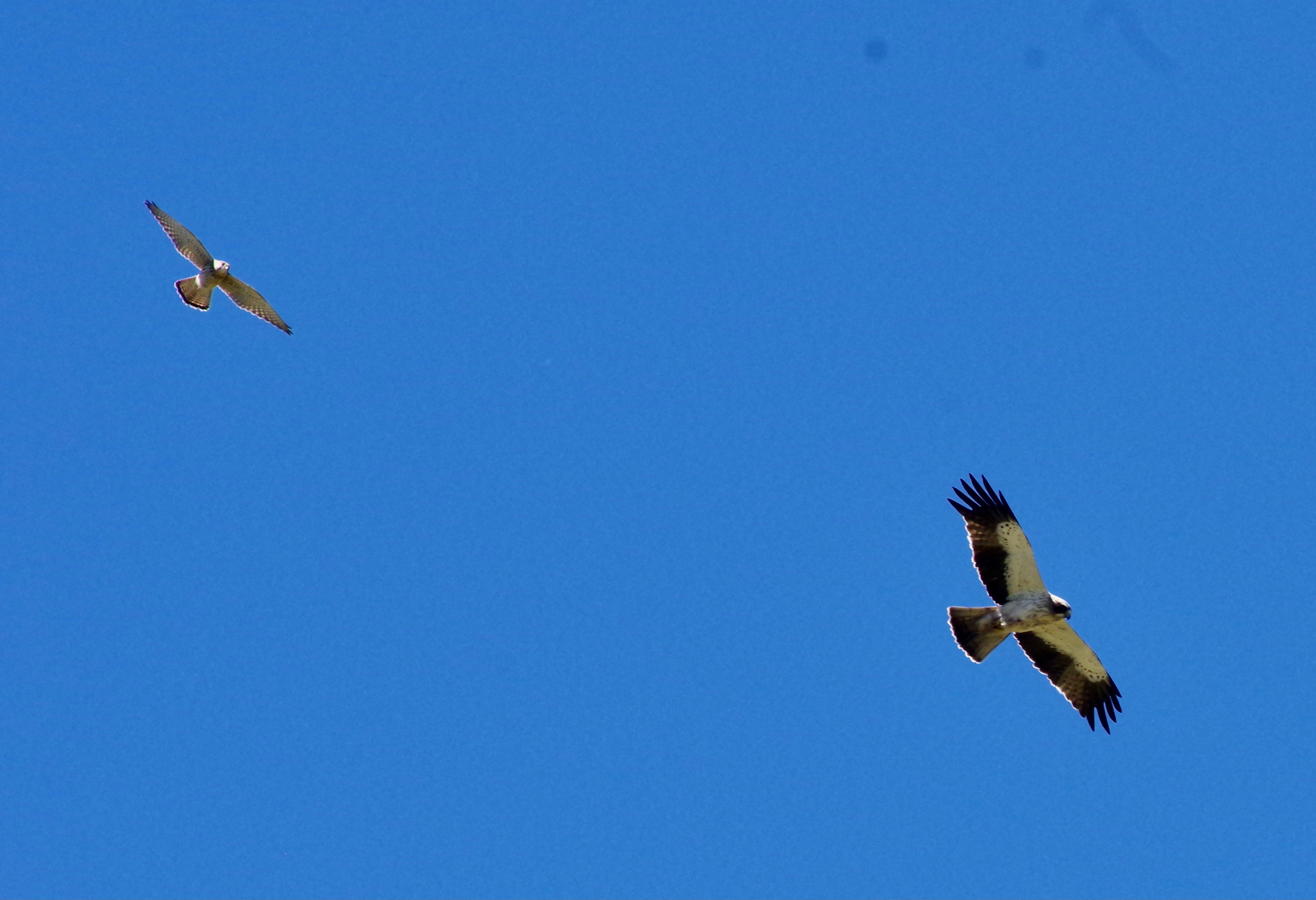
Except for seeing Bearded Vulture every day here we also had frequent sightings of Kestrel and Booted Eagle. Here a pic with both for size comparison.


Last day here was the best as we decided to climb the local peak close to our hotel. A narrow and in places steep trail made me take the decision to not go all the way. My knee was hurting a lot and was not stabile. Per and Nick continued and managed to see some good birds. I wasn't disappointed though as I had a nice flock of Citril Finches down at the fields next to a rest house/ café. Sorry for my friends they were gone when they returned.

We went back south towards Zaragoza where we stayed at a roadside hotel on the south side. A strange place with a"special" garden. It was very hot, over 30 at 10 p.m. Purpose of this hotel was to be close to an area where there had been several reports of Larks and Sandgrouses. As we went out in this habitat we quite quickly started to see many larks. Very erratic and nervous in behavior, we had problems with seeing them good enough. Thekla Larks where plentiful but after a while we came close enough to put the last one on the list, the Lesser Short-toed Lark. While standing here, I heard a sound which in some way was familiar. For sure a flock of Pin-tailed Sandgrouses were seen but in quite a distance though. Luckily I saw where they went down and we drove on a small track a finally and found them on a field. Could not come close enough for a decent photo but easily recognized in the scope. Talk about lucky minutes, a flock of Black-bellied Sandgrouses also came by but these were only seen in flight. A simple brunch was taken in a local village and this place will be in my memory for quite a while as about 20 old men where having a party with lots of alcohol at 11 a.m.

Last evening was spent at a nice airport hotel and the next morning we said goodbye to each other. A great trip and splendid time with good friends. I saw 7 out of 9 possible new birds which is ok, taking in the matter of timing of the year. Both Dupont's and Wallcreeper are well known to be very hard at this time of the year but the view and the memory of the Pyrenees is clear as a blue sky. Last picture was sent to me from Nick at one of many joyful moments.


Looking forward to next adventure!
Utklippan Ringing Station late October 2020.
It has been 4 years since I last visited this hidden paradise. I used to come here every year during the 90s and first decade 0f 2000. I have so many great moments, both when it comes to birds and friendship. I have spent more than 160 nights here at this rustic but well preserved old lighthouse. Back in time the staff and their families lived here as they had to take care of the permanent light. Nowadays, this has naturally changed and it's all automatic. This year I again had the opportunity and my daughter, now 19, wanted to come along as she also has great memories being here when she was younger. My close friend Nick (you have seen him on pictures from other trips) also came along for the first time and also first time being part of the ringing activity.


The weather this week was quite windy but still not so bad that we couldn't have the nets up. The first 5 days we ringed about 50-150 birds each day. At this time different types of finches dominate, like Redpoll, Twite, Linnet and a few Bramblings and Siskins. The last days were really good and we made a new recored of 430 Redpolls in one day!! A great surprise among these was an Arctic Redpoll (unfortunately now lumped with the Redpoll).
Being on this great island also includes looking for migrating birds like Geese, Ducks and Gulls. A previous group banded this juvenile Greater White-fronted Goose. Quite uncommon in the Baltic Sea is the Black-legged Kittiwake but this year a few passed one day (distant photo).

Having Shorebirds as my favorite group of birds, some close encounters with a bunch of Purple Sandpipers was a big highlight of the trip. The pic with water splashing is not sharp (if it had been it would have been a great photo, I guess) but never the less a bird not very easy to come up close to.
A few warblers were ringed, mostly Chiff Chaffs and among them an easter Sub-species of Tristis. See the difference in color of the back, greenish in Colybita and Grey in Tristis.
One day, in the middle of the day, an owl just crossed my eyes around the corner of one of the houses. What was it, wasn't that a Barn Owl? Yes it was!! It flew in to one of the windows sections to the light house where we later found it again and took this photo. The first record for a living one ever on this island (one found dead by the lighthouse many years ago). This one of the eastern sub-species Guttata. WE tried to put up some extra nets but never succeeded. The next morning it was gone.
Otherwise when it comes to owls, many migrate through this island at this time of the year. Most of them are Long-eared Owls but a few of them are Short-eared Owls. They differs in behavior, Long-eard likes to seek shelter in trees and bushes where the nets are and Short-ears seek for shelter between rocks or more open placed "holes". Therefor Short-ears are seldom captured.
Here some nice pics of these great birds.

The last day, just before leaving we discovered this White Wagtail. Looks very much like a female Yarelli but could perhaps be a hybrid.
Finally some pics showing the beauty of this island. It's possible to go here during summer as a tourist as there are boat taxis and a café here at this time. For now.


Öland August 1-3, 2020
For a few days , I visited Öland in early August. Purpose was to go away a few day with my wife as Corona had spoiled all other plans. We stayed at my friend Tommy's house just at the southern part of the island. The house has a stunning setting with views of the Baltic Sea and traditional farming country. Obviously we spent some time not birding but as this time happens when the waders are starting their migration, I still had the chance to see some nice birds. Seby is one of my favorite places on this island as it often gives good views of some shorebirds. The majority of them, as usual, Dunlins.
Among all the Dunlins and a few Common Ringed Plovers I was a little bit fortune to see both a few Curlew Sandpipers and a single Little Stint, both great birds for me who lives inland.
A few moments later, still at Seby, I saw a few more good species. The Ruddy Turnstone is a local specialty and this single Sanderling, a wader that's not uncommon during migration, but never shows up in big numbers as at other places around the world.
All birders in Sweden has visited Öland and to spend some hours at the absolute tip, is in all itineraries. There is a famous light house here, Långe Jan (Tall Jan) and beside it you can see some birds related to the shore and also lots of migration. Beside the light house, also a Black-headed Gull, an Arctic Tern and a surprising (sick?) Black Guillemot.


Just a few hundred meters north of the light house there are some lovely areas of forest where you in spring time will find many warblers, flycatchers and other passerines. Not many songs or calls at this time of the year but still some good birds at close range, here a juvenile Red-backed Shrike and the awesome Wryneck.
Thanks for this, a few days of birding in great Swedish birding country.
3 days northern Härjedalen June 2020
As restrictions concerning Covid 19 had been changed a bit, me and my two friends Claes and Per decided to take a 4 days/ nights trip up to northern Härjedalen. Per has an apartment in Ramundberget so it was easy to organize day trips from here. Day trips may not be the correct word as you need to be in the field very early and very late because of the position of the sun at this time of the year. We started our first day at 03.00 and drove to Mittåkäppen. This mountain is a "famous!" and a popular spot for hiking. The first section is bush and lower trees where you find some typical birds like Brambling, Redpoll, Willow Warbler and at the edge between forest and the "tree boundary", Bluethroat. We had to walk through some snow but it was a great experience as it was very warm and birds were singing all around. We had 5-6 Ring Ouzels here on the way up to the top but I never got close enough for a decent pic.
Our first stop was just before the parking where this beautiful lake is and here we saw a group of Willow Ptarmigans.

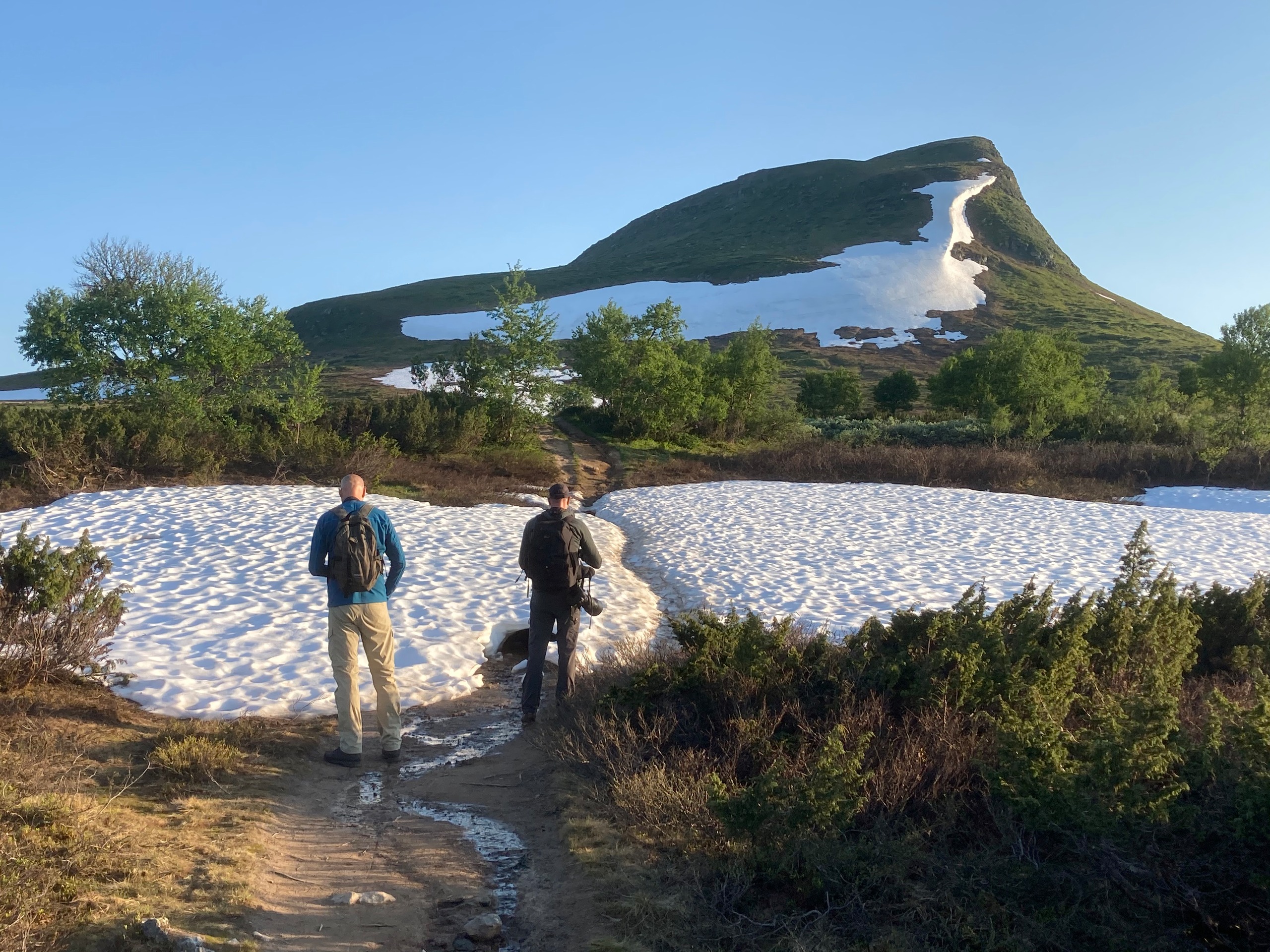
I was surprised to see and hear so many Reed Sparrows here (as they are quite common around the lakes and reed where I live). Here the seem to like a more forest like habitat not necessary with a lake and reeds.
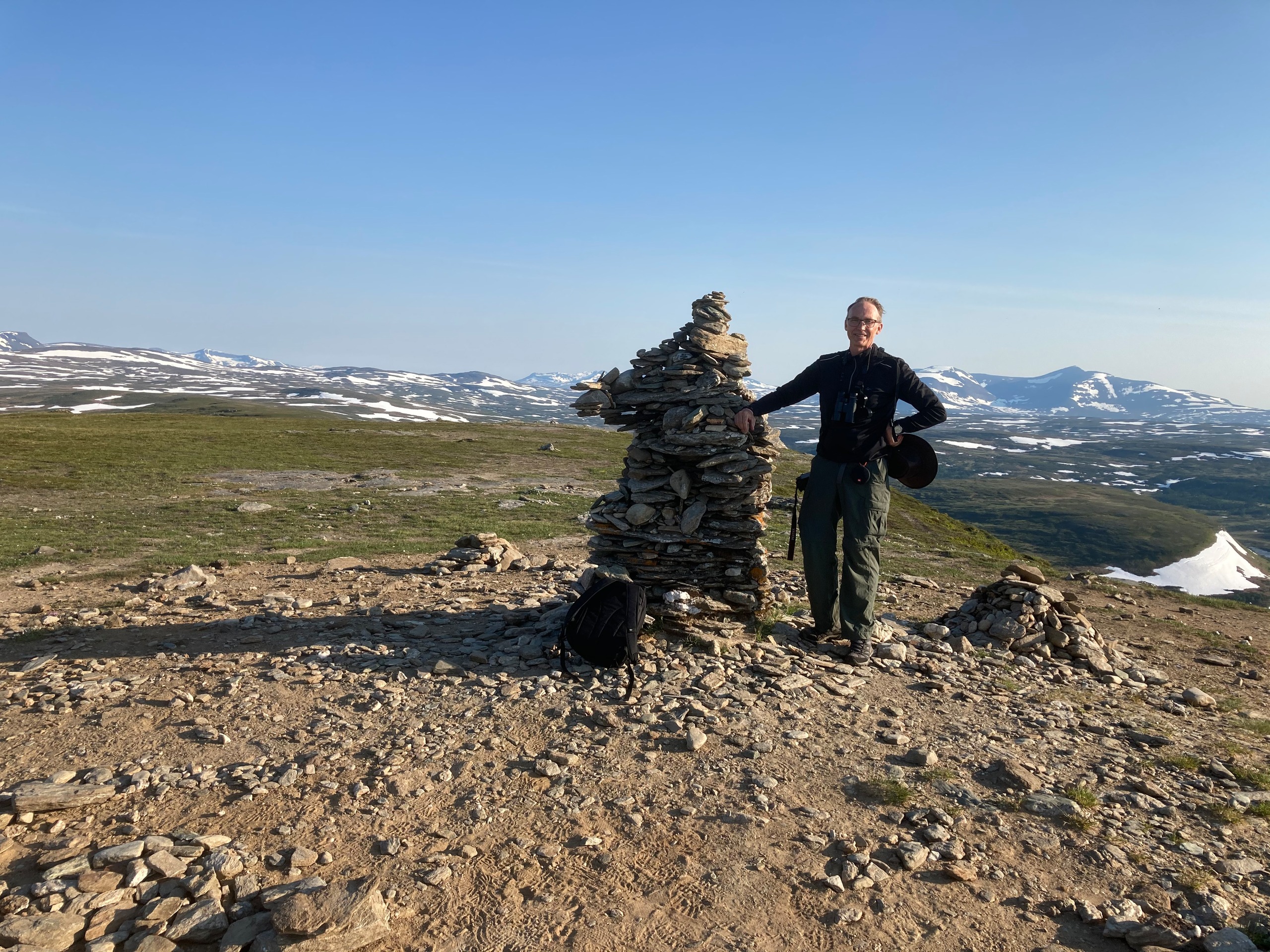
At the top we had hoped for Horned Lark and Dotterel but none were to be found. Still a very nice walk and superb views of the Swedish mountains. Me at the top.
The next day we wanted to go to Flatruet which is the most southern road in Sweden that goes strait over a (flat) mountain top. This place is famous among birders to be a very good spot and also with easy access.
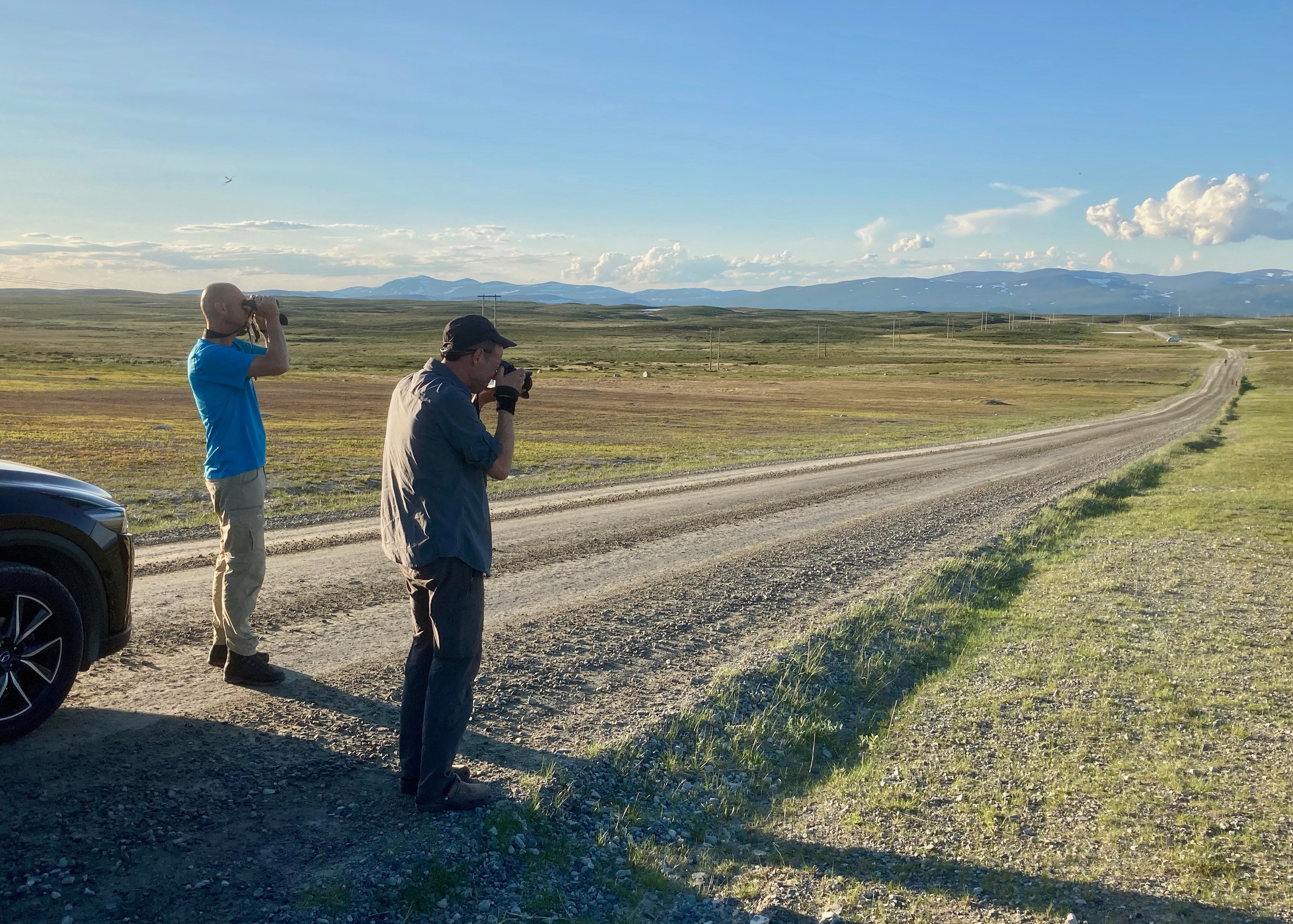
You are allowed to walk in some areas here and the reward is some true star birds of this habitat. The most common one is the Meadow Pipit but close by we found several Lapland Buntings.
There are a few small lakes here that normally attracts one of my favorite birds, the Red-necked Phalarope. This year only one pair with a young were found.

Close to this small pond a pair of magnificent Long-tailed Skuas had their nest. The male had a favorite stone where it returned after every hunt. To see see this star bird with the mountains in the back is a true privilege.
On my walk back to the car I bumped in to a single female Rock Ptarmigan which was having a drink in a small creek.
As shore birds are my favorite group of birds I also enjoyed the quite common Wood Sandpiper, which breed with several pairs here as well as the very cute Dotterel.
We came back later in the evening to listen for Great Snipe. Usually not a well known place for this species but this year there had been quite a few reports. We arrived around 10 pm and stayed until midnight. I was not any wind and we heard 7!! different males but never got our eyes on one. Still a fabulous way to end this day.
Great Snipe territory
The next day we ended our trip by doing some walk along the river (lower down) to see if we could catch up something more. This area had lots of the stunning Bluethroat and also several pairs of Yellow Wagtail. I also managed to have a quick swim in the cold water of this beautiful spot.
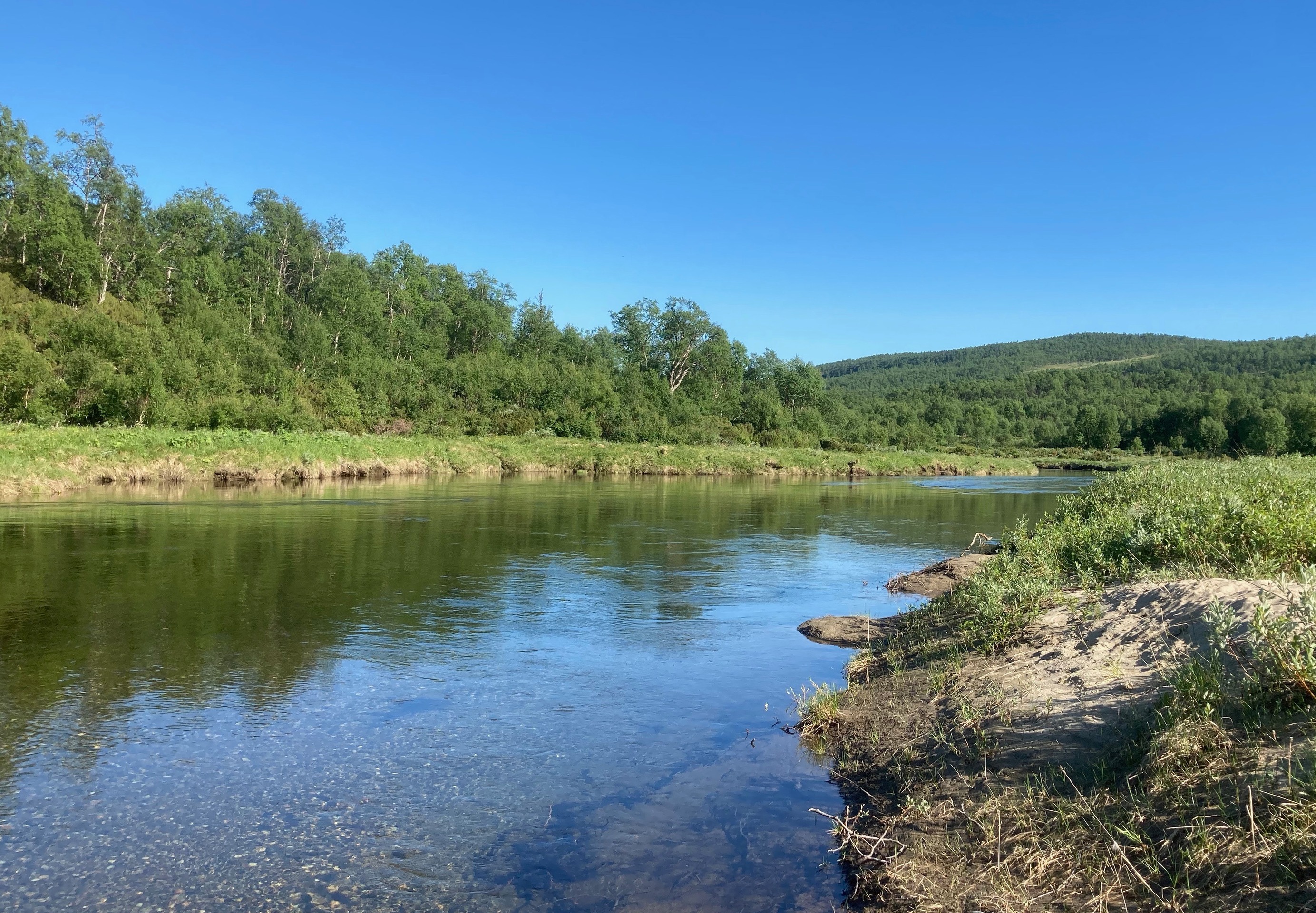
Sweden is a stunning and great place!!
Sri Lanka 19-20
After a long transfer in New Delhi we finally arrived to Sri Lanka, very early in the morning. Our fantastic and gentle driver Malan was waiting for us. We had booked a private driver for 14 days since it is quite cheap in this country. I had planned and booked everything else as it became cheaper and I also like to make my own plans. (Bad photo taken by a present taxi driver!)
Still, we more or less went the most frequent route putting in the most famous and recommended places in the tour. Our first stop was at Sigiriya which is about 5 hours drive NE from Colombo. This area is famous for its giant rock in the middle of a flat country. This site is sacred because of the sculptures and paintings of Buddha. At the top it's also a ruin of a former palace and it's hard to understand how they make the transport up with all the stones and other material that was needed to build it earlier. A must stop and also a good place to see some good birds. Maybe my most wanted species was to see the Indian Pitta. The Swedish name Jewel Thrush is more accurate to the beauty of this hard to see group. Believe my great excitement and joy when one of the first birds seen in the hotel (expansive) garden was this gem. I played the recorder and it responded immediately and flew up in to a tree. The Yellow-billed Babbler was common here jumping on the lawn outside our room and a handsome Shikra made a pose at the garden wall. At the "Rock" the endemic Toque Macaque was common and I fond these young relatives quite irresistible on our way up.
After 2 days at this great (but rainy) area we continued our journey south. Next stop was the hilly town of Nuwara Eliya. At the height above sea level of 1860 meters this is a cooler place surrounded by beautiful forested mountains and the place for the famous Sri Lankan (Ceylon) tea. There are many places to stop for tasting and buying. In Nuwara Eliya the Victoria Park is a famous park for birders. Many migrating species make this their wintering home. Looking at ebird you find many good species but in low account. That is also understandable when you come here. The park is quite small and you walk across it in just 15 minutes. I had a few targets that had to be seen here, if ever during this trip and I managed pretty well. I saw birds like Kashmir Flycatcher, Indian Blue Robin, Indian Black Thrush, Indian Pitta (heard only) and the endemic Sri Lanka White-eye. No photos though as they were all skulking and hard to see even in my bins. More easy birds however were, Indian Pond-heron, Oriental Magpie Robin, Grey Wagtail and the stunning endemic Yellow-eared Bulbul.
Next day we continued to the popular hilly village Ella.Ella is now getting very popular for all kinds of people, backpackers, yoga-people and nature lovers. Here you can make the relatively short walk up to Little Adam's Peak (not be be compared with the original I was told) and witness the stunning sun set.On the way back I got this funny pic of two endemics making acquaintance to each other; the Sri Lanka Red-backed Woodpecker and the Yellow-fronted Barbet.
An other must do thing is to take the walk to the 9-arches Bridge. This bridge lies in a nice valley and people go here to see the local trains pass by. I took a jungle walk here and was lucky to come up close to the national bird of Sri Lanka, the Sri Lanka Junglefowl and also got (maybe) the shot of the trip. Her I also saw a small group of Grey Tits which is closely related to the European Great Tit.
My list increased with some more birds here and just outside my room I found my first Red-vented Bulbul (showed to be quite common further on during the trip).
After two wonderful days our trip went south and down from the hilly areas. The weather had improved significantly the last days and our following days were all more or less sunny and we had that feeling you want of a tropical vacation away from the cold nordic Scandinavia. When you leave the mountains, southern Sri Lanka is rather flat and consists mostly of different types of agricultural habitats. Our new destination was Tissamaharama (Tissa in common talk). Most people who stay here do it because of the proximity to Yala National Park. Yala is world famous for the high possibility of seeing a Leopard. Elephants are usually seen and birdlife is abundant. Before the trip I had contacted a birdingpal clled Nalin (a group of birders from all around the world that like to help travellers) and he had given me some important information how to think and plan my trip. He helped me with a contact to a local guide whit his own jeep and he also suggested that we should not go to the main area in Yala (Block 1-2) but instead to block 5. The reason is that Block 1-2 is very crowded and some people (especially true nature lovers) finds it to be like a driven zoo. I'm happy about our choice and our guide Bandala was great in many ways. As we entered the park we saw our first Spotted Deers which later proved to be very common. Here a male and also a female/ young.
The park is a combination of lakes, rather thick bush but also some more open forest. Our first stop was at a smaller lake where we had this Yellow-billed Stork and a massive Mugger Crocodile.
Close to this lake I got the first endemic of the day, a Sri Lanka Swallow.
I have never seen so many Bee-eaters at the same spot as here. I probably saw more than 300 during the day. Most abundant was the absolutely gorgeous Little bee-eater.
The two other Bee-eaters that are present in Sri Lanka is the rather common Blue-tailed Bee-eater and the least common Chestnut-headed Bee-eater, both real stunners as well.
Next to the lake we got our first raptors for the day, an "unshy" Grey-headed Fish-eagle and a Crested (Changeble) Hawk-eagle. The latter seems to be a bird which taxonomists are discussing as there are many forms and whether it is one or two separate species is still an issue.
A central area in this block is the big lake with an elevated road that leads straight and with good views of what animals and birds that are around. We saw two displaying males of the Indian Peafowl which is a great sighting, especially in the wild.
There were one or two Leopards present in the area but we only saw one resting deep in to the bush which was a little bit of a disappointment. While standing at one point waiting for one, this Grey Mongoose came up close and gave us an interesting moment. Close by this Oriental Dwarf Kingfisher showed up. It's a quite uncommon bird here and our guide said it was the first time he had seen it in this section.
To see elephants you have to drive to an other part of the park (block) as they like the more open areas. In this sector we only saw one old female elephant which was a little bit surprising. A fantastic thing about this time was that we were completely alone here. For 2 hours we drove all by ourselves and beside the elephant (among other good stuff) we saw a group of Golden-backed Jackals, disturbed a Crested Hawk-eagle with a new prey and a stunning White-bellied Sea eagle.
Time for lunch, we parked in a "safe" place and enjoyed the splendid Lankevian kitchen at the back of the jeep. Bandala had prepared some classic curry which tasted good. We had nice views of the uncommon Lesser Adjutant Stork as well as a Hoopoe.
As the afternoon slowly got closer, we started slowly to drive towards the entrance gate. Close by the road we found a group of Water Buffalos. They claim these are true wild ones but if you read about it on serious web sites, most scientists seem to have the opinion that all now (in same way) are mixed up with the feral population. Still a massive sight though. Also my first (and only) Malabar Hornbill was seen here.
Just next to the gate we came up pretty close to the nice and funny Indian Robin, It was displaying, singing and moving all the time and was a great way to finish up the day in this nice park. The sun was dropping and we hit the main road. Inside the park itself we only saw one elephant but now on the main road we had to stop 5 times because of elephants standing on the road. The guide told us that this section was a cross over for them during the afternoon and therefore he had almost expected us to see a few on the way back.
The last day in Tissa I had booked a half day "safari" to Bundala N.P for myself. This park is next to the sea and is a mix of wetlands and bushy habitat. A part of the park is also the salt pans which attracts many shorebirds and other water birds. As the true shore bird lover I am, this day had big expectations, as I would have the chance to get to lifers in this group, Great Thick-knee and the Small Pratincole. The Great Thick-knee breeds here in small numbers and the glorious and quite difficult Small Pratincole winters here in small number. I was picked up by a local guy who took me there. I told him most time should be used for searching these two. The Great Thick-knee was easy and actually seen immediately at arrival but the the pratincole showed (not surprising) to be much harder. Finally after some hard week I saw two birds at quite a long distance in my scope, puh. The pic under is just to give me a souvenir of this moment.
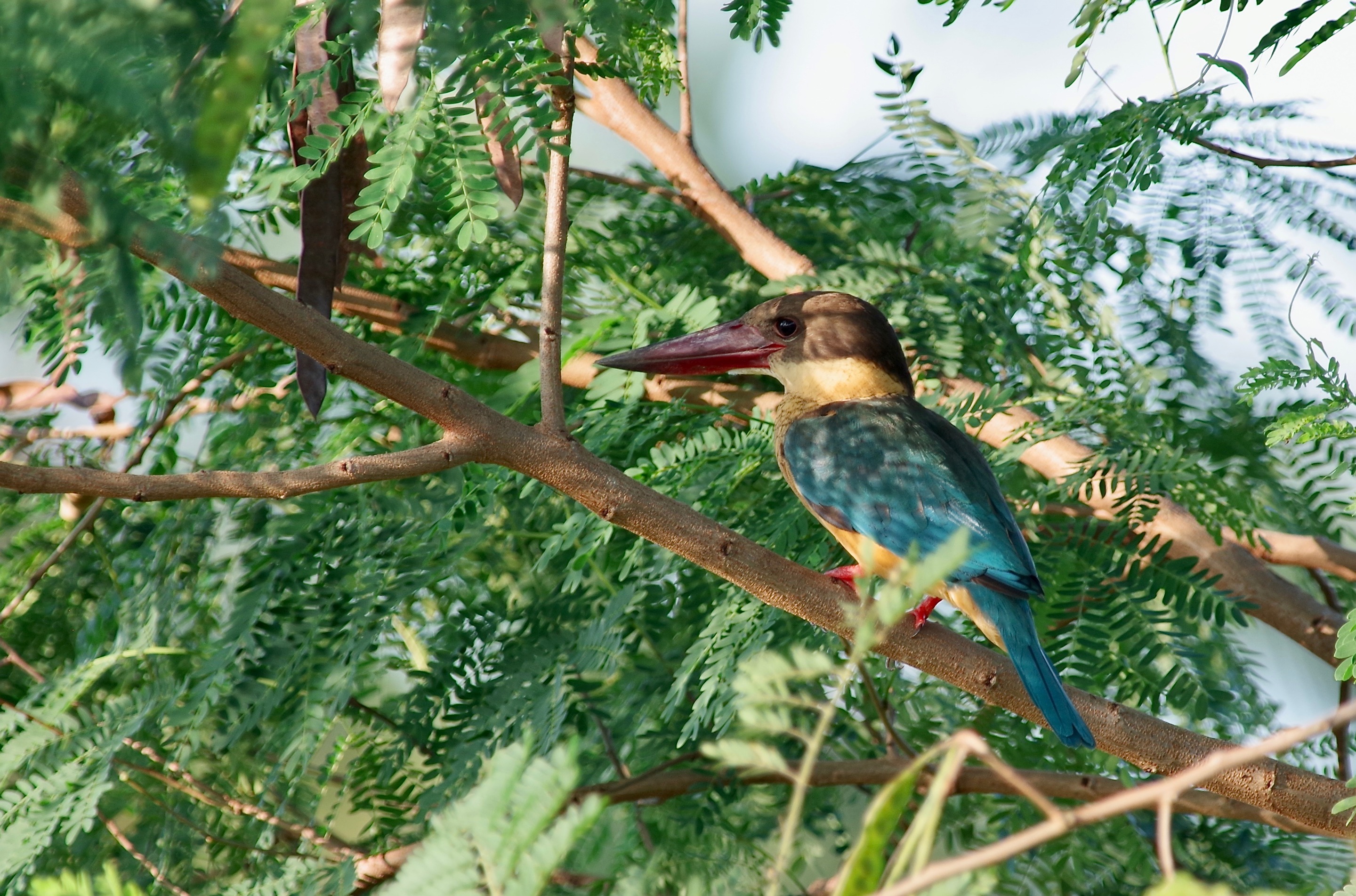
Lots of water attracts kingfishers and my guide became quite excited when we found this Black-capped Kingfisher which is a rare winter migrant. To fill up the list we also got this Pied Kingfisher and the special Stork-billed Kingfisher.
At a small pond we also got this group of Lesser Whistling Ducks in front of a Pacific Golden Plover. I've seen the plover once in Sweden so it was a good bird to see. Mongolian Plovers and Little Stints were quite common and a few came in close enough for a photos.
There are three different species of monkeys in Sri Lanka and 2 of them are decently common when you drive around to different places. This group of young Tufted Grey Langurs was a cute sight in the morning as well as the mother and child.
A splendid finish of this half day was this perched Crested Hawk-eagle.
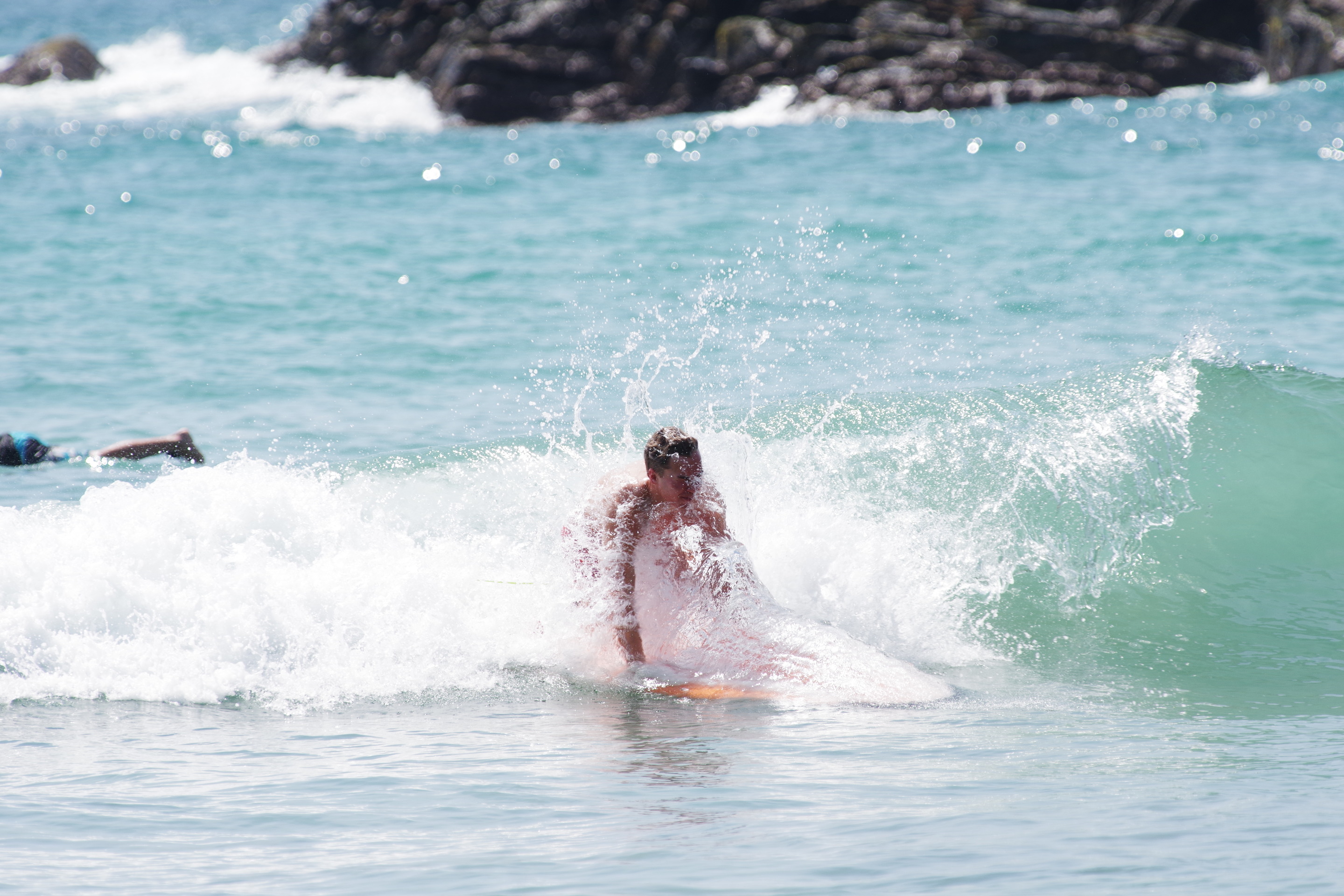
Most people who visit Sri Lanka spend many days around its magnificent beaches and now it was our turn to spend some time here. I had chosen a tiny beach called Hiriketiya. What I didn't know at the time of booking is that this beach is the best place in Sri Lanka to surf at this time of the year. Waves are not gigantic but the shape of the beach pushes the water in so that waves are created but not at the beaches around. It's a small place but highly recommended. Here my son doing it for the first time in his life and also a beautiful Black-hooded Oriole and that was seen in the garden.
I also took a walk to the next village which has a harbor and on my way I came up with this beautiful Orange-breasted Green Pigeon as well as this funny Toque Macaque.
After 3 days at the sea we started the trip towards Sinharaja (Forest) N.P. This park is the last remaining true rainforest in Sri Lanka. It is also the place to see most of the islands 32 endemics. The most frequent place for birders to visit is at the northern entrance and most reports are from there. However, I decide to try the southern part mostly because it is more convenient and also more "family friendly". I didn't see all endemics but had a truly good time here and saw many good birds. We stayed at a lodge at the absolute edge of the park an d it was ok but I would much more recommend the place my private guide recently has started. Only 2 rooms but they are absolute spotless and next to a valley/ slope down towards the river. I saw so many nice birds here in just an hour. He (Saman Shanta) also has his own restaurant. The place is called Villa Evergreen and restaurant. The first evening I booked him for a night walk which proved to be very successful. Our first bird was the Crested Serpent Eagle which was disturbed by the flashlight, just outside the park.
As we walked in to the forest it started to rain so I got pretty disappointed that the evening would be ruined. I was completely wrong. Except from the wake up of leeches (I had about 20 on each leg) we had fantastic views of Sri Lanka Frogmouth. My guide heard an owl call and he said maybe the endemic Chestnut-backed Owlet but when we finally found it after some tough walking we were stunned to find the Serendib Scops-Owl. This endemic is one of the rarest birds on earth (maybe only 80 of them) and only found in Sinharaja. However, this was actually the first record ever in this section of the park and this made a strong feather in his hat. At the end of our walk he showed me a great Tarantula Spider behind a sign.
The next morning I had booked Saman again for a full day in the rainforest. The plan was to bird whit him alone until 10.30 and then my family would join at a meeting point for further walking inside the park. It's a great park with several water falls and also the chance of a nice swim and "wild" fish therapy. We had a great start directly at dawn with a pair of Brown Fish-owls. A suggestive moment with these glorious birds beside the mist coming up from the river in first day light.
There are 2 endemic Thrushes here, no one easy so seeing on of them in this short time felt almost like a bonus. He knew a place for the Spot-winged Thrush where we also went. In poor light I managed to at least get id-photos to remember this event.
Day light came quick and as you know, bird intensity falls back quickly whit sun and heat. Maybe the biggest target today was the almost unreal Sri Lanka Blue Magpie. Sometimes tricky to see well but still a decent chance even if you only have one morning. At a bridge over the river we managed to finally see a pair which gave a big relief.
My family joined us as planned and we had a great moment in the forest with swimming, fish therapy and a few more birds like this pair of malabar Trogon as well as a handsome endemic Sri Lanka Green Pit Viper. Our friendly guide Saman was with us all the time.
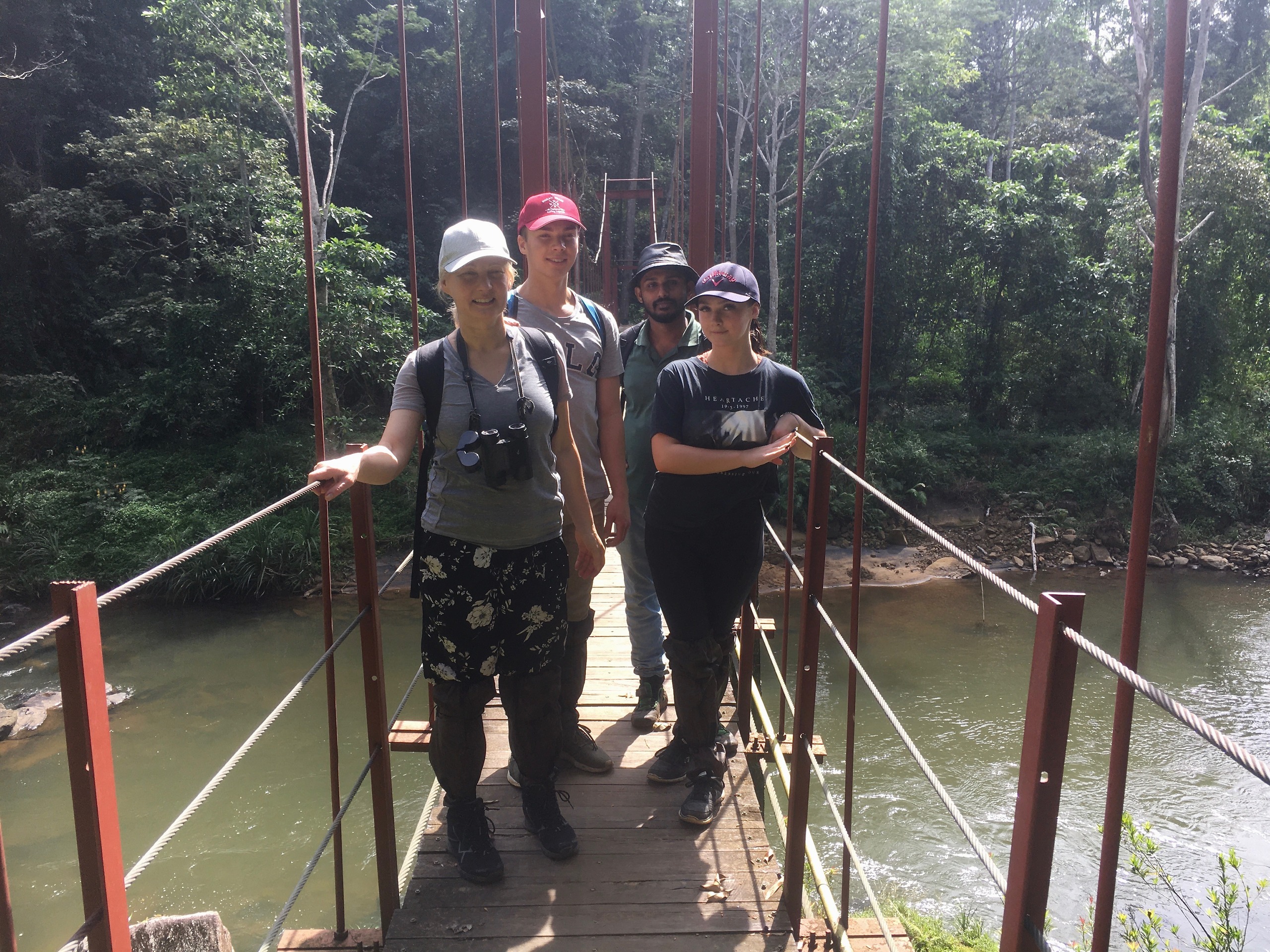
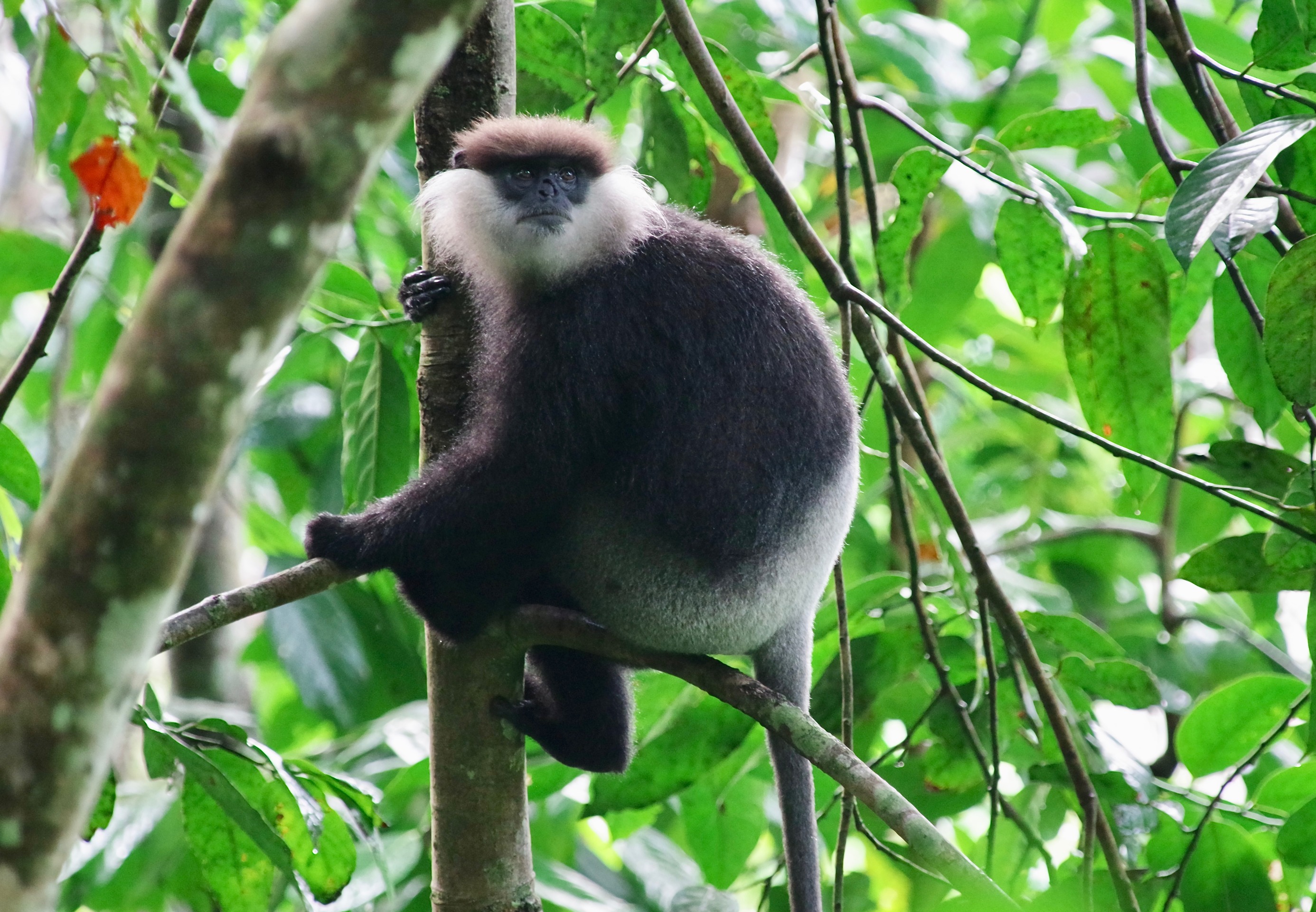
Here in Sinaraja you can see the endemic Purple-faced Langur which is quite rare compared to the other two shown before. We had a group of three which gave good enough looks.
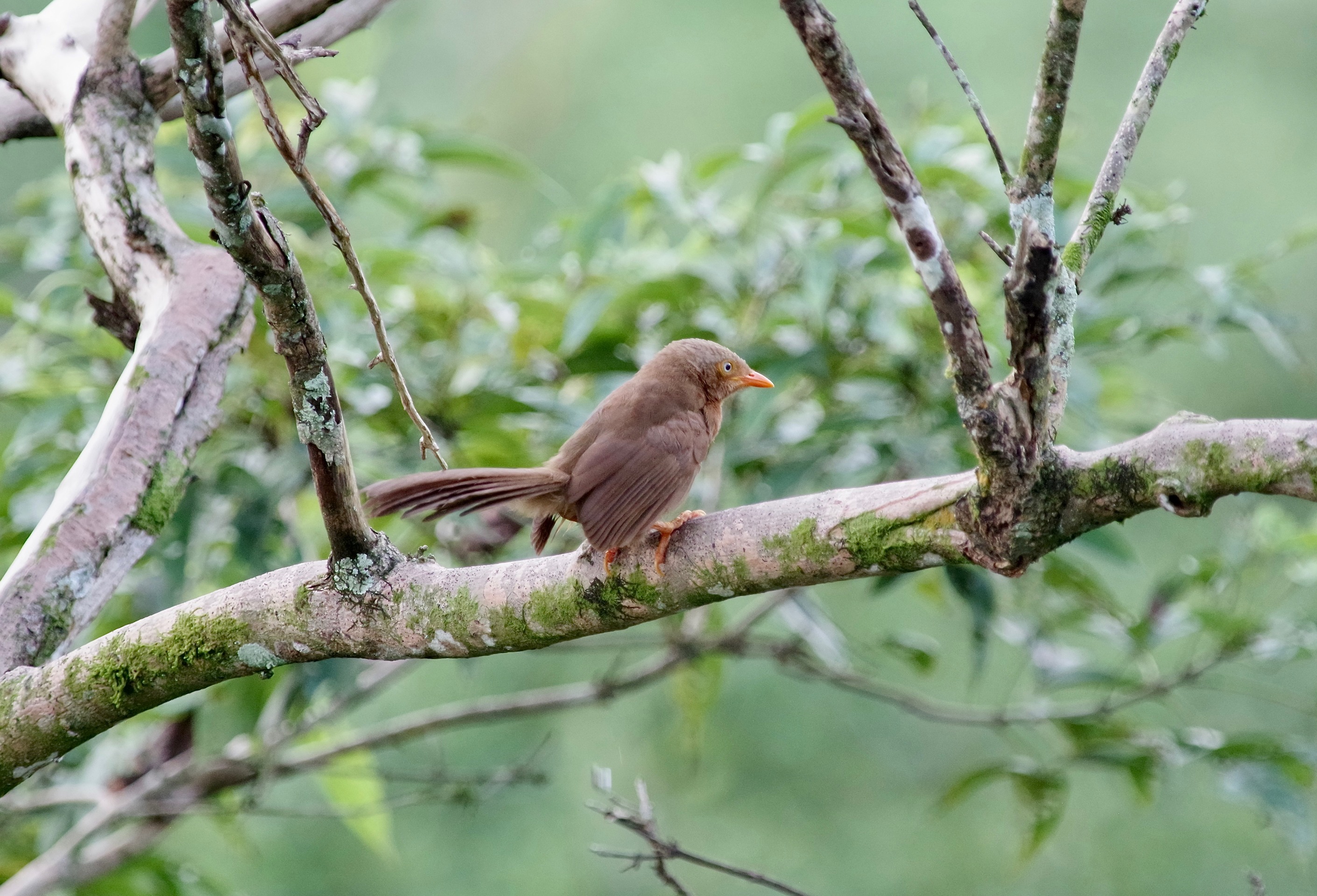
My trip, as far it comes to birds ended the last hour at Shaman's place where I saw my last 2 endemics, the Orange-billed Babbler and Layard's Parakeet and the stunning White-throated Kingfisher. This was a great trip and is highly recommended both as a pure birding trip as well as a combined family trip. Bottom you can see a woman and a kitten. This kitten had hide itself inside the car behind the engine and was too scared to come out. It was pure luck that my daughter saw when it jumped in, otherwise something terrible could had happened. Happy end though.
In total I saw 175 bird species of which 74 were lifers. Of 34 endemics I managed to see 20. Below you can see the list of endemics. SL= Sri Lanka.
Endemics seen: SL Jungelfowl, SL Green Pigeon, Serendib Scops-owl, SL Grey Hornbill, Yellow-fronted Barbet, SL Small Barbet, SL Red-backed Woodpecker, Layard's Parakeet, SL Hanging Parrot, SL Woodshrike, SL Blue Magpie, Black-capped Bulbul, Yellow-eared Bulbul, SL Swallow, SL Scimitar-babbler, Brown-capped Babbler, Orange-billed Babbler, SL White-eye, Spot-winged Thrush, Dull Blue Flycatcher. (20)
Endemics missed: SL Spurfowl, Green-billed Coucal, Red-faced Malkoha (heard Sinaraja), SL Wood Pigeon, Chestnut-backed Owlet, SL Greater Flameback, SL Crested Drongo, SL Bush-warbler, Ashy-headed Laughingthrush, SL Hill Myna (Heard Sinharaja), White-faced Starling, SL Scaly Thrush, SL Blue Whistling-thrush, Legge's Flowerpecker. (14)
Leif Rydell
Skriver om
Innehållskategorier
- Intresse - Natur
- Intresse - Vilda djur