Sten-Åke Sändh - Stenis Fotoblogg
One day with and onboard boats in the Stockholm Archipelago in the ice-winter of February 2026
Background
I have written the story here as a small tribute to those who work and have worked on the Waxholm's Company's boats in all weathers, in light or in darkness, during both early and long shifts to ensure that we can all live and thrive out here and that visitors both can get out here and back home again safely in all seasons, in one of the world's most difficult to navigate waters.
This little photo-illustrated story with 24 pictures is just trying to give you a little hint of how it is to live out there in the islands of the vast Stockholm Archipelago with its 30 000 islands in the ice-winter when most of the tourists are elsewhere. The Stockholm Archipelago is stretching roughly 100 kilometers north and 100 km south of Stockholm. Behind the City island of Stockholm Old Town lays the Lake Mälaren which is a big fresh water lake that freezes much faster than the Stockholm Stream with its brackish water on the Baltic Sea side. Lake Mälaren is stretching about 100 kilometers west from the Old City. So there is islands everywhere and they are about 240 000 all together along the long Swedish Cost. Malaren has a lot of islands too - usually much bigger than the ones in the Baltic Sea just because they are older and have had a longer time to rise since the last glacial period that ended 10 000 years ago.
In the Stockholm area in these postglacial times all the land is rising about half a meter in 100 years. In the north at the high coast it can be as much as one meter leaving old harbors witout water demanding new onces to be built in just a few houndreds of years. So when the water table is rising slowly in the Worlds Oceans it is partly counteracted by the land rise of the entire Scandian Peninsula. So far it is nearly a zero sum game but not so in medievel times. Since the medieval days Stockholm Old City has risen about three meters. In fact the very edge of the Inland Ice 10 000 years ago was situated where Old City is today and the Old City Island is nothing else than part of an esker or pebble ridge (rållstensås in Swedish) created by an ice river beneath the up to 2 km thick ice cover. So the land is still rising to normalize that enormous pressure the ice cover once put on the Scandian peninsula.
Another historical remnant from the Ice Age are the many smoth rounded stone slabs you can find all over the islands in the archipelagoes in Sweden, that both locals and tourists loves when they are sunbathing on these warm cliffs in the summer.
Many people are visiting Stockholm in the summer and around one miljon of them are said to also to be visiting or passing the Vaxholm Stad, about 15 nautical miles north of Stockholm. That is a lot even for a small town of just 5000 people proudly calling itself a Stad or City since the fifteenhoundreds when the King and his government decided to build a fortress on the little island of Vaxholmen in the middle of the Vaxholm Strait to protect Stockholm from intruders. So going by the Vaxholm Boats in the summers is very different from doing it in the ice-winter and the boats often are very overcrowded during the turist season. So the best season I think is really to go in the winter time, despite the communications are more limited, not the least by the ice!
The Weather
The archipelago teaches a quiet lesson: seasons are less about temperature and more about light, water, and collective mood. Up there, the sun’s angle is the true ruler. The Baltic breathes, the granite remembers the glaciers, and humans adjust their poetry accordingly.
Civilizations measure time with calendars. Vaxholm´s Islanders measure it with when the ice breaks and when the first crayfish party begins and what about seasons says some when we sometimes are forced to experiece four or five of them in one single day when the arctic air constantly battles the warmer south continantal temperatures! The weather is truely unpredictable. So bring a travel umbrella and a sweater even if the sun happens to be shining at the moment. Sometimes it is snowing even on the first of May or later even as far south as in Stockholm - yes I have experienced that myself a couple of times but that might just be because Stockholm lies roughly at the same latitude as the south of Greenland (Kap Farvel) or south Alaska (Haines).
Despite that, Stockholm and Vaxholm are places, that normally with Swedish standards, usually are relatively warm in the summer with lots of sun - especially if you get out from the main-land among the islands in the summer - it usually is less cloudy out there. However this year 2026 we have experienced a very long very snowy and cold ice-winter with very few sun hours. It started in the first half of December when Stockholm just saw the sun for half an hour in more than two weeks according to the Swedish weather service SMHI - that is probably a record. Even 2024 we had a very bad ice-winter with the most ice I have ever seen out in the Solöfjärden (Sun Island Bay) for the more than 60 years I have lived out here in the archipelago - so much for that global warming in our winter times.
On top of that we have had some other pretty special conditions where we have experienced very low sea water levels and this was the very reason why I went to Stockholm this specific day. These special conditions has exposed an old shipwreck at Kastellholmen in the very center of Stockholm. It is a captured Danish 17th-century warship, most widely identified as the Grå Ulven (Gray Wolf). It has gained significant attention recently just because of the exceptionally low water levels in the Baltic Sea, reaching points not seen in approximately 100 years. Personally I have never seen this wreck before in my entire life and that was the reason I went to Stockholm this February day and the old naval base island of Stockholm called Skeppsholmen (The ships island) and the adjacent island of Kastellholmen where this ship lies. The Baltic Sea has normally almost no tidal movement. Its emergence in early 2026 was caused by an unusually prolonged high-pressure system over the Nordic region, which pushed a lot of water out of the Baltic Sea to the North Sea.
The eight different seasons of the Stockholm and Vaxholm Archipelago
Before I will take you there, I would like you to know a little about the eight different seasons we live through here over a a year.
Stockholmers do not merely endure weather even if the well known Swedish songduo First Aid Kit use to sing about that ("Stockholms cold but I was told I was made to endure that kind of weather") - they curate it. In the Stockholm Archipelago the year is less a circle and more a wobbly philosophical experiment that unpredictably varies year by year. The “eight seasons” are not official meteorology — they are cultural field observations, refined by generations of boat owners and slightly sunburned philosophers.
Here’s the usual lineup, in brisk form:
1. Ice Winter (Isvinter)
The sea locks up and you can´t use non ice-worthy boats any more. Ferries crunch through brash ice with quite a lot of noise. When they have passed the silence thickens. The landscape becomes monochrome and stoic litterally. So don´t necessarily expect to see anything else some days than monochorome pictures despite you are absolutely sure to having taken them in RGB-colors!
2. Late-Winter Sun (Vårvinter)
Still freezing, but the light returns like a revelation. People squint optimistically at café tables outside, with far to cold clothes on pretending it is spring, while snow still remains everywhere.
3. Real Spring (Vår)
Explosive, brief, almost suspiciously intense. Birch leaves burst out in neon green. Everyone forgets the previous six months instantly when the belowed black birds starts to sing.
4. False Summer (Försommar)
Early June magic. Lilacs bloom. Water still cold enough to re-evaluate life choices. Optimism at peak levels.
5. High Summer (Högsommar)
Midsummer poles, sailing boats, strawberries. Looong nights where the sun barely sets. Mosquitoes run their own empire. Civilization temporarily relocates to wooden cottages.
6. Crayfish and Fermented Herring Season (Kräft- och Surströmming-säsong)
Late summer evenings in the first weeks of August. Crayfish parties with paper lanterns, dill crowns, and songs of questionable pitch. The water is finally warm. This feels like the emotional center of the year. Not the least because all adult Swedes get a proper excause to drink too much Vodka and/or Akvavit (spiced liquor) regardless if it is crayfish or fermented herring on the menu.
7. Beautiful Autumn (Sensommar/Höst)
Crisp air, golden reeds, mirror-calm water. Philosophical mood activated. Photographers thrive when maples turn yellow and red.
8. November (Just… November)
Not quite winter, not quite autumn but dark, dark, the heavy winds and everything is wet. Low sky. Horizontal rain. Existential realism. This is the “extra” season many insist deserves its own category. Many leaves the country ands goes south together with the migratory birds.
Our journey begins at Rindö Blacksmith Shop
I started my journey by bus from Rindö Island that is the most fortified island in the Stockholm Archipelago. This island was until 2005 the base for the Swedish Costal Artillery KA 1. It also had an amphibious boat regiment. Since Rindö is an island the only way to leave it is by boat and in this case by one of the big car ferries.

I started on the bus at Rindö Island around 11 o´clock and the bus rolled one of the car ferries at Rindö Smedja, which today is a commercial varf complex where among others the Stockholm - Vaxholm commuter fleet is maintained.

In the background through the windows you can se Vaxholm Town. From Waxholm the commuter boat traffic is reduced to mornings and afternoons especially in the ice-winter since a lot of the commuter fleet is not ice worthy. So this day I took the bus into Stockholm.
Overview of the "Maritime City Park of Stockholm"
Since Sweden was neutral and managed to stay out of the World War II, we still have quite a few historic boats left in usable condition. If you go to Stockholm and some of the spots marked with an H on the map below, where there are historic boats you also will find that quite a few of them were built in other countries around the Baltic Sea.
There has actually been a plan to officially declare the quays and other areas with historical maritime significance in Stockholm a Maritime Park. To my knowledge it has not happened yet, so here you at least can see an informal map over these often interesting areas.
C - Areas for the Commuter and Waxholm Company Boats at Strömkajen and Nybrokajen
H - Is the areas where you can find a lot of historical boats after the different quays of the City
X - is the place of the wreck from the Danish warship Grå Ulven
X- to the very rigth of the map is the place where Regal Skeppet Vasa (The Regal Ship Vasa) went down just some minutes after having left the warf it was built at. On enourmus disaster for Sweden at that time and its navy
Vasa - is the Vasa Museum where you can see the the historical remainings of the ship
F- Is the place where The Stockholmers used to dump all the shit from the City in the old times.
The F stands for the "Flugmötet" which means "The Fly Meet". In these days it was a happening when the ice went and with that all the shit that had been accumulated during the winter and with that the bad smell. Then the spring came with other more pleasant scents.

Click to zoom!
The lines on the map og The Old City is drawn where approximatellly where the medieval city walls were built. The area Skeppsbron to the east of Österlånggatan was partly built on landfill.
Stockholm was founded 1252 and it was built where it was built to stop pirates and enemies from the east to raid the shores of Mälaren where the hart land of Svealand with all its rich soils, big farms, castles and manors.
At Strömkajen the base of the Waxholm Boats

The old steamship "Storskär" (Big Skerrie) here at Strömkajen where all the Vaxholm commuter boats are having their base, is still running regularly in the commuter traffic in the ice free part of the year, between Stockholm and Grenadjärbryggan at Rindö Vaxholm - It is a historic Swedish steamship with over a century of service in the Stockholm archipelago.
Key Historical Milestones:
Construction (1908): Built at the Lindholmen shipyard in Gothenburg, Sweden.
Original Identity: It was delivered to Strängnäs Nya Rederi AB and originally operated under the name Strängnäs Express. It also operated under the name Stockholm early in its history.
Acquisition by Waxholmsbolaget (1940): The ship was renamed Storskär in 1940 after joining the Waxholmsbolaget fleet.
Modern Service: Considered a flagship of the Waxholmsbolaget fleet, it remains one of the few authentic coal-fired steamships still in regular passenger service.
Technical Specifications:
Engine: Powered by a yard-built steam engine producing approximately 659 hp.
Capacity: Designed to carry up to 320 passengers.
Dimensions: It measures roughly 36.98 meters in length and 6.99 meters in width.
The ship is a central part of Stockholm's maritime heritage and is a frequent participant in annual events like "Skärgårdsbåtens dag" (Archipelago Boat Day).

Another of the well known steam ships "Norrskär" (North Skerrie) that is still running regularly in the commuter traffic in the ice free part of the year, between Stockholm, Vaxholm and the outer islands in the middle part of Stockolm Archipelago - here covered and ritired just oppisit the Stockholm Royal Castle for maintenance during the winter.
Brief History: The S/S Norrskär is a classic example of the passenger steamboats that have been a vital part of Stockholm's maritime heritage.
Archipelago Service: For much of its history, the vessel has been used for passenger excursions and ferry services between Stockholm and various islands in the archipelago, such as Sandhamn.
Steamboat Tradition: It is part of a traditional fleet that continues to operate, often featured in events like "Archipelago Boat Day" (Skärgårdsbåtens dag).
Operational Status: The boat remains an active piece of living history, providing guided tours and scenic cruises for visitors.
At Skeppsholmen (the old naval base of Stockholm)
Skeppsholmen is the small historical island where Stockholms naval base once was situated for houndreds of years. Nowadays it is one of the places where Stockholms maritime heritage is moored. Other places are Djurgårdsvarvet, Norrmälarstrand and Södermälarstrand in the Lake Mälaren and together they form a sort of informal maritime city park. Especially at Skeppsholmen there is a lot of historical vessels which makes the place worthwhile to visit for tourists. Quite a few of these boats are inhabited year - around

Torsten is a historic Swedish tugboat built in 1895 at the Södra Varvet shipyard in Stockholm.
Original Use: It was originally built as a steam-powered tugboat for the company Stockholms Transport- och Bogserings AB.
Engine Upgrades: Over the decades, its power system was modernized multiple times. The original steam engine (100 Ihk) was replaced by a Crossley diesel engine in 1960, and later by a Scania DS 11 engine in the 1990s.
Current Life: Today, Torsten is a well-known sight in Stockholm, often docked at Skeppsholmen. It serves as a living piece of maritime history and is frequently used as a private leisure vessel or "houseboat" style residence.

Violette, a historic vessel currently serving as a houseboat in Stockholm
History & Origins:
Built: She was constructed in the early 20th century.
Early Use: Originally, the Violette served as a passenger steamship.
Transformation: Over the decades, she was retired from commercial service and meticulously renovated to become a private residence.
Current Status:
Location: She is permanently moored at Skeppsholmen in central Stockholm.
Community: The boat is a member of the Stockholm Ship Association (Stockholms Skeppsförening), a community dedicated to preserving historic ships and providing a unique living environment on the water.
Features: Her design retains many classic maritime elements, such as the wooden wheelhouse and white-painted hull, which are common sights along the Skeppsholmen quays

The Finn was originally built as a tugboat (Swedish: bogserbåt)
Modernization: It underwent a significant reconstruction in 1947, after which it was classified as a cargo motor vessel (lastmotorfartyg).
Current Use: Like many vintage ships at Skeppsholmen it has been retired from commercial service and now serves as a private residence or recreational vessel.
Historical Context: The ship was earlier part of a cluster of well-preserved historic vessels at Norr Mälarstrand , a scenic quay on the island of Kungsholmen of Stockholm known for its collection of classic wooden and iron boats.
The name "Finn" is a traditional Nordic name, often associated with historical and legendary figures in Swedish and Finnish culture, such as the giant "Jätten Finn".
On the boat the owner that also is named Finn!
At Kastellholmen

Just a short walk east over a small bridge will take you to another smaller island called Kastellholmen (named afters a small "fortress" on top of the island) and on the southern side of the island we this day with its extremely low water level could se this old historic Danish warship that was the reason I made the journey to Stockholm this day.
The shipwreck visible at Kastellholmen is a 17th-century warship, most widely identified as the Grå Ulven (Gray Wolf)
It has gained significant attention recently due to exceptionally low water levels in the Baltic Sea, reaching points not seen in approximately 100 years.
Visibility and the 2026 Phenomenon
The wreck is rarely seen because the Baltic Sea has almost no tidal movement. Its emergence in early 2026 was caused by a prolonged high-pressure system over the Nordic region, which pushed water out of the Baltic toward the North Sea.

The Danish warship Grå Ulven at Kastellholmen
The water you see is called Strömmen or The Stream in English since it is two streams one on each side of the Old City-island and it is often open despite the cold ice-winter. In the backgrumd you see the houses on the eastern side of the Old City called Skeppsbron or the Ship's Bridge - a place which historically served as the commercial harbor of Stockholm. The relatively cold and brackish waters of Strömmen has preserved the oak tree surprisingly well after all years but it is nothing compared to the Regal Ship Vasa at the Vasa Museum at Djurgården, which is in a surprisingly good condition (see the Maritime City Park -map). Vasa is a must for many visitors.

There are a few other old wrecks along the shores of Kastellholmen and like Grå Ulven they where deliberately sunk in this case to be used for foundations for old bridges. Also around Vaxholm they have used the same methods but in that case it was to block enemy ships from passing between certain islands. There are also stone barriers between some of the islands built on the bottom up that are invisible for the eyes but they are there about just 1/2 a meter below the surface. Each year there are houndreds of accidents just around Vaxholm when pleasure boats hits these barriers or other under-water skerries. So it is a good idea to take navigation seriously in these historically heavily fortified and shallow waters.
Strömkajen: The Old Lady Västan

Västan is a historic Swedish ferry often referred to as the "Grand Old Lady" of the Waxholmsbolaget fleet
Here at Strömkajen covered under winter protection, with the island Södermalm in the background,
Short History of MV Västan
Construction: The ship was built in 1900 by Motala Verkstad.
Original Name: It was originally named Nya Svartsjölandet.
Legacy: As of 2023, the vessel celebrated its 123rd anniversary. It is one of the three classic "tradition" ships in the fleet, alongside the steamships S/S Norrskär and S/S Storskär.
Current Service: Today, it continues to operate in the Stockholm archipelago, frequently seen at Strömkajen in central Stockholm or at the Vaxholm harbor.

The Waxholm I commuter vessel is docked at Strömkajen in Stockholm, Sweden. The vessel is designed to break through thick ice, a feature necessary for navigating the waters around Stockholm during winter months when the faster boats like the one you can see to the left can´t make it through the ice. The ship has served the Stockholm archipelago for over four decades now and is very important as a "life line" for many out in the islands in the winter.
This and a few other of the bigger vessels that are equiped with hydrulic cranes are very important as they serve as cargo ships during of season when there are few tourists.
Service History and Key Events
Delivery and Early Years: Built by Lunde Varv och Verkstads AB, the vessel was delivered to Waxholms Ångfartygs AB on June 30, 1983, at a cost of 8.5 million SEK. Along with its sister ship, M/S Waxholm II, it became the backbone of winter traffic in the middle Stockholm archipelago until the early 2000s.
Operational Incidents: On September 21, 1993, while undergoing a refit in Fredrikshavn, Denmark, a fire broke out in the water on its starboard side. The ship sustained damage to its forward deck, necessitating the replacement of interior ceilings, carpets, and furnishings.
Technical Upgrades: During the same 1993 stay in Denmark, new MAN D2842 LE main engines (836 hp each) were installed.
ications and Role
Dimensions: It is a sturdy cruise-style vessel measuring approximately 36 meters in length.
Current Service: Today, it continues to operate as part of the Waxholmsbolaget fleet, frequently seen at terminals like Strömkajen and Vaxholm. It remains an active part of the public transport network, recently being part of a trial where SL (Stockholm Public Transport) tickets are accepted for archipelago travel.
A trip with the icebreaking commuter vessel Waxholm 1 from Stockholm to the end station of the communter line 4 at Grenadjärbryggan on Rindö Island

The communterline 4 (the straight line) was established a few years ago as an experiment but is now permanented. It is about 28 kilometers or 15 nautical miles long. Every year a lot of tourists comes to Vaxholm and the other islands in the middle part of Stockholm Archipelago with this coummuter boat line.
The dotted line shows the main waterway into Stockholm through the previously heavily fortified Oxdjupet strait. For 300 years until the mid-19th century, prisoners at Vaxholm Fortress worked as forced labour to block Oxdjupet (The Ox-depth) in order to force all traffic to pass the Vaxholm Fortress. When they were done, the boats had become so big that they could not pass through the narrow and shallow Vaxholm Strait. So then they had to start the work to clear Oxdjupet again :-)
A trip from Strömlajen in the central Stockholm through the archipelago between Stockholm and Vaxholm in the ice-winter in February on the ice-going commuter ferry Waxholm I

A view from a boat window on Waxholm I shows a frozen landscape with a distant shoreline and a cloudy sky. The scene captures the stillness and beauty of a winter day in the Stockholm Archipelago. The ferry is navigating through ice-covered waters, showcasing the unique winter conditions of the region.

A stop at Hasseludden - The commuter ferry Waxholm I approaches Hasseludden, a small settlement on the island of Värmdö, during a winter journey through the Stockholm Archipelago. Passengers are waiting to get onboard and continue through the icy waters to Vaxholm and the adjacent islands.

Around 17 hours it start s to get dark - Here Waxholm I is passing a small sound between the two small islands of Granholmen and Östra Granholmen) - this sound is so narrow that Waxholm I barely makes it at such low water as it was this trip and in these conditions they can´t serve some of the piers with shallow waters - The two white spots are two swans - The Waxholm I ferry navigates through a sound filled with ice floes, a common sight during the winter months in the Stockholm archipelago. The ferry provides a unique transportation experience, allowing passengers to witness the beauty of the frozen landscape. But this part of the year there are very few tourists that travels out in the islands in the evenings. The few that are here are possibly on their way back to Stockholm instead.

Waxholm I has landed for a short stop at Vaxholm which is a small town of 5000 inhabitants serving as a hub for the Vaxholm´s Companys fleet. Now the town is very quit but in a year there is around one million passing here - many by boat. At this time when the water is so low, old people have hard to get on and of the vessel - In the background the old famous Vaxholm Hotel, where people have a wonderful view over the Southern Vaxholm Bay from the hotel restaurant. The historic Vaxholm Hotel is a real landmark of Vaxholm. The scene captures a quiet moment before the expected influx of visitors.

Waxholm Fortress - A well-lit fortress stands prominently on an island within a dark, calm body of water. The structure, constructed of stone, features a central dome and surrounding walls, illuminated by warm artificial light. The reflection of the fortress is visible on the water's surface, creating a symmetrical effect. The scene conveys a sense of history and tranquility.
Waxholm Fortress: The Lock of Stockholm
History and Early Origins
The first fortification on the island of Vaxholmen was commissioned by King Gustav Vasa between 1549 and 1558. At this time, it was a simple wooden blockhouse and stone tower designed to control the main sea route into Stockholm. Its strategic importance was proven early on when it successfully withstood two major attacks against the capital.
The Evolution of "The Lock"
For centuries, Vaxholm Fortress functioned as the primary defense for Stockholm from the sea, earning it the nickname "Stockholms lås" (The Lock of Stockholm). The current stone structure seen today was built much later, between 1833 and 1863. This massive reconstruction was prompted by the loss of Finland to Russia in the early 1800s, which left Sweden's eastern coast more vulnerable.
Military Significance
The fortress was designed to be impregnable, featuring thick granite walls and heavy artillery. It played a crucial role in coastal defense, and its presence effectively forced all incoming ships to pass within range of its cannons. However, the rapid advancement of artillery technology during the 19th century eventually rendered the stone walls obsolete against modern explosive shells.
But it once prevented the Danish fleet from passing into Stockholm in the sixteen houndreds and in the seventeen houndreds it prevented the Russions to do the same. On the east of the Island of Rindö just behind the fortress there are a lot of heavy fortifications and especially on both sides of present main deap sea-lane to Stockholm
Modern Day
Today, Vaxholm Fortress is no longer an active military site. Instead, it serves as a cultural destination housing the Vaxholm Fortress Museum, which showcases 500 years of coastal defense history. Visitors can explore exhibitions ranging from military history to life on the fortress in the late 1800s.

The commuter ferry Waxholm I is approaching the Southern Waxholm Bay - It navigates through the dark waters of the Stockholm Archipelago, its powerful headlights illuminating the path ahead. The scene captures the essence of a nighttime journey, with the distant lights of the shores of the islands of Rindö and Ramsö outside Vaxholm. The vessel's bow cuts through the water, creating a dynamic sense of movement and direction. When the ship is breaking the ice it generates quite a lot of noise and especially on lower deck of the boat that can be very disturbing if you have to listen to it for the hours a trip like this might take in the winter conditions. The journey from Stockholm to Rindö in the thick ice often takes twice as long as in the summer since the engines has to be spared from overheating by the ice. They are not run on full speed constantly of that reason.

The commuter ferry Waxhom I is approaching the island of Ramsö in the darkness of the afternoon. The ferry's lights illuminate the ice covered water as it travels towards the island's harbor, which is visible in the background. If there are people waiting for the boat on the pier there are semafores at all the piers that people can use to signal to the captains, if they want to get onboard.

Ramsö is a pretty small island with very few inhabitants in the winter. Here an old lady trying to debark on the steep gangway. The scene captures a quiet moment on a winter's evening in the Swedish archipelago, highlighting the importance of ferry transport to remote island communities. These ferries are a real life line for the people living out here. Some permanent living people on even more isolated ilands like the adjacent Skogsö where I earlier had a summer house even used to get free helicopter flights once a week to Vaxholm when the boats could not approach their jetties in the winter or the traffic was closed to their island.
To the very left you can see one of these semafores used to signal to the captains on the boats.

Waxholm I is approaching the jetty at Vegabryggan on the southern shore of Rindö Island in the late dark afternoon. - Buildings line the shore, illuminated by streetlights.

Waxholm I arrives at Grandjärbryggan pier in Rindö Harbor on Rindö Island, marking the end of a two-hour journey through the Stockholm Archipelago. Passengers disembark as crew members prepare the ferry for its return trip. The scene is illuminated by the ferry's lights and nearby street lamps, highlighting the quiet beauty of the island at night.

Grandjärbryggan the end stop of the commuter line 4 at Rindö Island - A snow-covered pier at night, with people walking home. The scene captures a quiet moment at Rindö Hamn on Rindö Island.

At last back home at Rindö again after a whole days travel. I started around 11 and are back again at one of the old converted military barracks where I live since three years back. This bulding was part of the old KA I Coastal Artillery regement that was closed 2005 - This large, yellow building stands prominently in a snowy landscape. These former military barracks, was converted for residential use ten years ago (around 2015). Warm light emanates from the windows, creating a welcoming atmosphere against the backdrop of a winter night. People out here at Rindö often keep their string lights they put up on their balconies for Christmas, as an attempt to mitigate the influence of the otherwise long and massive winter darkness.
If you don´t like the Ice-Winter and the darkness you might prefer Rindö Harbor in the summer instead:
To Rindöhamn - by shuttle boat - Photo page
Höstbild av en ren tillfällighet - Skogsö-höst
Vi var bortbjudna i torsdags och eftersom vi bor på en ö vid Vaxholm utan någon vidare service, så hade min fru dagen innan åkt in för att bl.a. köpa några fina blommor. Expediten berättade särskilt att det inte var vilka blommor som helst från partihallarna i Årsta utan dessa var minsann direktimporterade av butiken raka vägen från Holland.
Nåväl, buketten hade tre vackra grenar fulla med vita vackra blomklockor. En av dessa kroknade tyvärr redan samma kväll och ytterligare en hade helt tappat stilen under natten. Lite halvpanik då. Köpa ost eller något från Ostmakeriet, när dom är inte mycket för ost.
På morgonen framkastade jag att jag väl kunde kolla om jag hittade något att printa och göra en tavla av. Efter ett tag fastnade jag för en gammal höstbild som jag tog redan i oktober 2007 med min gamla Ricoh Caplio R7 med ca 7 megapixel. Den hade bara två fel, den var inte "tillräckligt höstig" och den hade "fel" sidoförhållende (4:3) för de passepartouter jag hade som var för 50 x 70 / A2. 7 MP var väl lite väl lite för A2 så jag skalade den till 24 megapixel. Jag ändrade tonerna en aning mot mer gult och rött, ökade mättnaden och ökade ljusstyrkan i "midtones" samt softade den lite för att få lite av en "impressionistisk look" i själva bladverket. Till slut är bilden beskuren så att jag främst kapat den en del i underkant, då jag tyckte den delen av bilden inte tillförde särskilt mycket.

Bilden var också en liten test i att skriva ut med Display P3 istället för med Adobe RGB, för att hjälpa skrivaren att släppa till lite mer rött och orange än vad Adobe RGB möjligen skulle ha gjort. Även min fru har beställt ett ex. för montering i tunn ram.

Originalbilden togs en dag när jag passerade på vägen förbi en av mina Skogsö-grannars vackra björkar, när den stod där i det vackra motljuset som silade in genom en massa helt vildvuxna aspar och hans enorma och ogenomträngliga slånbärssnår.
"Tjuren Ferdinand" i Estepona
Translate into Google English:
"Ferdinand the Bull" in Estepona - Photo page
Translate into Google Spanish:
Bakgrund
Staden Estepona - Solkustens trädgård och Tjuren Ferdinand
Den här historien är en berättelse om en framsynt man och hans vision om hur man skulle kunna bygga en stad, där invånarna faktiskt kunde tycka om att bo och leva och hur den visionen i stor utsträckning kommit att förverkligas på drygt 10 år och fortfarande i allra högsta grad hålls levande. Den handlar om en verklighetens "Tjuren Ferdinand" i dagens Estepona i Spanien - borgmästaren Jose Maria Garcia Urbano och hur han i Ferdinands anda använt sig av mjuka värden som ett överflöd av vackra växter och blommor, kultur i vid mening som tagit sig uttryck i kakelmosaik, muralmålningar och vattenkonst samt inte minst ett varsamt bevarande av gammal befintlig bebyggelse, för att uppnå dessa sina mål. Till synes enkla åtgärder som gjort förvånansvärt stor skillnad.
I Estepona har man sett ett värde i att försöka bevara den medeltida skalan och inte som på många andra ställen idag skyndat att riva allt som stått i vägen för moderniteten, för att i hast kunna bygga allt högre skyskrapor som ett uttryck för dynamik och utveckling. Den satsning som gjorts under dessa drygt 10 år innefattar dock även ett splitter nytt sjukhus och en del nya offentliga byggnader och även det ligger helt i linje med att satsningarna ska komma alla till del och inte som tidigare mest rinna ut i korruptionens oformliga delta.
Estepona Kommun och Regionen Andalusien
Estepona är en kommun och trädgårdsstad långt ner på den spanska solkusten. Kommunen har nära 80 000 invånare och staden med samma namn drygt 30 000. Det finns lämningar i centrala staden ända sedan romartiden, så platsen har varit bebodd i minst 2000 år men det finns inte mycket kvar från den tiden ovan jord idag.
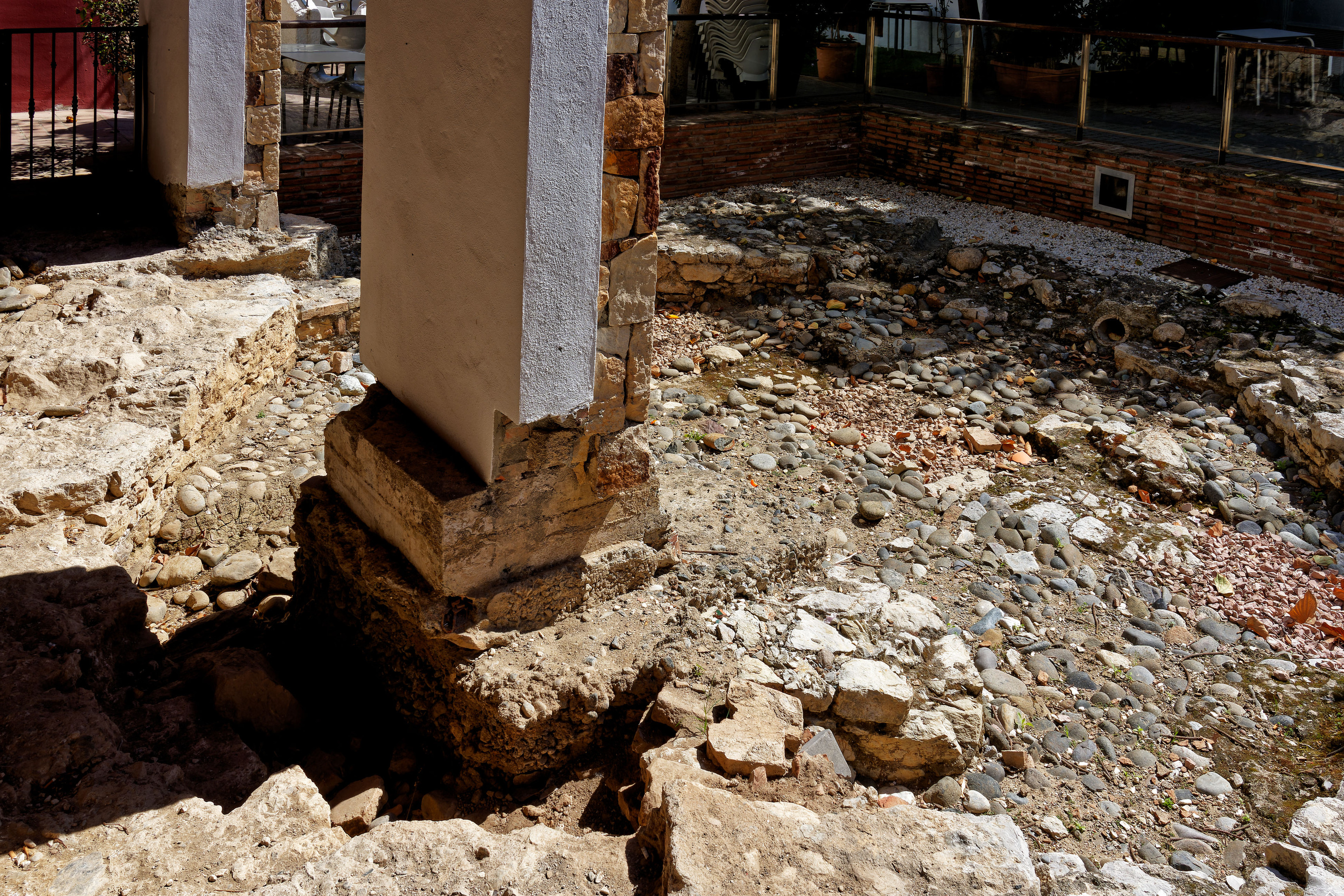
Här en liten utgrävning av en 2000 årig gammal romersk villa i centrala staden som i sig inte är särskilt imponerande, men som ändå skvallrar om ett flertusenårigt kulturellt arv. Bredvid finns en liten men intressant historik utställning.
Stadens anatomi
Stadsmorfologi är ett ord som nog bara kulturgeografer använder, så även om jag faktiskt läst kulturgeografi för många år sedan använder jag hellre "anatomi" istället för det förstår betydligt fler. Estepona har en medeltida kärna med äldre byggnader, gator och gränder, som en gång anpassats till platsens naturliga topografi och naturliga förutsättningar. Stadens mer modernistiskt präglade högre byggnader omger den gamla staden i ringar som spridit sig från centrum och längst ut tunnar de ut och ligger efter stranden både åt norr och söder. En del arkitektur har lånat både färg och formspråk från både dagens Marocko och de gamla morerna.
En del av hotell och lägenhetskomplex skulle lika gärna kunnat ligga i Marrakech, för de har samma rosaockra-färgade fasader som är Marrakech verkliga signum. Där tillåts ingen annan färg varken på den enorma och magnifika stadsmuren som omger hela Marrakech eller på husen kring den historisk Medinan. Notera även det grönglaserade tegeltaket nedan. Även det skulle kunna vara hämtat direkt från Marrakech. Inget konstigt med det då ju morerna styrde det som idag är södra Spanien och Andalusien under nära 800 år.
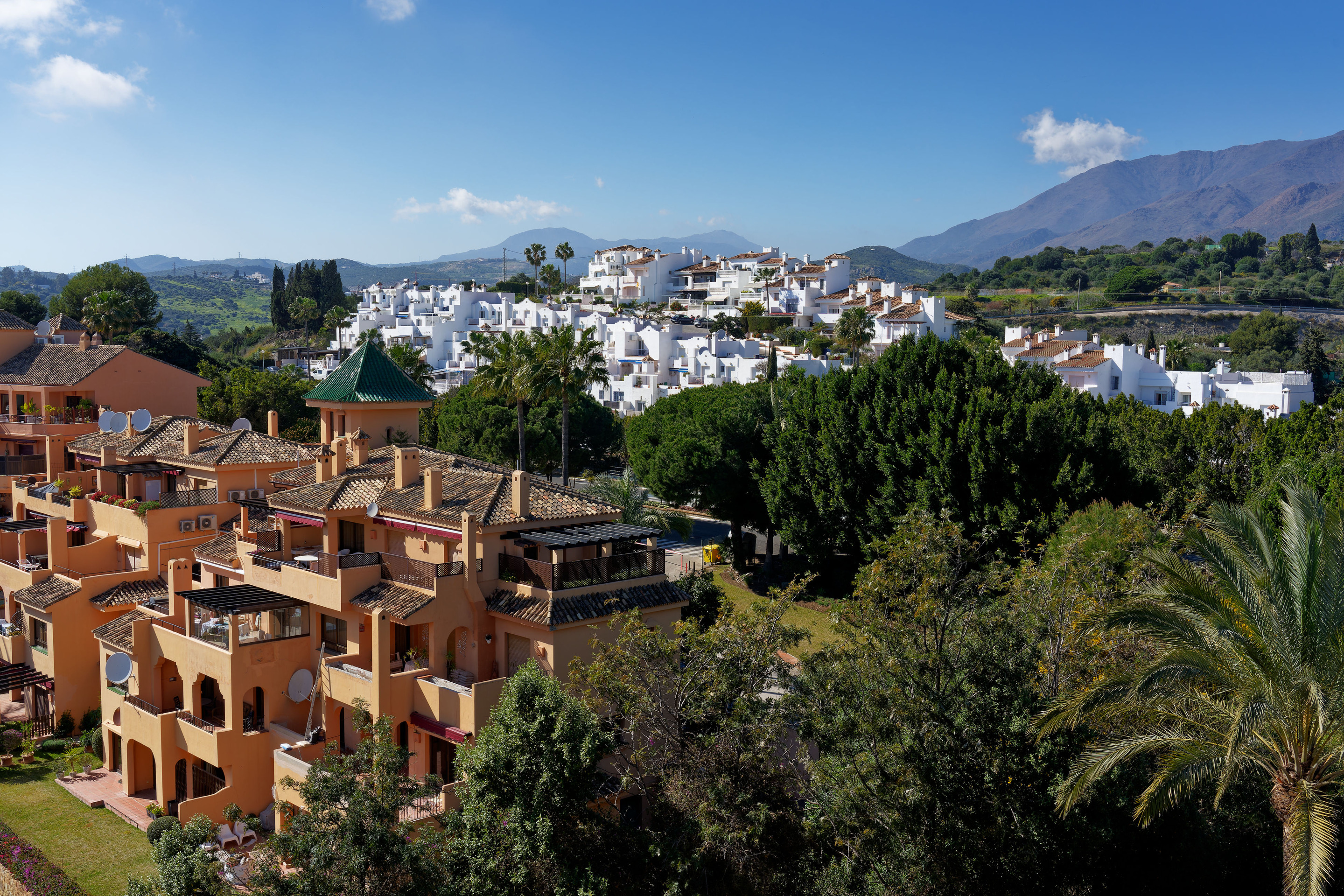
Marocko inspirerade bostadskomplex som lika gärna skulle kunnat ligga i Marrakech som i Estepona
Hamnen och helgmarknaden - En turistmagnet
Historiskt har staden Estepona vuxit ur en gammal fiskeby och den mycket fina, pittoreska och trevliga hamnen är fortfarande ett viktigt nav med sitt båtliv, sina vackra byggnader i vitt och koboltblått och sina restauranger och vattenhål för turisterna. Just den färgen råkar vara min absoluta älsklingsfärg och även exakt denna vit/blå kombination står att finna i den stora marockanska fiskehamnen Essaouria där även alla traditionella fiskebåtar är målade i samma blåa färg.
Varje söndag hålls dessutom en stor marknad i hamnen som då drar till sig mängder av besökare, vilka ökat starkt i antal under de senaste drygt 10 åren som staden genomgått en förändring utan tidigare motstycke historiskt, vilket gjort den alltmer attraktiv.

Helg marknad i Esteponas hamn,

Restauranger och barer i hamnkvarteren är populära bland turister såväl som lokalbefolkning, särskilt på marknadsdagen
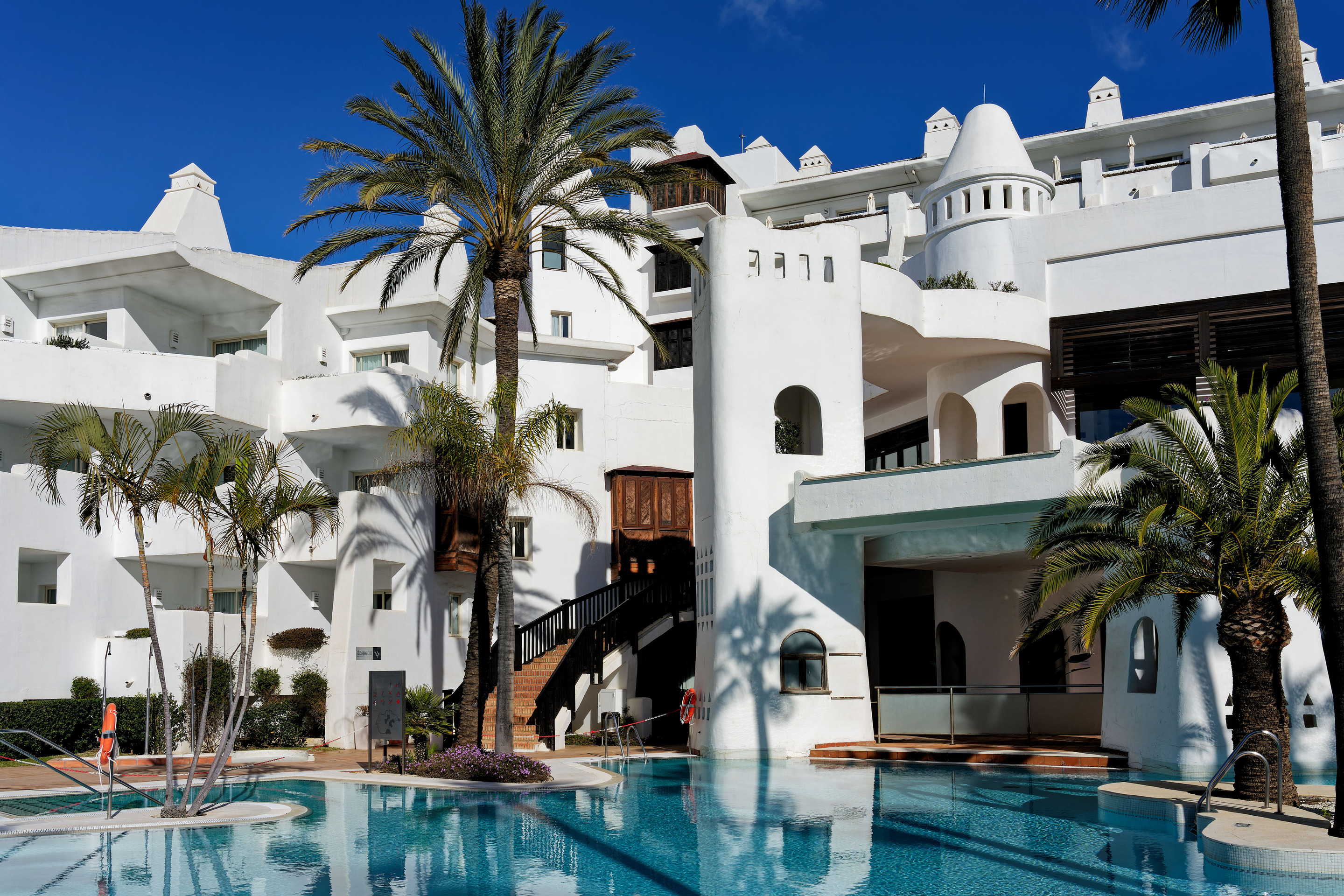
Estepona Palace, ett exempel på ett hotell som nästan är byggt som ett Marockanskt palats. Ett exempel på de hotell som byggts för de allt fler turister som nu upptäcker staden.
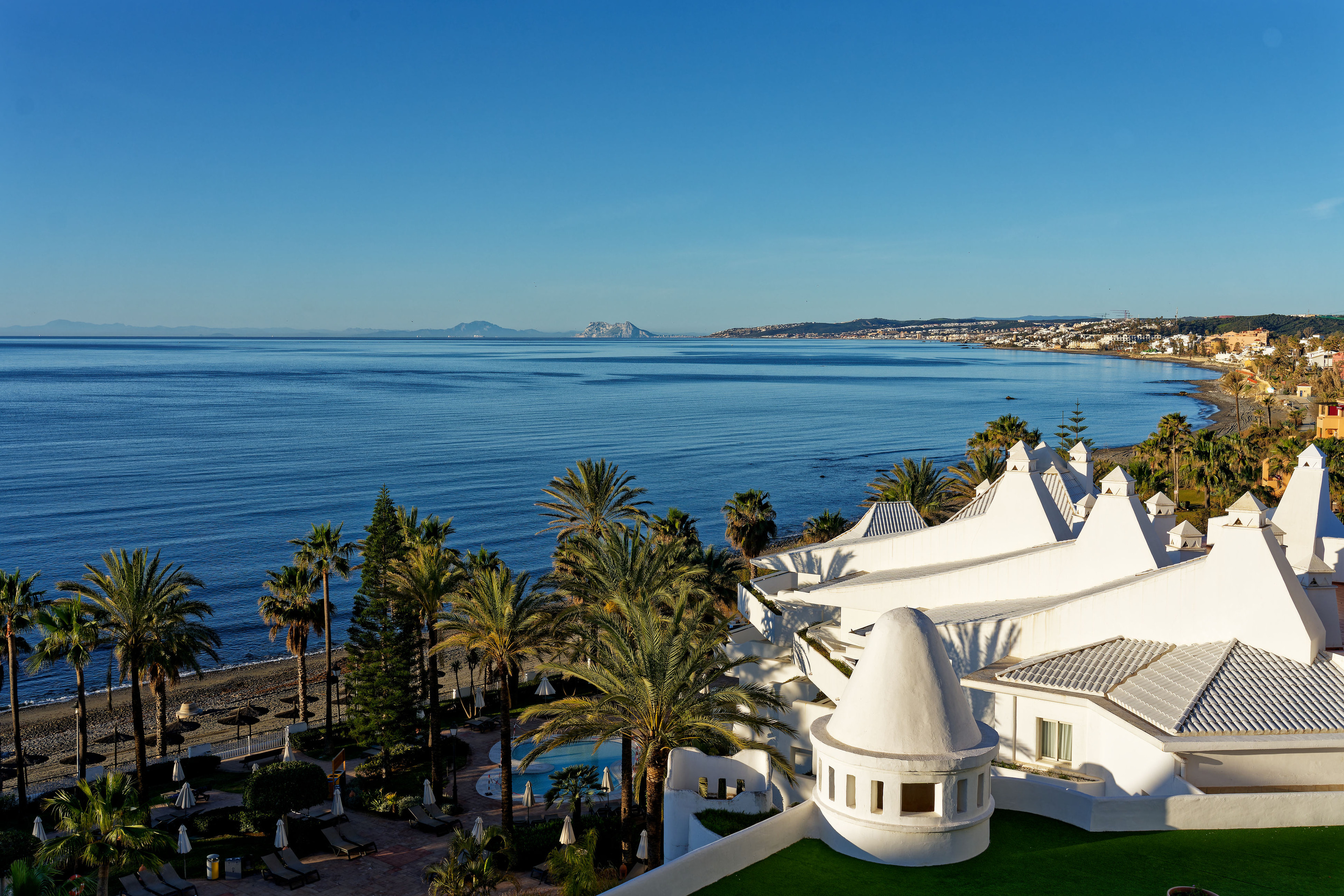
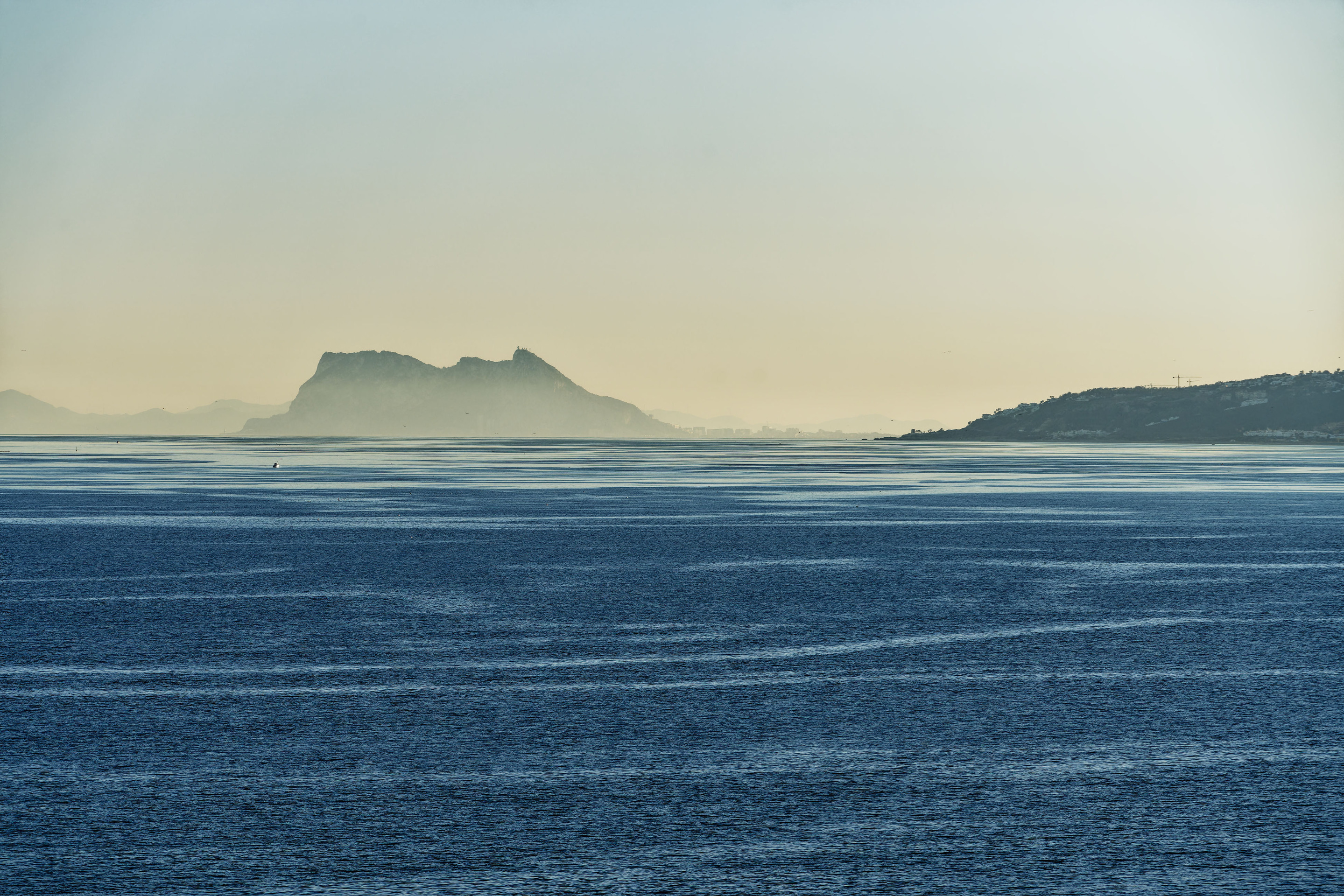
Det är inte längre till Gibraltar (ca fyra mil) än att man klara dagar mycket väl kan se ända ner till klippan och Europas sydligaste udde.
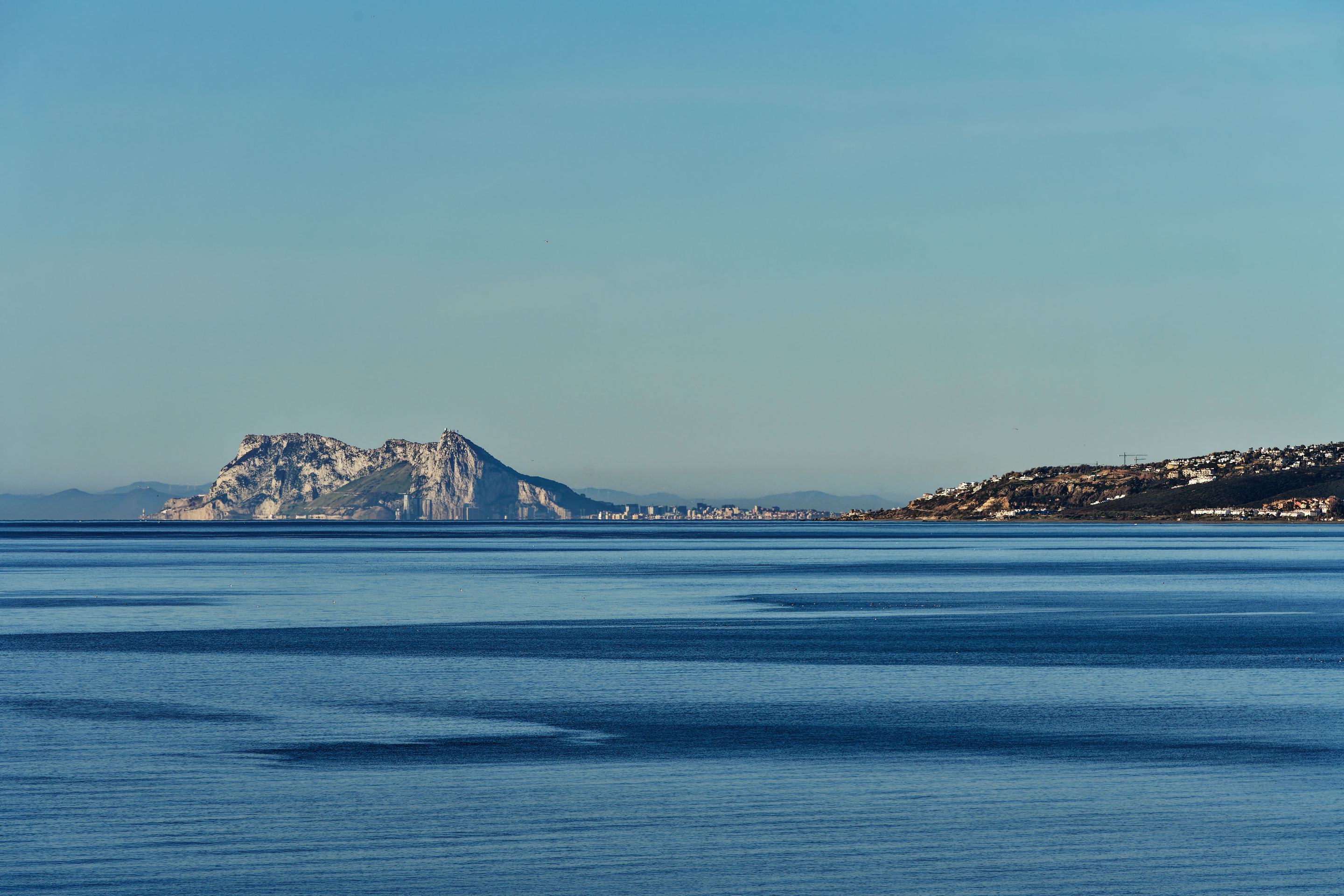
Genom en 70-200mm telezoom eller kikare så kan man t.o.m. se Gibraltars skyskrapor och lite av stadens gytter vid klippans fot. Man ska inte vara naiv och tro att allt är lika lugnt i omgivningen som i det lite sömniga Estepona. Det är via detta område som mycket av Europas narkotika kommer från Marocko. Bakom Gibraltar-klippan skymtar bergen och Marocko och på andra sidan Gibraltarsundet ligger staden Ceuta, som även har ett stort problem när det gäller afrikanska flyktingar, då Ceuta är den enda plats där Europa har landförbindelse med Afrika. Så det är nog bara bra för Estepona att det hittills saknat sydkustens verkliga "hot spots" typ av nattliv. Med det brukar som bekant även följa drog- och gängrelaterad kriminalitet och mer eller mindre grava säkerhetsproblem, som idag verkar vara hyfsat under kontroll i Estepona.
Ceuta: Fortress Europe in Africa – DW – 08/22/2018
Tillbaka till "Tjuren Ferdinand" och Esteponas borgmästare,
1936 skrev författaren Munro Leaf barnboken "Ferdinand the Bull" som senare kom att ligga till grund för Walt Disneys tecknade film om den ovanliga spanska tjuren som inte ville slåss med de andra tjurarna, utan istället föredrog att lukta på blommorna och titta på himlen under någon av södra Spaniens många korkekar. Samma film som visas varje är på Julafton i Sverige av SVT.
Boken som skrevs alldeles innan Spanska Inbördeskrigets början kom märkligt nog att ses som subversiv av Spaniens blivande diktator Francisco Franco och även av Hitler. Boken kom att förbjudas både i Spanien och Tyskland och i Spanien ända till 1975 då Franco dog. Möjligen ogillades det pacifistiska i berättelsen om "Tjuren Ferdinand" av både fascister i Spanien och nazister i Tyskland, då bokens budskap hotade att undergräva folkets vilja att delta i deras arméer och krig.
Sextio- och Sjuttiotalen var ju annars dystra årtionden på många sätt med imperialist- och kolonialkrig i Afrika, Syd-Amerika och i Viet-Nam. Det var också årtionden av europeiska diktaturer i bl.a. Spanien, Grekland och Portugal. När jag pluggade på Sveaplans Vuxen Gymnasium i Stockholm vid denna tid, så hade någon skrivit på toaletten: "Paco" Franco esta muerte. Viva la Muerte! (Franco är död. Leve döden!)
(Stalin lär dock ha gillat boken - vad man nu ska dra för slutsats av det?)
Även i Esteponas västra utkanter finns en tjurfäktningsarena, precis som i så många spanska städer men jag tänker inte berätta tjurfäktningens historia eller historien om dess matadorer, utan om Esteponas egen "Tjuren Ferdinand" - dess borgmästare sedan drygt 10 år - Jose Maria Garcia Urbano, som även hyllats och fått utmärkelser av svenskarna på solkusten (Årets Oliv 2022) för sina insatser att utveckla Estepona och göra den till en vacker, säker och trevlig stad att besöka och leva i. Utmärkelsen kan även ses som en uppriktig genuin uppskattning av en bra offentlig ledare.
Esteponas förvandling
Det går alltså inte att komma förbi borgmästare Urbanos inflytande och visioner när man betraktar Esteponas förvandling. Det han och hans medarbetare lyckats göra med Estepona är helt enkelt rätt enastående och det är här Ferdinand kommer in.
Istället för att riva allt gammal och bygga nytt i glas och betong som man gjort på många ställen i världen så har man istället restaurerat och vitmålat den äldre bebyggelsen exemplariskt samt lagt om gatstenen på många ställen. Under denna tid har man skapat ett hundratal gågator och dessa är kantade med tusentals blomkrukor i alla regnbågens färger. Det är just gågatorna och det låga tempot som gör att den gamla staden fullt ut kan komma till sin rätt. Långa stunder kändes det som om jag var helt ensam däruppe i den övre delen av gamla stan, trots att det var mitt på dagen.
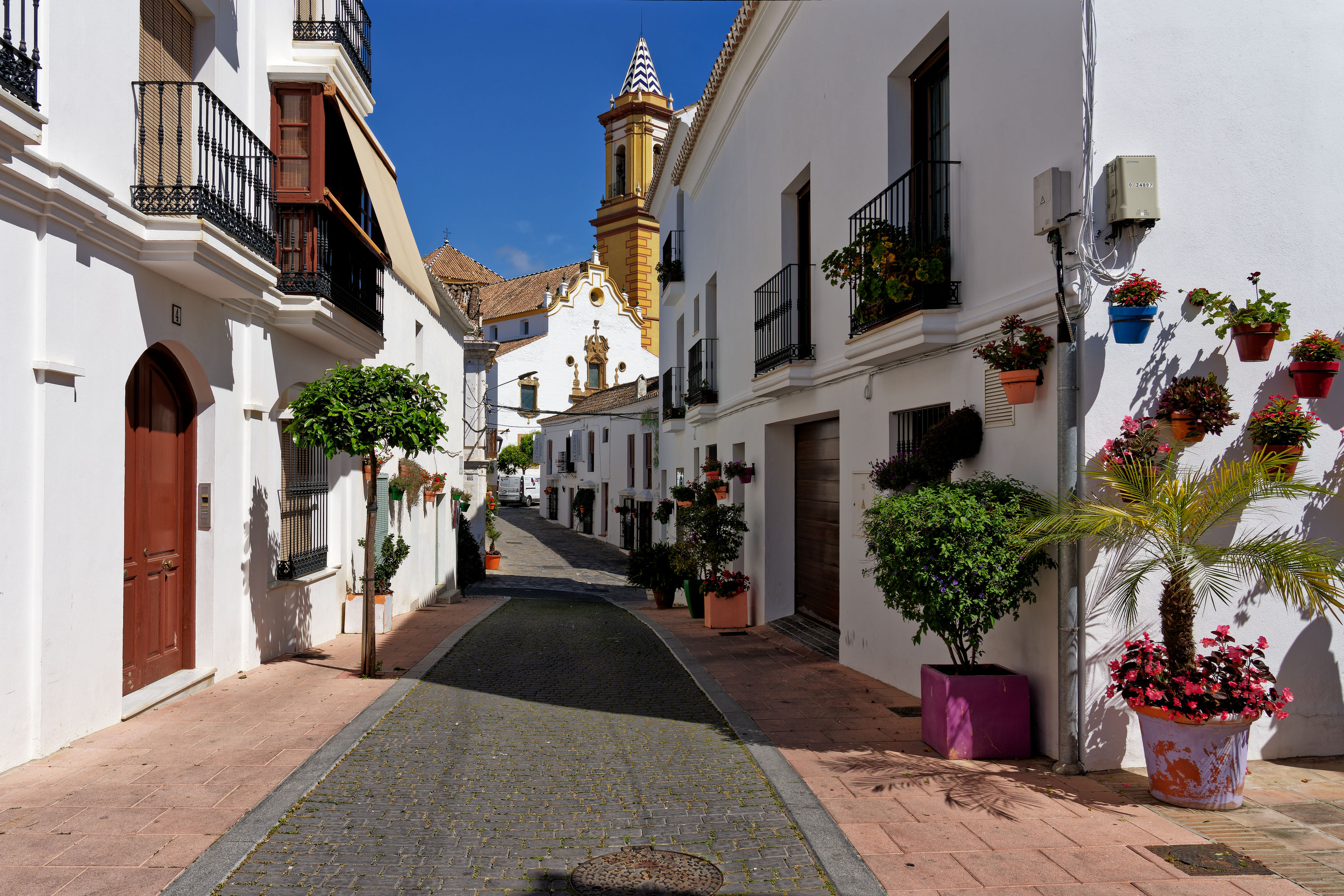
Här kvarteren uppe vid den gamla kyrkan
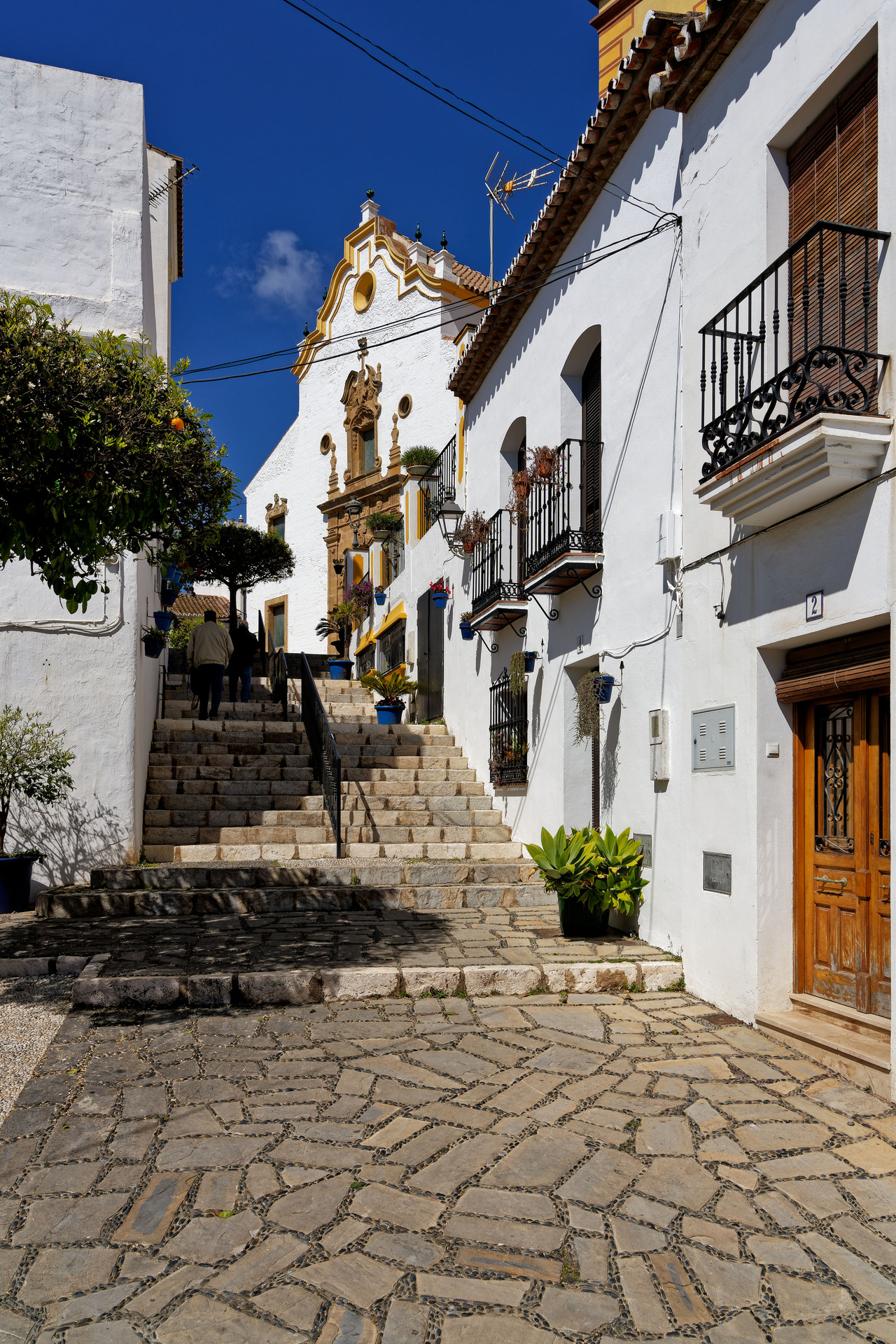
Kyrkan - notera stenläggningen
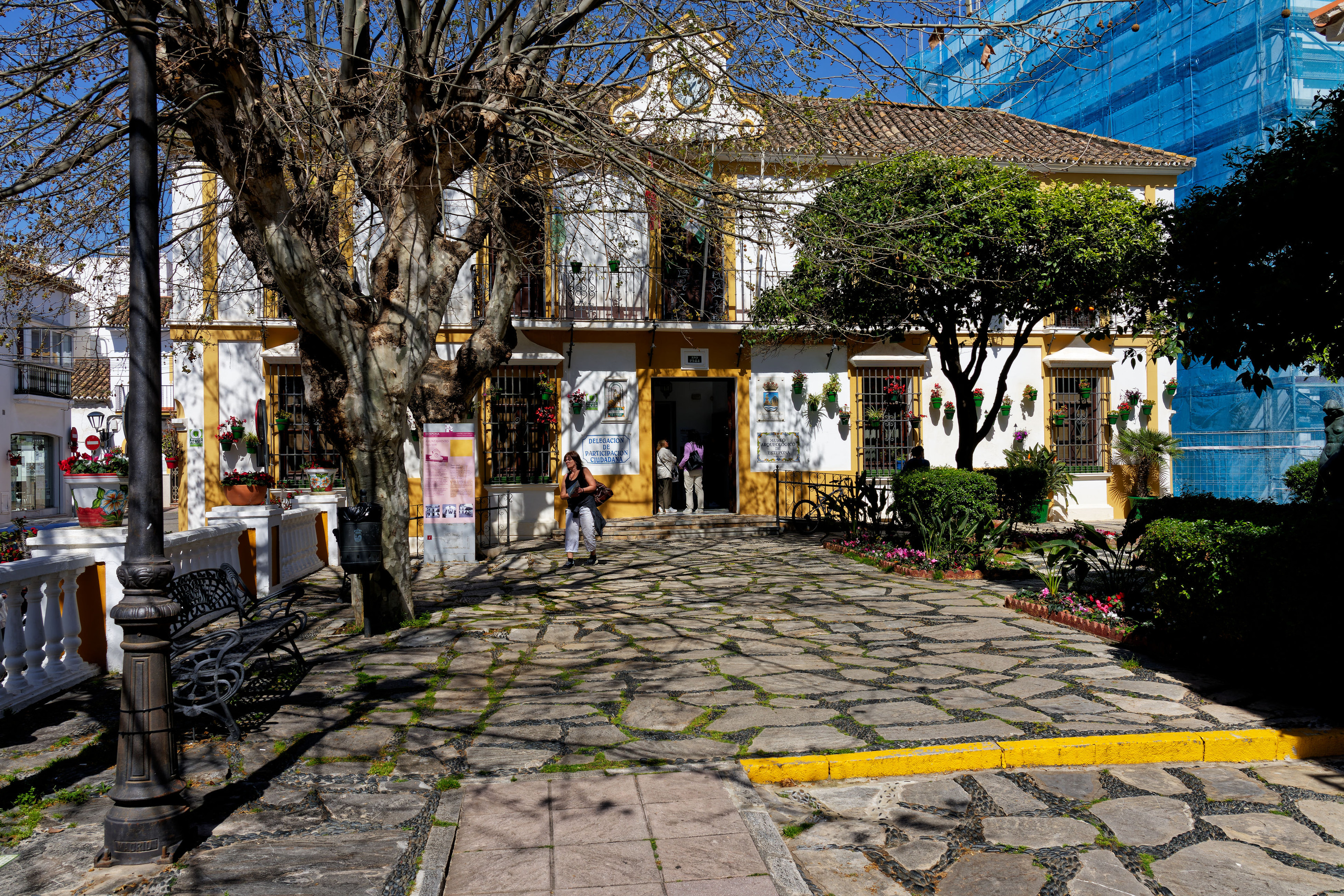
Kvarteren kring det gamla stadshuset är särskilt fina och härifrån utgår de vackraste gatorna som alla är kantade med mängder av blomkrukor som hänger efter väggarna. Alltid en enda färg på alla krukorna efter en gränd eller gata.

Blommor, blommor, blommor - här den "rosa" gatan.
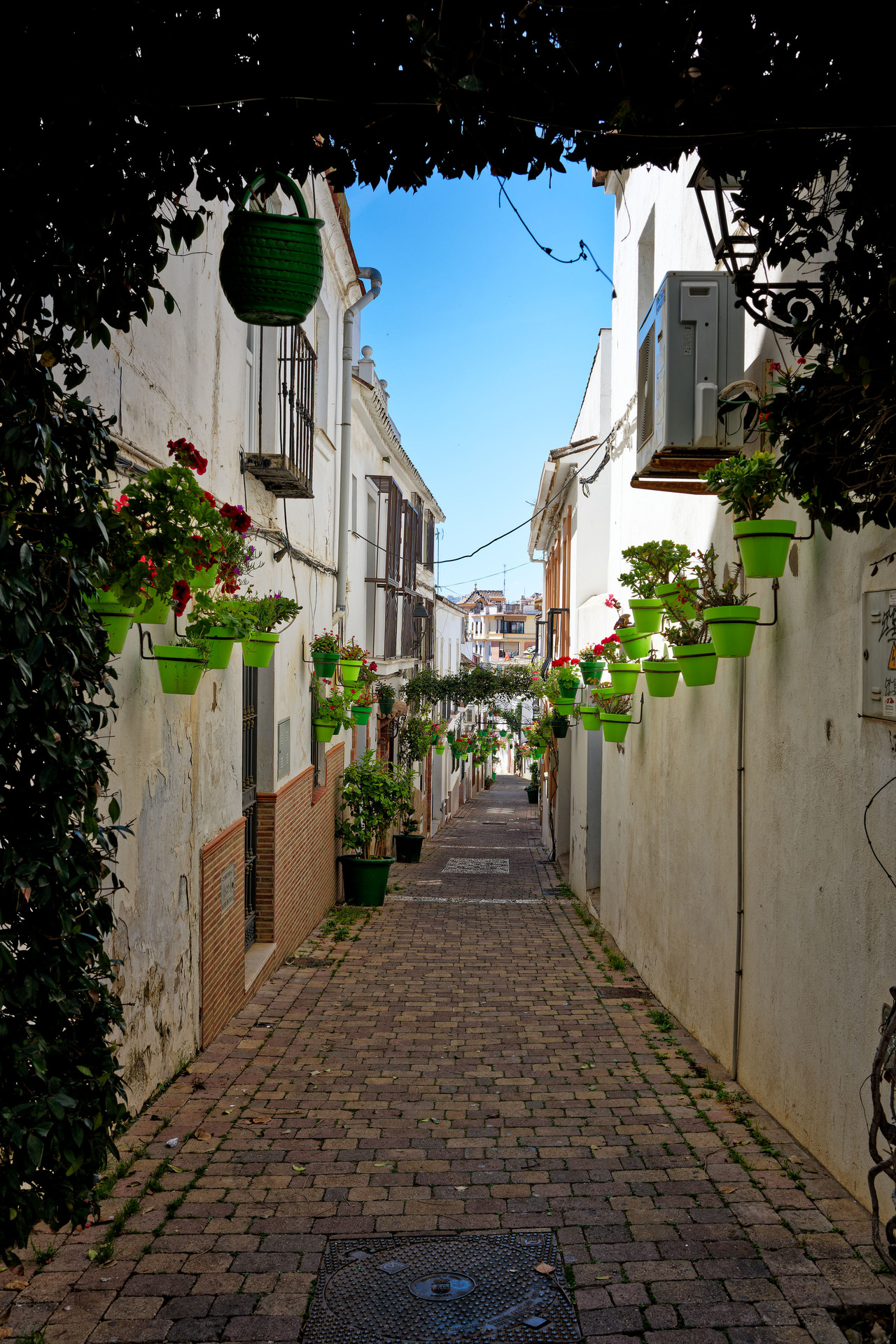
Mer blommor och bara konsekvent ljusgröna krukor.
Jag undrar verkligen om sånt här skulle få vara i fred i en svensk småstad.
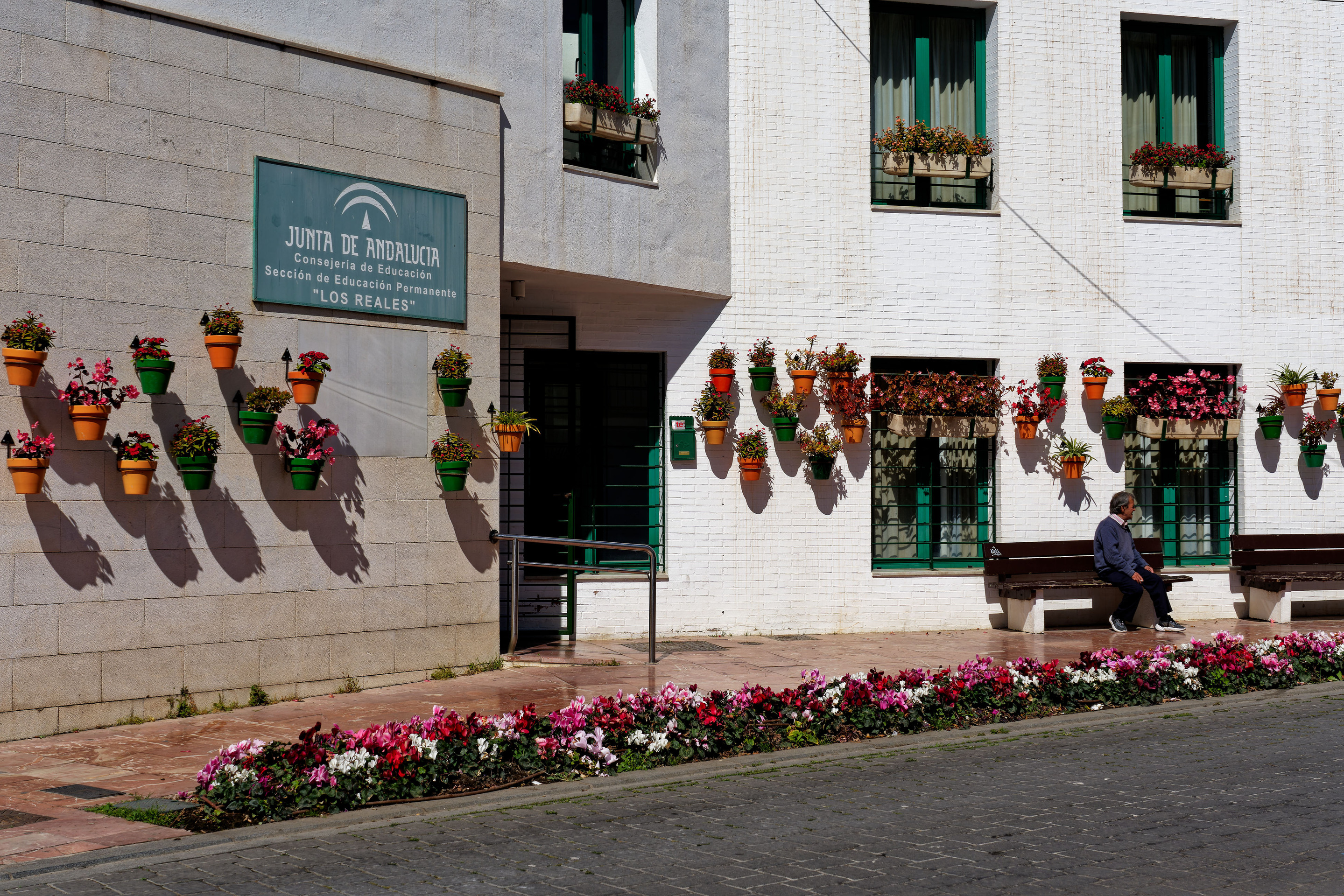
Här den blomstersmyckade entrén till ett regionalt skolkontor. Det är ett sånt överdåd med svenska mått mätt ibland så man häpnar
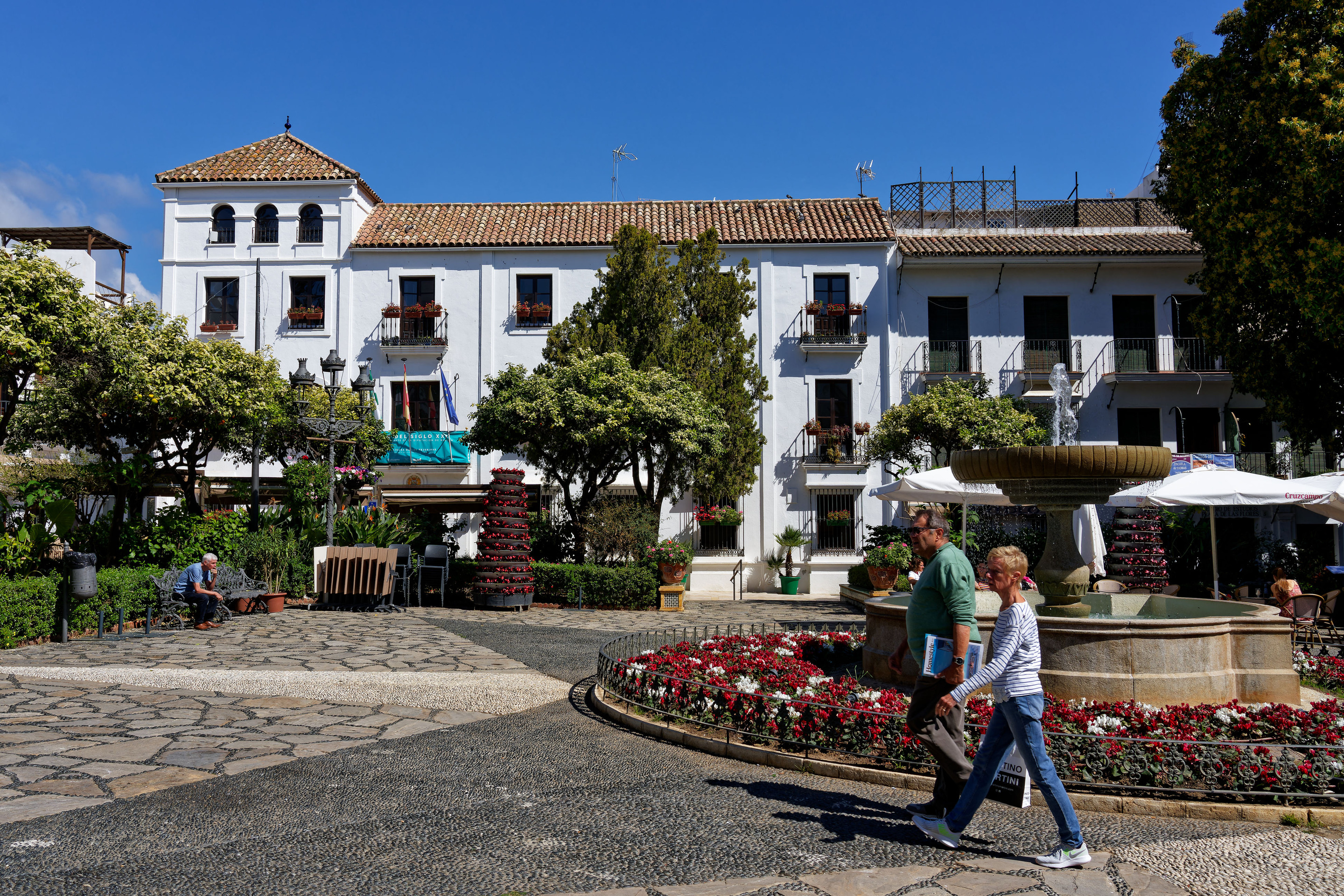
Vad kan väl vara ett mer passande namn på stadens centrala torg där många restauranger ligger, än Plaza de las Flores eller kanske Blomstertorget på svenska

Här är några av "hjältarna" som sliter med att plantera, plantera och inte minst att vattna allt i värmen.

Mängder med statyer har placerats ut i parker och på torg. Här ett tiotal statyer i en park nära Los Llanos i norr
 n
n
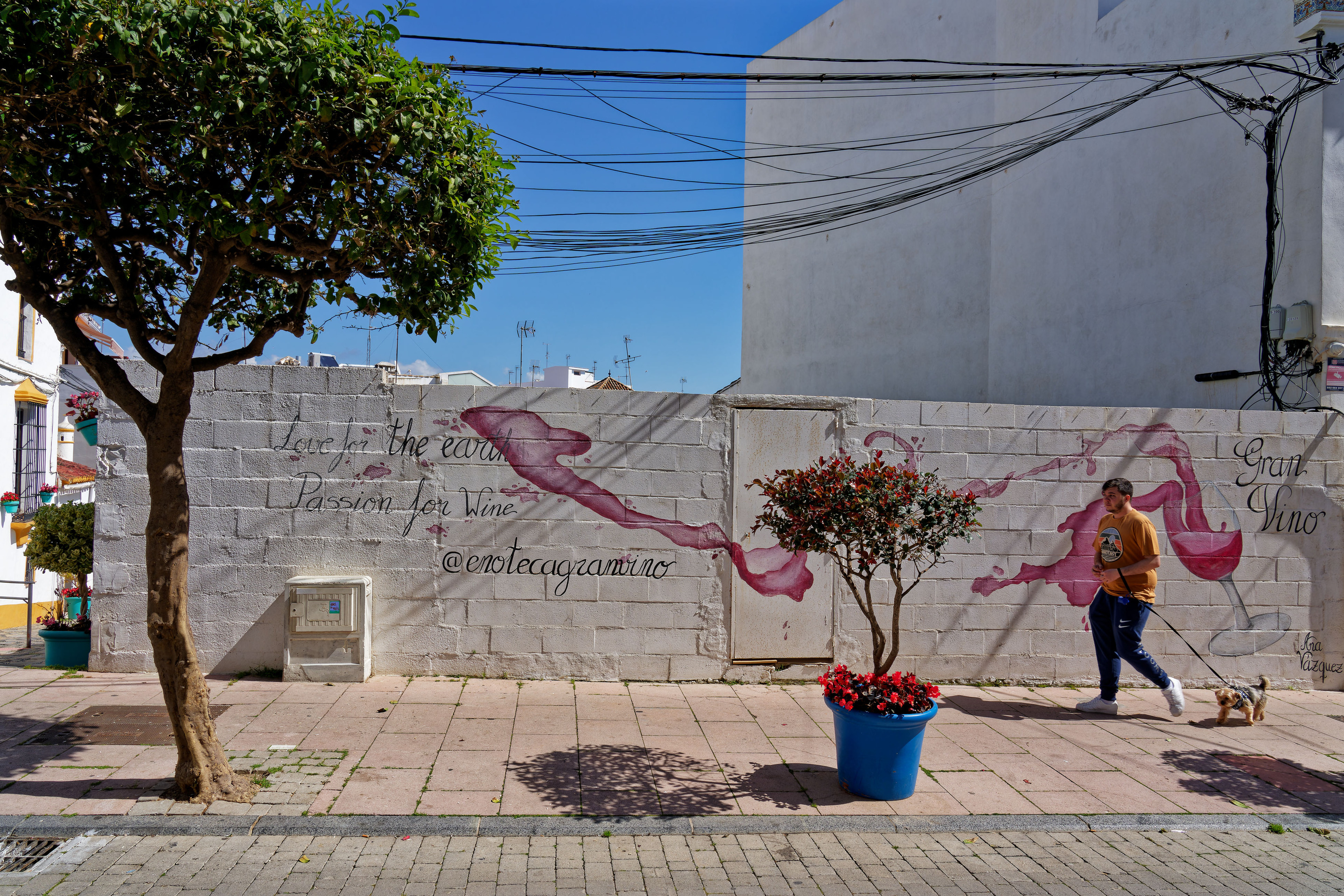
Till och med lite vinreklam för restaurangen på andra sidan gatan kan göra en mur lite roligare, fast det kanske inte var den direkta avsikten


Kakelmosaik med historiska motiv och poesi pryder gågatornas väggar. Jag måste säga att jag nog aldrig sett något så konsekvent i fråga om utsmyckning av en stad. Kakelmosaik har jag sett även i exv. staden Rhonda uppe i bergen, så det är inte helt unikt på något sätt men väldigt trevligt och ofta intressant. I vackra Ronda finns exv. mängder av poesi i mosaikerna som folk genom historien skrivit efter att ha inspirerats av Rondas skönhet och storslagenhet.

Man ser också till att barnen har det vackert vid sina skolor. Har vid en skolgård inne i historiska delen av staden. Jämför det med någon svensk visberättelse om den svenska förortsskolans ofta torftiga estetiska miljöer, av Lars Winnerbäck

Vid snart sagt varje rondell finns installationer och konst - även vattenkonst.
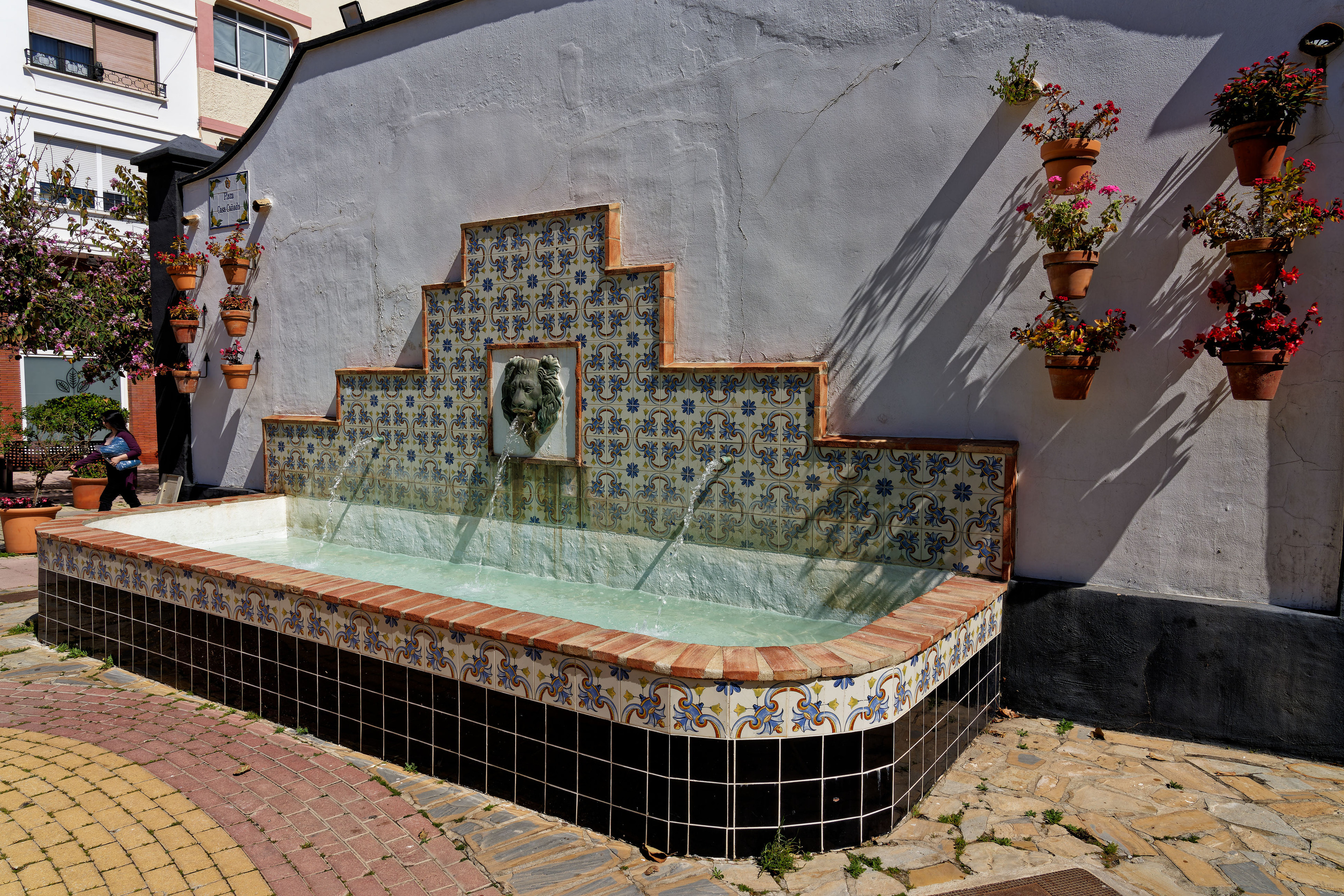
Det gamla moriska arvet finns fortfarande kvar i en hel del detaljer. Här en gammal fin brunn nära gamla Stadshuset. Blommorna i överflöd även här i matchande terracotta krukor

Även annan vattenkonst finner man ibland på de mest oväntade ställen - som här i en backe i den övre delen av den medeltida stadskärnan
Stadens nyare delar
Även stadens nya delar som bebyggts med en del höghus har fått fantastiska muralmålnings-utsmyckningar på husfasaderna. Ett sextiotal finns nu spridda över de nyare stadsdelarnas fasader. Stadens ledning utlyste nämligen en tävling för ca 10 år sedan och efter den satte man igång. Invånarna i staden är mycket stolta över målningarna och det ordnas stadsvandringar helt med fokus på muralmålningarna.
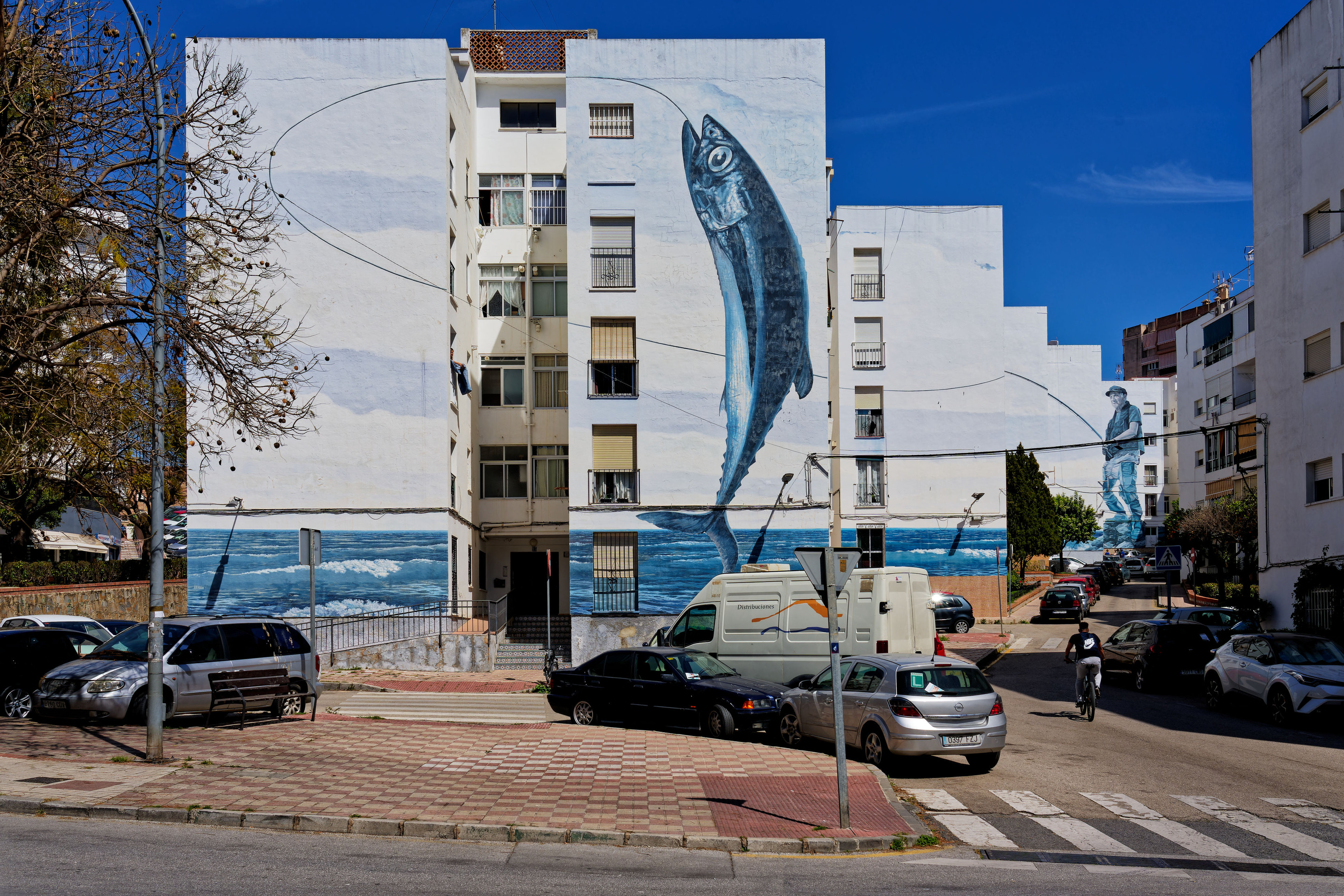
Detta lär vara Spaniens största muralmålning och den sträcker sig över hela sex husfasader

Här ser ni den målning som till slut vann priset i den muralmålningstävling staden anordnade.
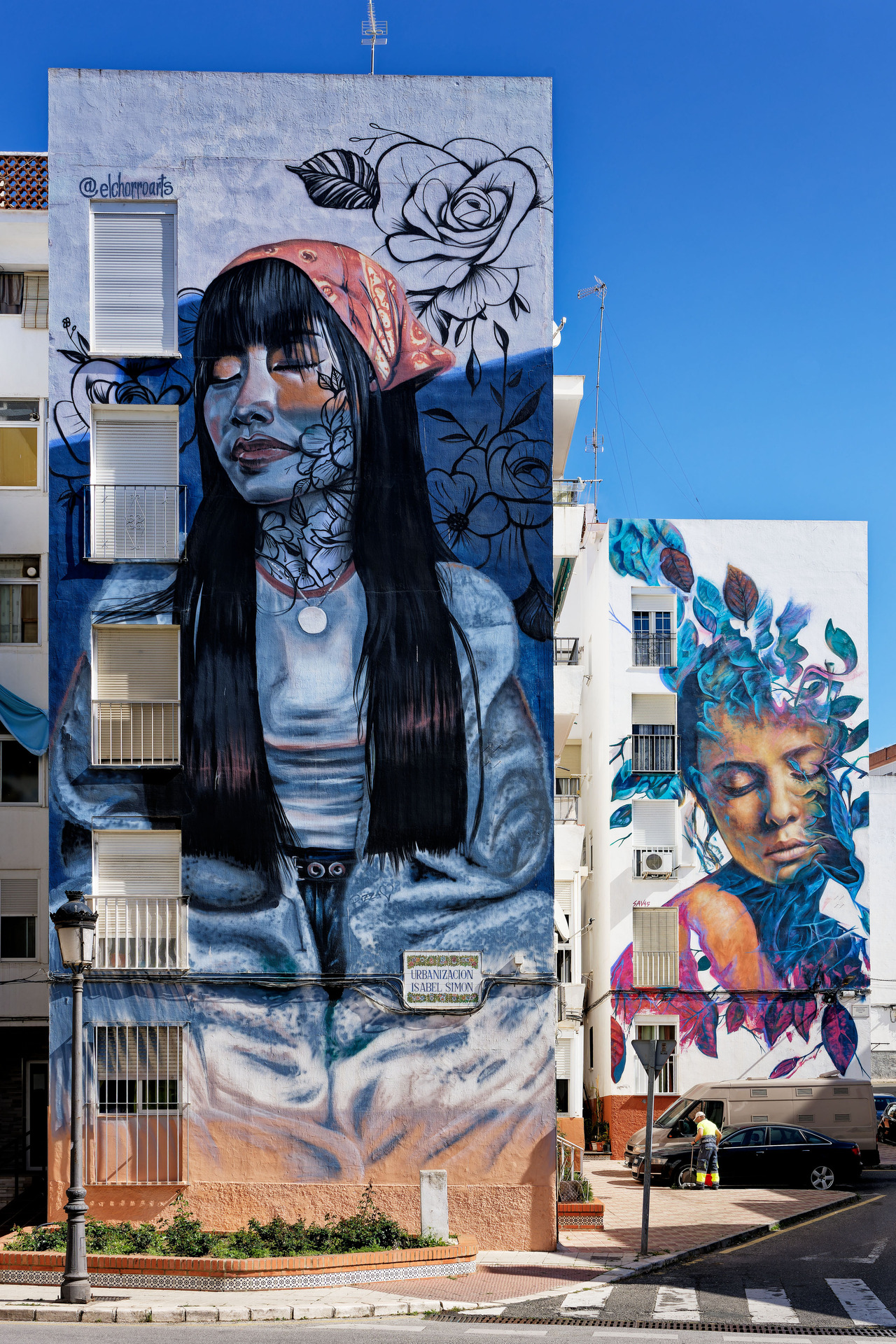
Några av de finaste målningarna på gatorna runt Esteponas Orchidarium
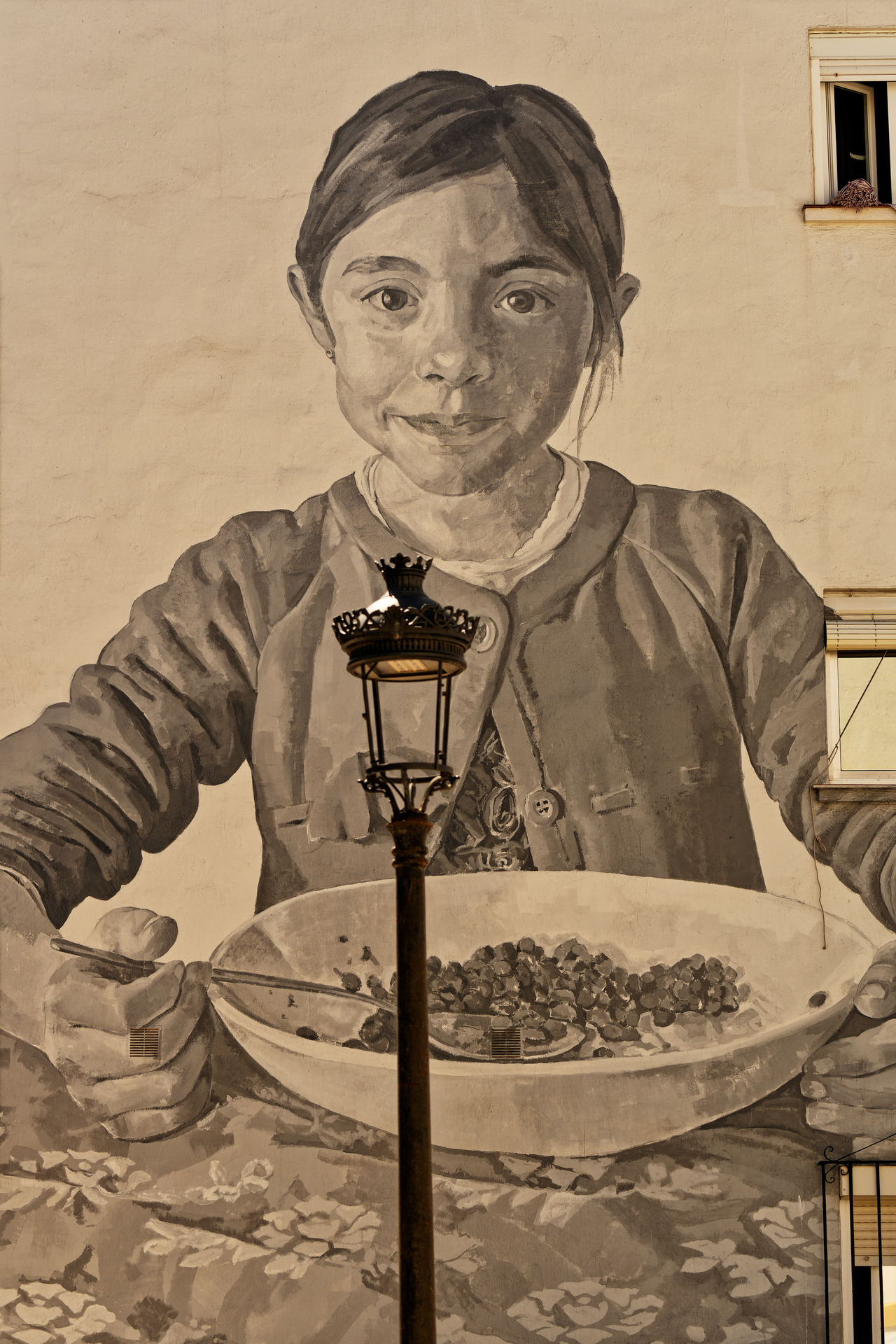
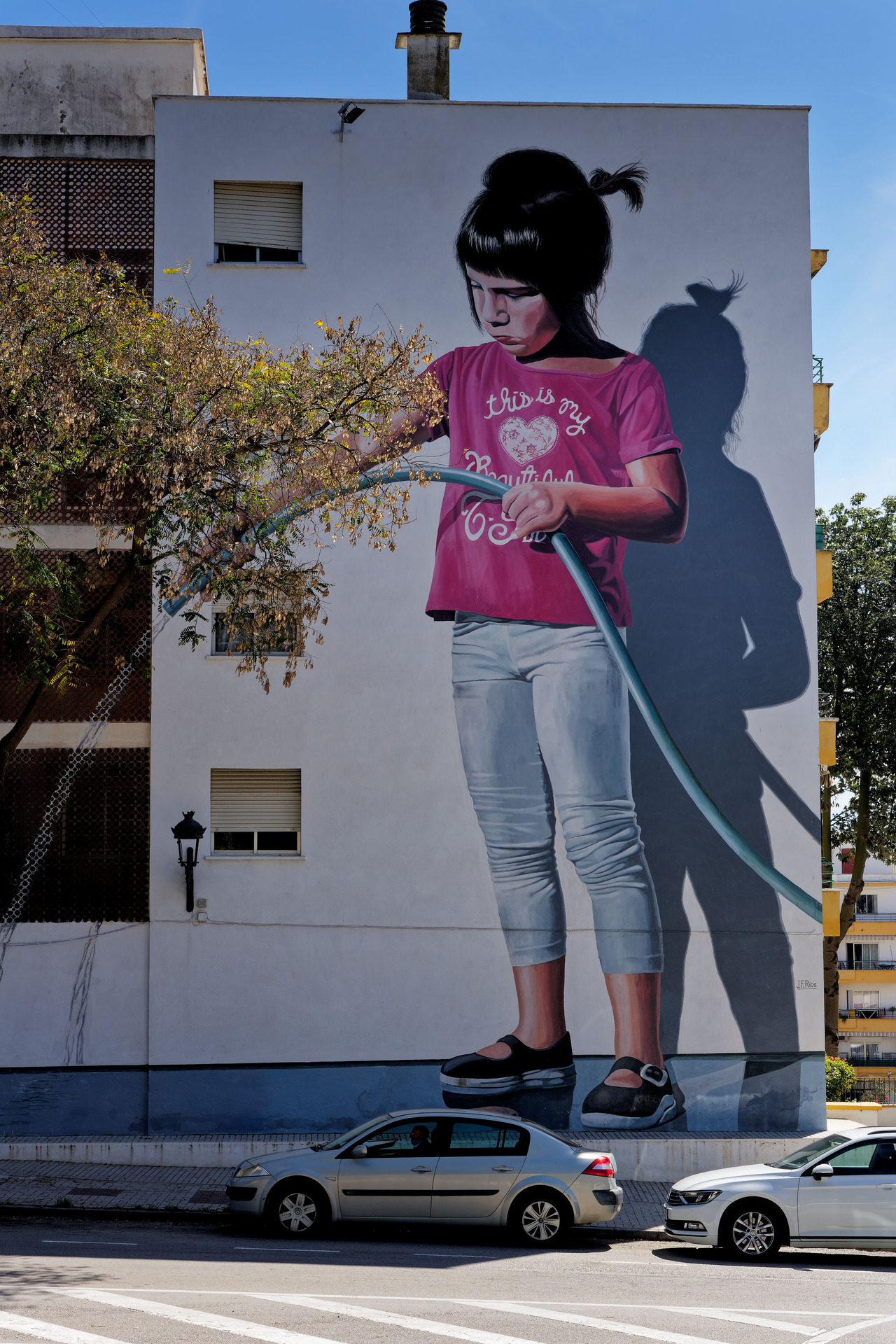
Min egen favorit kanske

Denna målning utgör en helhet med en rondell utsmyckning

Exempel på liten rondell utsmyckning
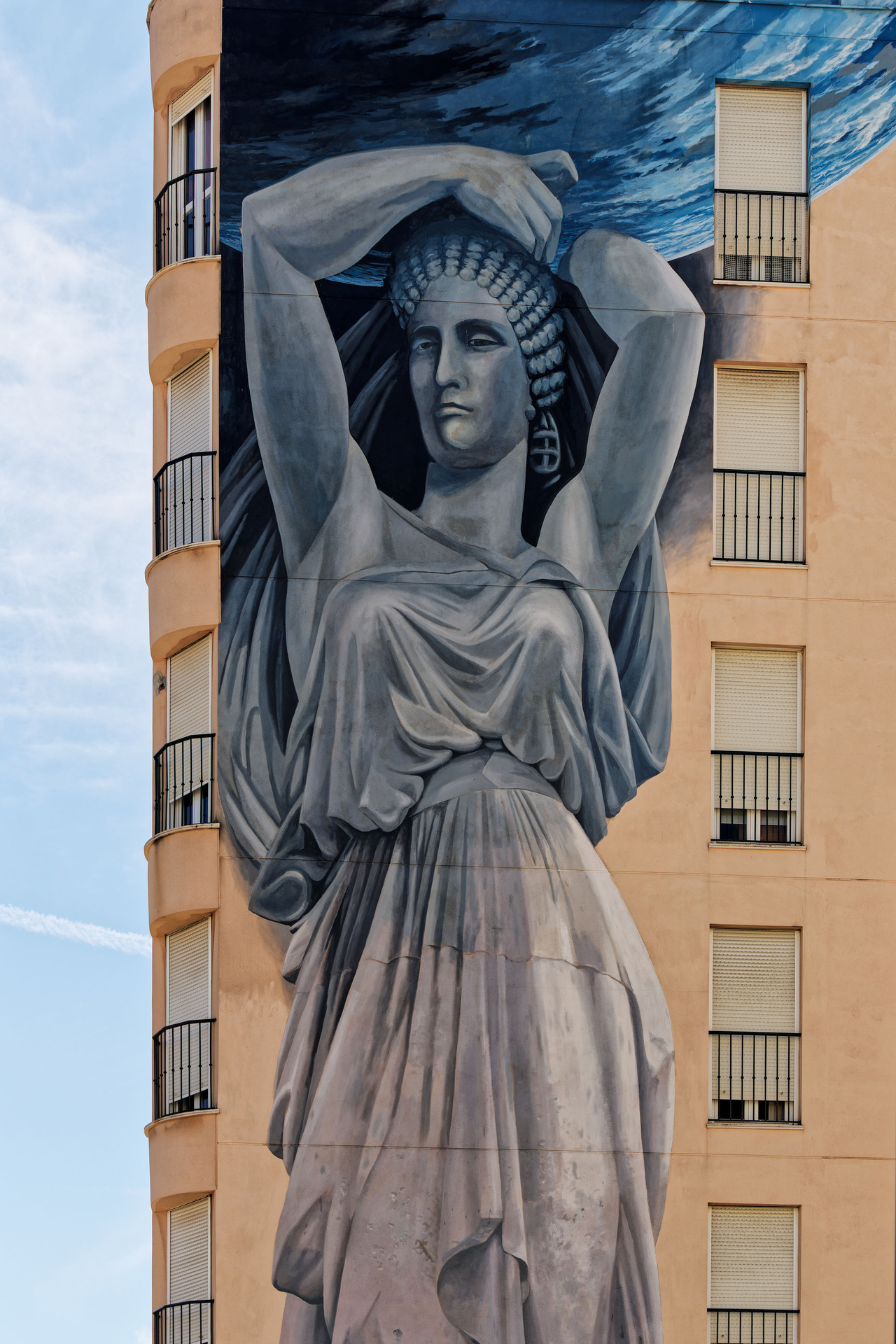
En av de större målningarna här föreställande den grekiska gudinnan Athena. Den är gigantisk i verkligheten

Staden som tidigare varit rätt på dekis och mest omtalats för sin tidigare omfattande korruption, var då inget självklart alternativ för Sveriges Spanien-koloni som hellre flockats kring badorterna längre norrut. 2011 påbörjades emellertid de omfattande förändrings- och upprustningsarbeten som gjort Estepona till Spaniens mönster kommun på ett drygt decennium. De flesta av de vanprydande och smått parodiska klassiska skatbon till elledningslösningar man tidigare kunde finna på snart sagt varje gata, har nu till största delen grävts ned och dolts för våra blickar.
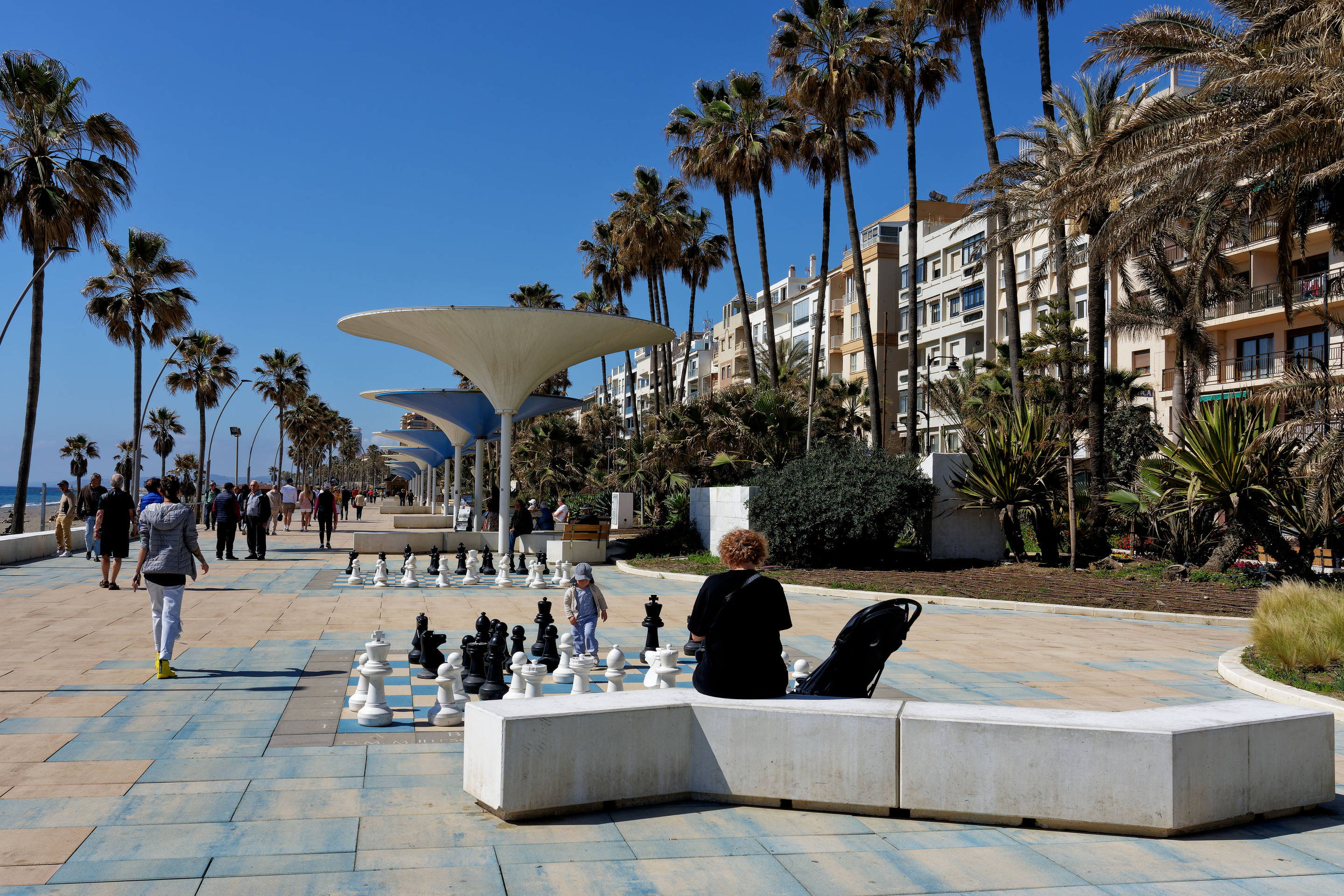
Just nu pågår en enormt arbete med att riva den gamla strandpromenaden som sträcker sig ca 3 km efter den breda stadsstranden och bygga en ny. Det finns kanske tre- fyrahundra meter av den gamla kvar men den står snart på tur den med. Som framgår av bilden är det en populär plats i staden att vara på, både för unga och gamla.
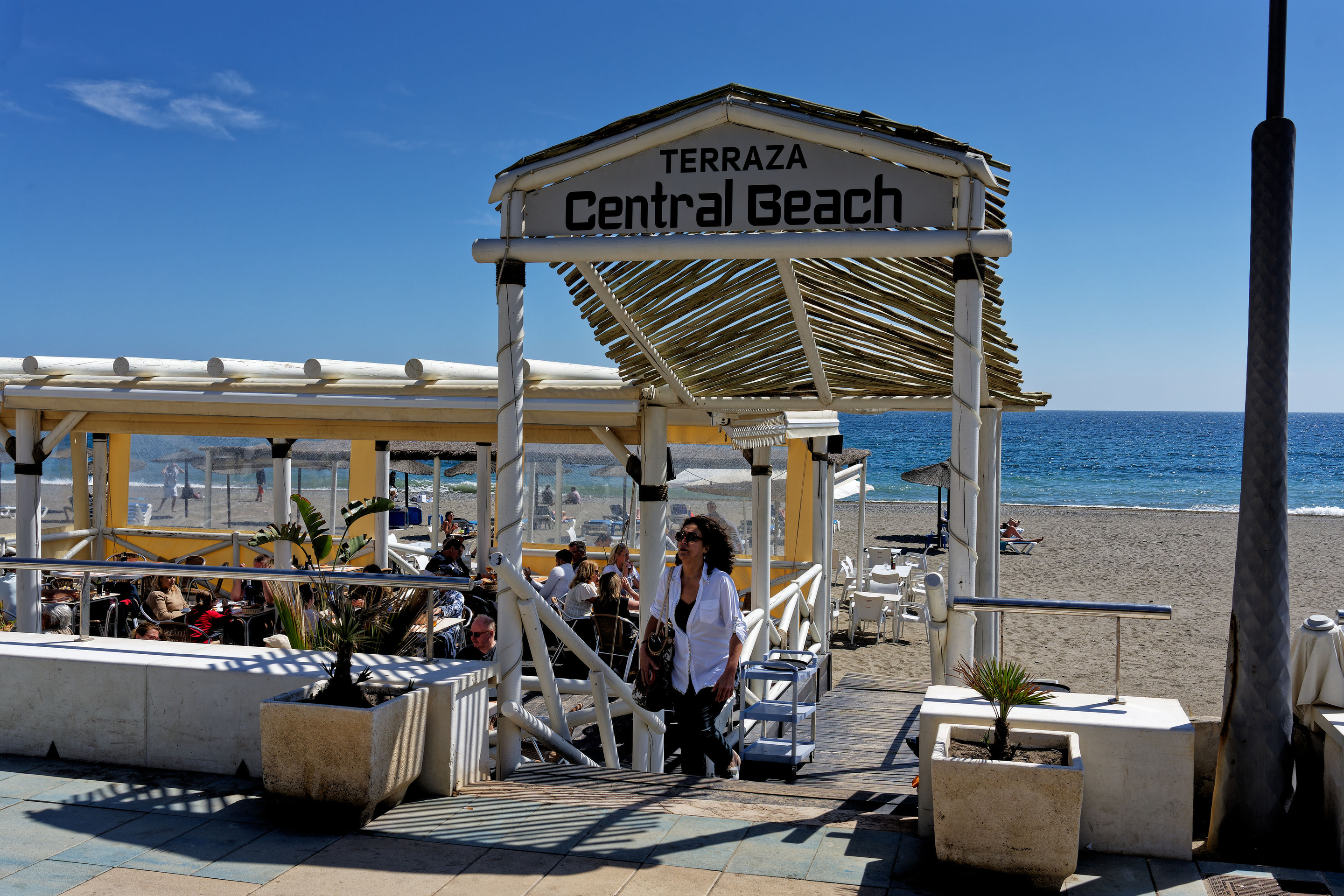
Här kommer sedan många nya restauranger m.m. att etableras efter den på sina ställen 100 meter breda sandstranden, för strandens värden är eviga

På stranden äten man gärna fisk som grillas över träkol
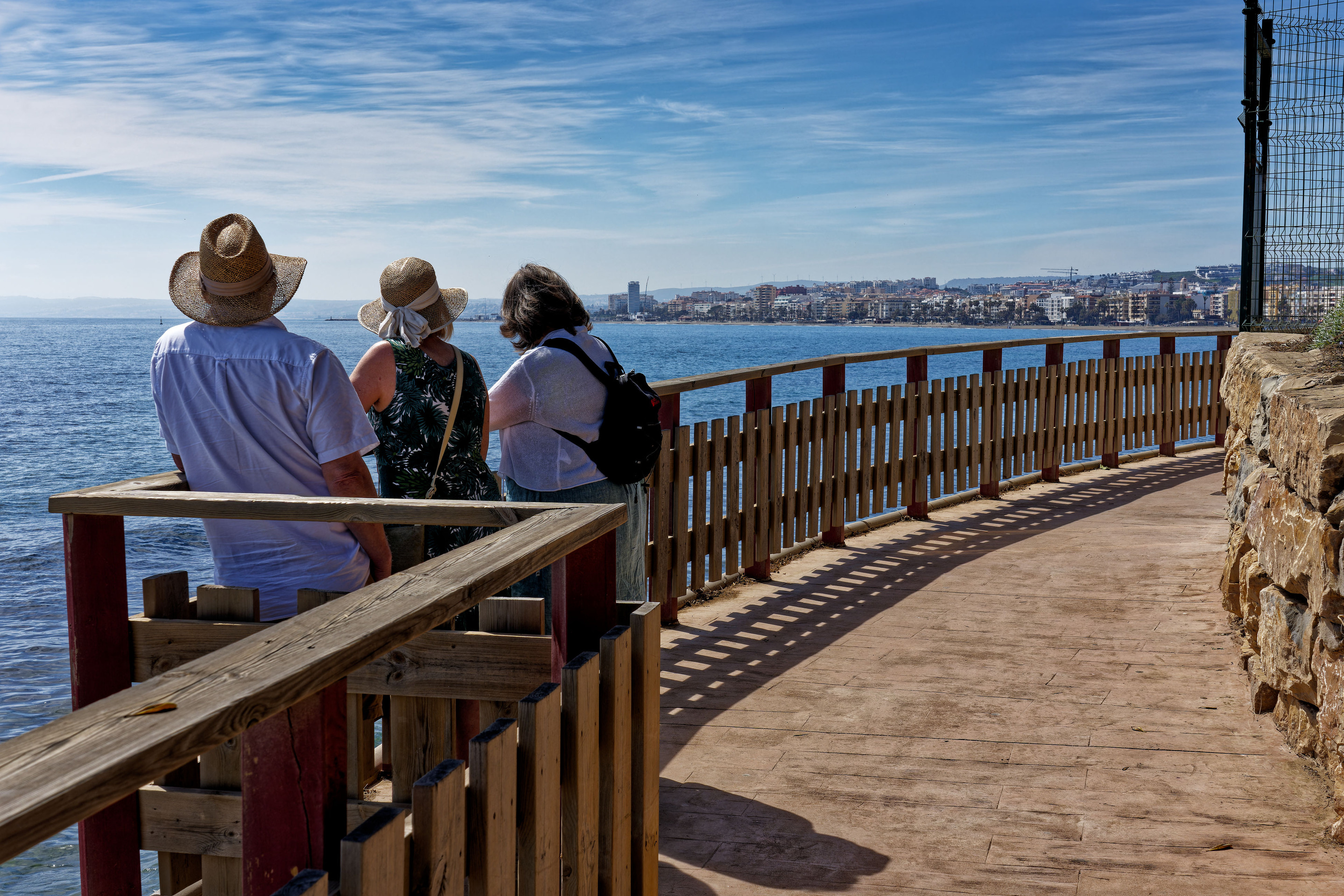
Strandpromenaden i Estepona är dessutom en del av den vandringsled som håller på att färdigställas efter en stor del av kusten
Slutord om "Tjuren Ferdinand" i Estepona
Om vi drar oss lite till minnet kring den här älskade gamla barnboken om den blomster älskande tjuren, som så till den milda grad lyckades reta upp 30-talets diktatorer, att den förbjöd den under många år, så ser jag något väldigt hoppfullt i en tid som vår med ett sådant exempel till ledare som Jose Maria Garcia Urbanos och hans Estepona. Jag kan inte tycka annat än att det är något väldigt sympatiskt och uppfriskande med en politisk ledare, i vår på många sätt hemska och nedslående tid, som i så hög grad kunnat göra en verklighet av sina positiva visioner. Visioner som faktiskt i hög grad hämtar kraft ur precis de skönhetsvärden som även verkade glädja sagans "Tjuren Ferdinand" och faktiskt kommer alla till del i Estepona och inte bara några få. Visioner och en ny verklighet i deras anda, som uppenbarligen älskas av invånarna.
Det visar sig ju också i hög grad att omsorgen om stadens miljö och invånarnas trivsel i form av vackra och rofyllda miljöer med höga estetiska värden, såsom en mångfald av blommor och andra vackra växter samt konst i alla dess former verkligen kan lyfta en stad på dekis och få den att gå in i ett antal starkt positiva spiraler, vilka verkligen gynnat den ekonomiska utvecklingen i både stad, kommun och region. Dessa spiraler har sedan i nästa varv genererat nya friska resurser, vilka kunnat växlas in mot ytterligare satsningar på stadens miljö och infrastruktur.
Vilken kontrast är inte detta Urbanos Estepona till Putins paranoida, aggressiva, förbittrade och destruktiva universum som bara resulterat i isolering, slutenhet, stagnation, förtryck, förljugenhet, ofrihet, exempellös förstörelse och död, samt usel levnadsstandard och ren misär för en stor del av den befolkningen. Jag har sett och upplevt några få såna här positiva platser som Estepona under mer än 50 års resande, som då jag varit där känts som positiva exempel. I de flesta fall har de präglats starkt av ledare med visioner som haft sina befolkningars väl för sina ögon. Kanske en och annan framtida ledare rentav låta sig inspireras av Esteponas positiva kulturella och ekonomiska spiraler och borgmästare Urbanos visioner och praktiska handlag, för här har det inte bara varit snack om visioner utan också massor av verkstad.
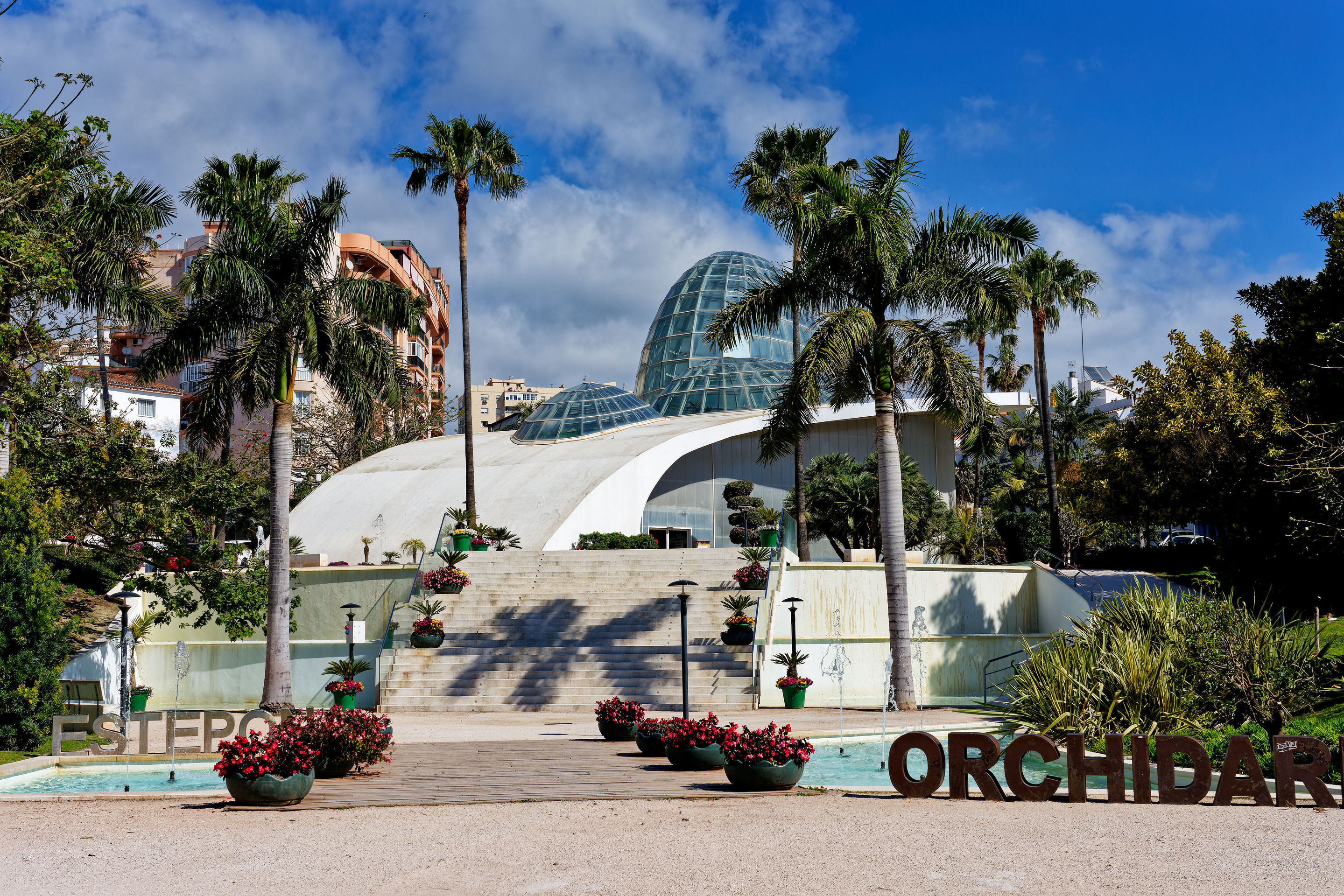
Nedan ser ni den byggnad jag tycker förkroppsligar arvet efter "Tjuren Ferdinand" allra bäst. Var om inte just i Estepona skulle man bygga ett Orchidarium. Om sagans "Tjuren Ferdinand" verkligen funnits på riktigt, så tror jag han skulle älskat det som finns i den byggnaden och jag skulle inte bli förvånad om borgmästare Urbano skulle snikat till sig en egen nyckel, så han kunde besöka det efter stängningstid. Om korruption kunde hållas på den nivån så kan i alla fall jag leva med den :-) Jag skulle heller inte bli särskilt förvånad om man skulle hitta honom under någon av Andalusiens alla korkekar, luktandes på blommorna, på sin ålders höst.
Estepona Nordicos utmärkelse "Årets Oliv" tilldelades stadens borgmästare 2022
Citat från tidningen "Sydkuste.es":
"Motiveringen till valet av borgmästaren i Estepona som mottagare av årets utmärkelse är ”stadens närmast exempellösa utveckling från en liten fiskeby till nuvarande blomstersmyckade välutvecklade stad. Under ledning av José María García Urbano har kommunen behållit sin genuina karaktär samtidigt som den utvecklats och varsamt förskönats samt numera är vida känt som Andalusiens blomstrande smycke. De tidigare usla finanserna har sanerats och Estepona är nu ett lysande exempel på en välskött kommun, känt långt utanför både sina egna, Andalusiens och Spaniens gränser.”
Nedan en Youtube länk från överlämningen av utmärkelsen:
I denna video finns två textade citerade citat som i någon mån kan förklara varför man lyckats, där så många andra orter i världen misslyckats:
"Vi tänker inte på nästa val utan på kommande generationer" (vilket ursprungligen lär ha sagts av Churchill)
"När det råder samförstånd mellan politikerna och folket som fattar alla beslut lyckas projektet"
García Urbano är en av Spaniens mest omtyckta borgmästare och i det senaste lokalvalet 2019 fick han hela 69 procent av rösterna och Partido Popular 21 av sammanlagt 25 platser i fullmäktige. Genom detta har man skaffat en massiv politisk majoritet som ger de politiska möjligheter som behövs för att få någonting gjort - snabbt. Kontrasten till hur det ser ut i exv. Sverige är närmast total.
... men om man ska skicka med en liten Brask-lapp, så är det väl det att det också är lägen som just detta med en så massiv politisk majoritet som insyn och kontroll tenderar att minska och är det inte just då som risken för en ny korruptionsresa är som störst??
Maskrosen i Estepona
Translate into Google English:
Dandelion in Estepona - Photo page (www-fotosidan-se.translate.goog)
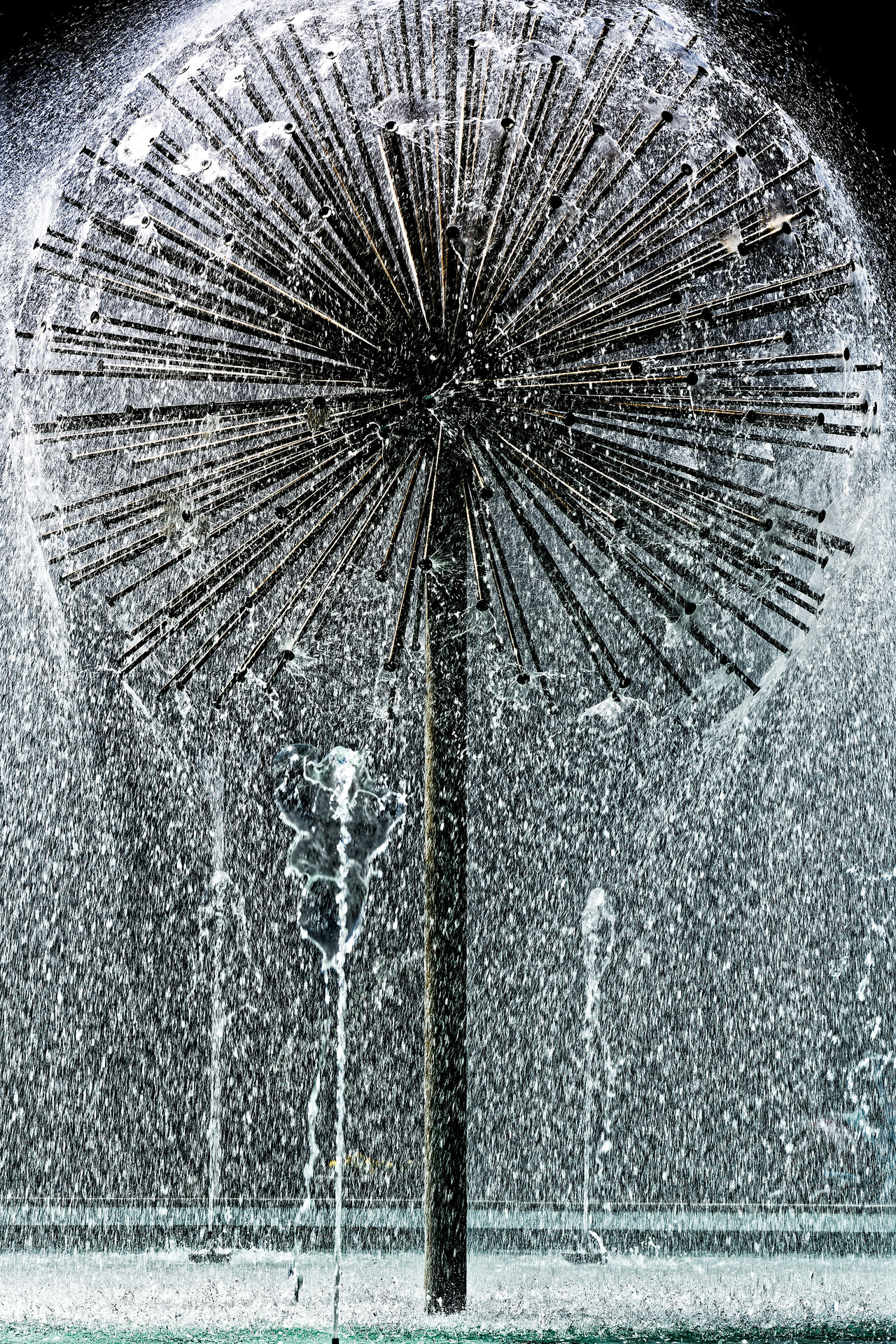
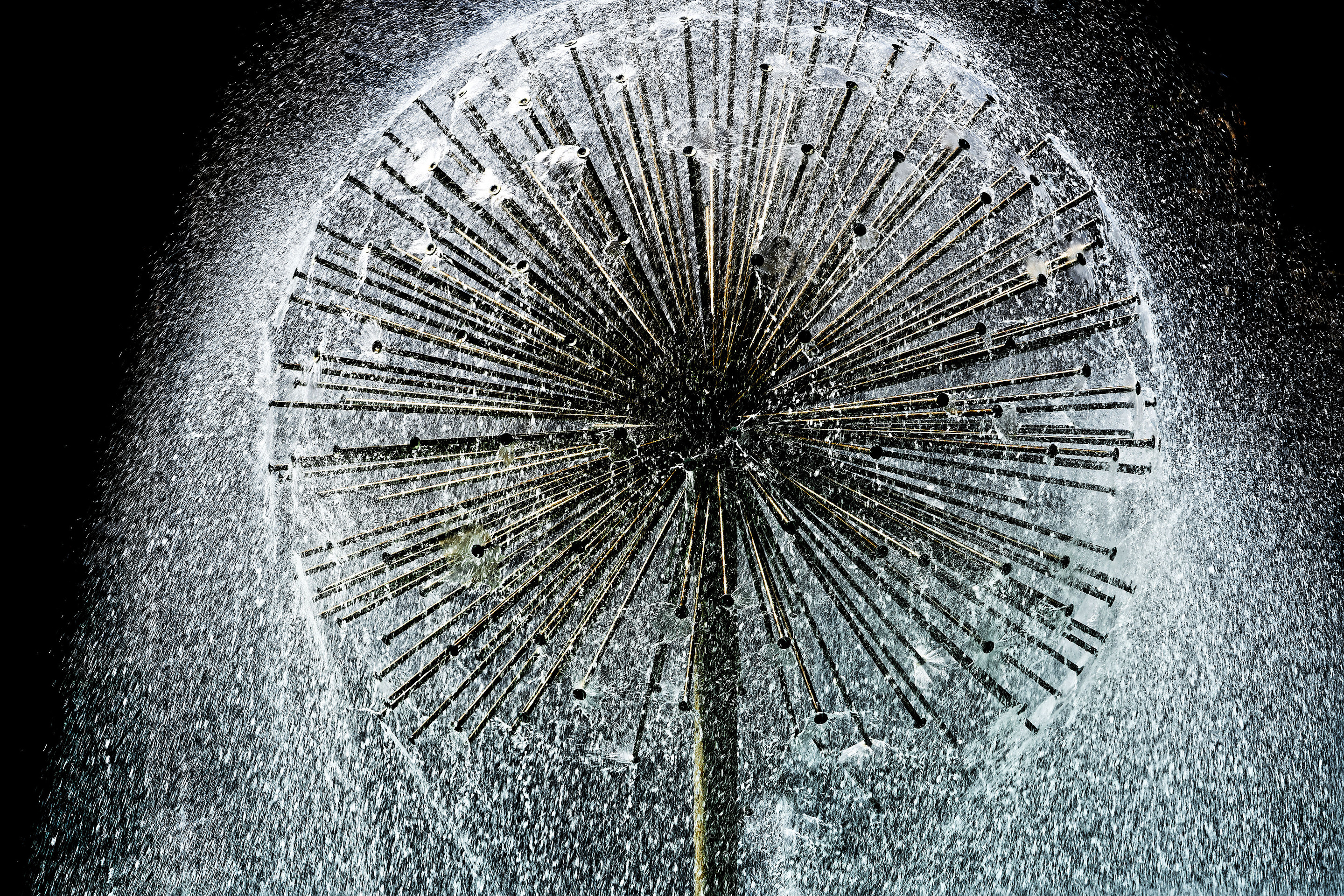
Även i Spanien finns det utblommade maskrosor
I det här fallet rör det sig dock om "vattenkonst" på rondellen utanför det alldeles nya Kulturhuset i Estepona.
Det här är ett exempel på den fina offentliga utsmyckning som Estepona Stad gjort under ledning av sin dynamiske borgmästare de senaste 10 åren.
Vid sidan av konst bl.a. bestående av mängder av kakelmosaik så har staden även hittills fått över 60 stora muralmålningar som är smått fantastiska.
(Förstora gärna)
En enda bild som jag fastnade för - på grund av ljuset
Translate into Google English:
Sten-Åke Sändh - Stenis Photoblog - The photo page (www-fotosidan-se.translate.goog)
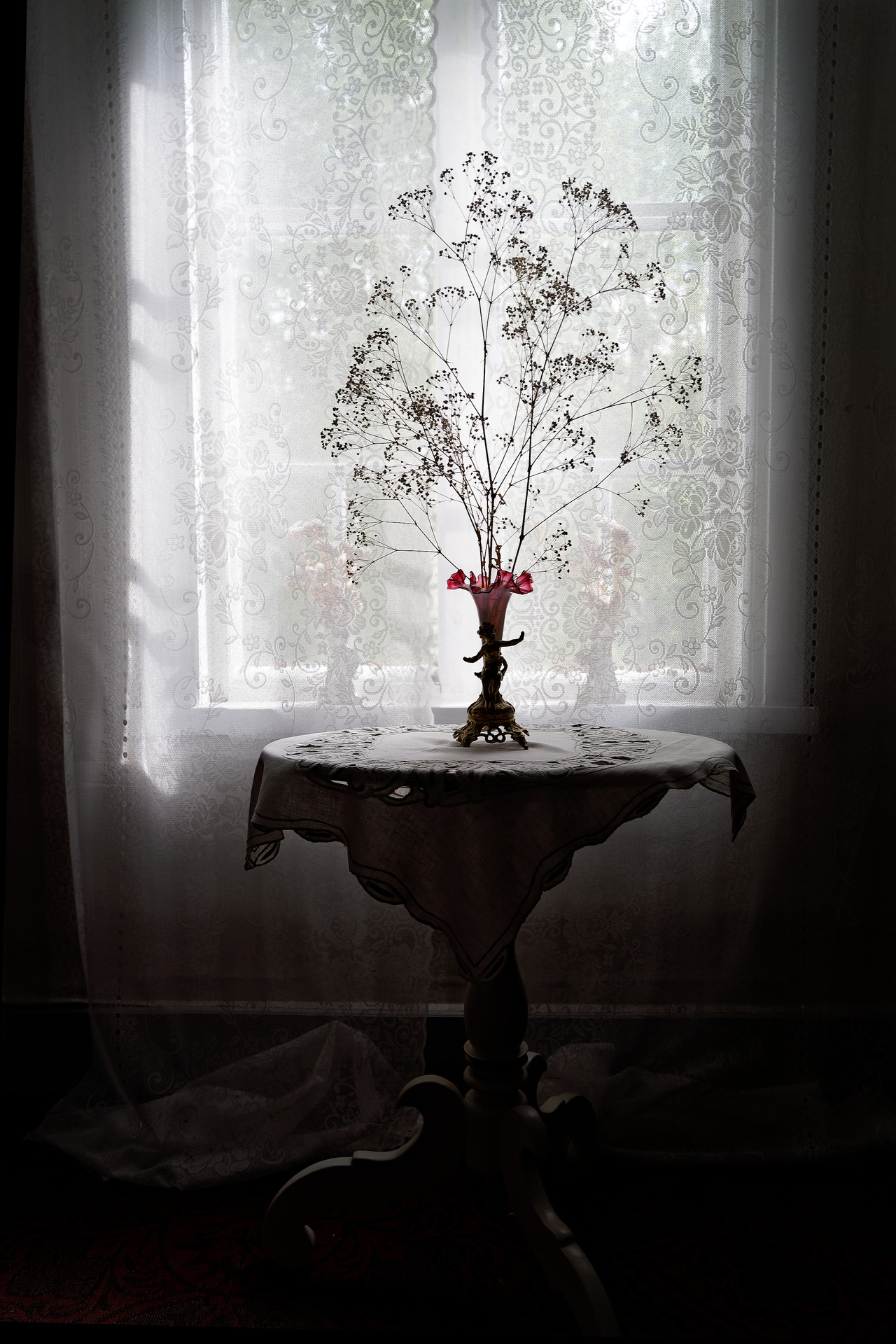
Det är sällan jag tycker enskilda bilder fångar min uppmärksamhet i det här fullständiga dånande vattenfallet av bilder vi står under varje dag året om och det gäller både dessa och mina egna. Igår höll jag på att metadatasätta en del bilder jag tog för något år sedan och märkligt nog fastnade jag här.
Det är ingen märkvärdig bild alls utan ett rätt tråkigt och intetsägande stilleben.
Bilden är tagen inifrån ett rum i ett gammalt småbrukarhems huvudbyggnad i Hälsingland och det finns bara ett enda skäl till att jag tog den - Ljuset. Den är väldigt sparsamt efterbehandlad, för i mitt öga skulle det snarare skada än tillföra något om jag exv. tog fram mer av texturen i gardinerna eller lyfte skuggorna.
Skriver om
Innehållskategorier
- Intresse - Arkitektur
- Intresse - Gatufoto
- Intresse - Natur
- Intresse - Reportage / Situation
- Intresse - Resefoto
- Intresse - Utrustning
- Intresse - Vilda djur
Arkiv
- Februari 2026
- September 2023
- Maj 2023
- Januari 2023
- Augusti 2022
- Juli 2022
- Juni 2022
- Mars 2022
- Januari 2022
- December 2021
- November 2021
- Juli 2021
- Juni 2021
- Maj 2021
- Februari 2021
- November 2020
- Oktober 2020
- September 2020
- Augusti 2020
- Maj 2020
- April 2020
- Februari 2020
- November 2019
- Juni 2019
- Januari 2019
- November 2018
- Oktober 2018
- Mars 2018